About this artwork
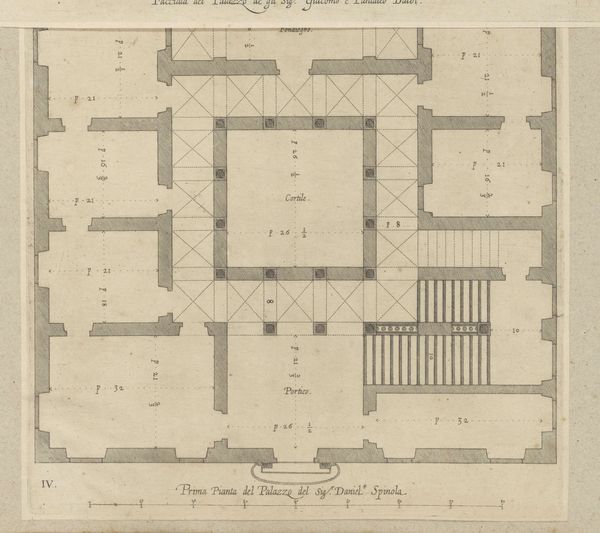
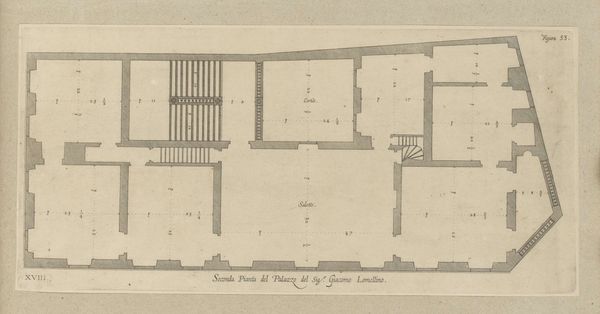
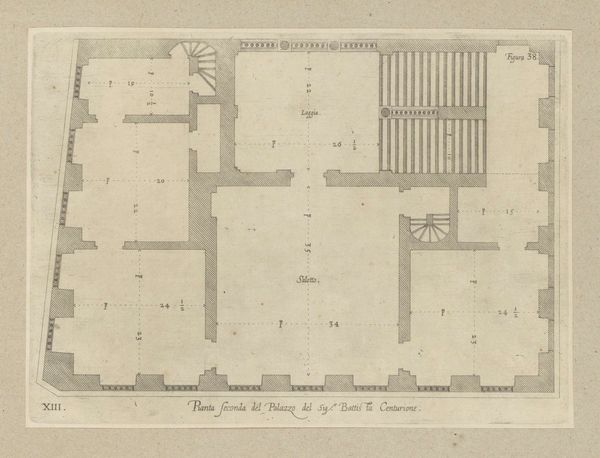
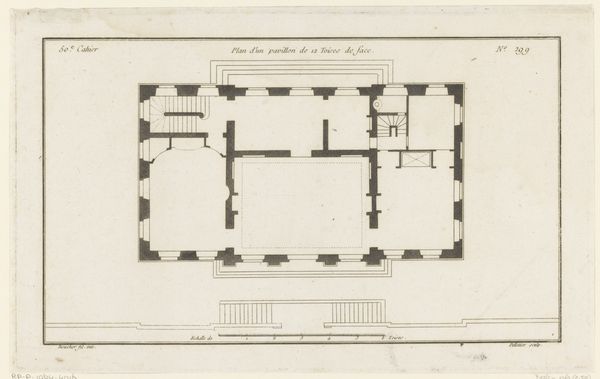
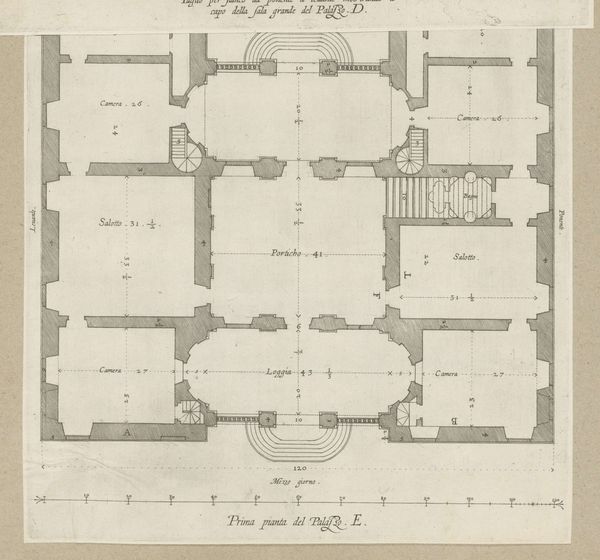
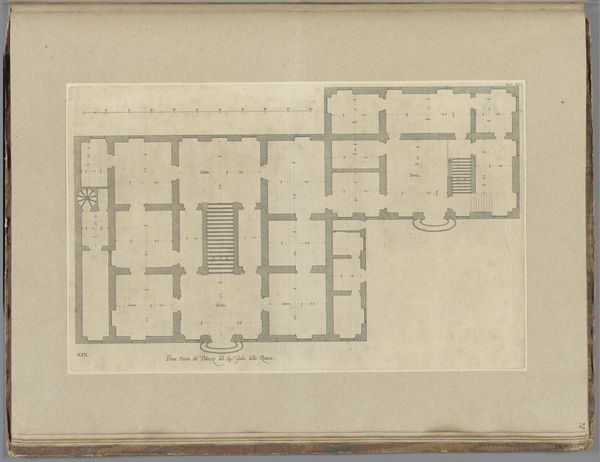
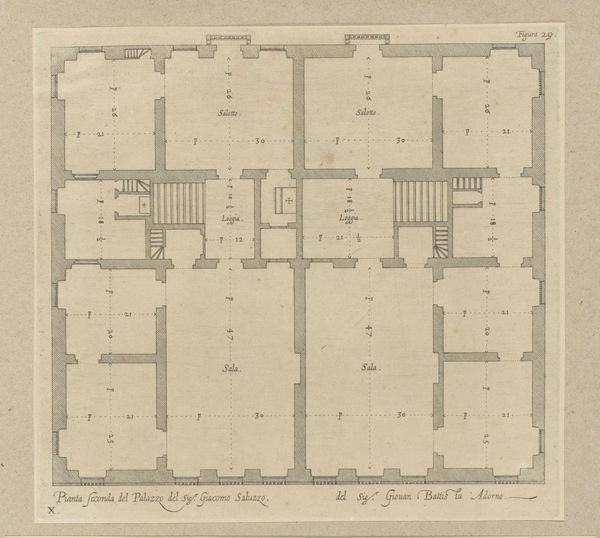
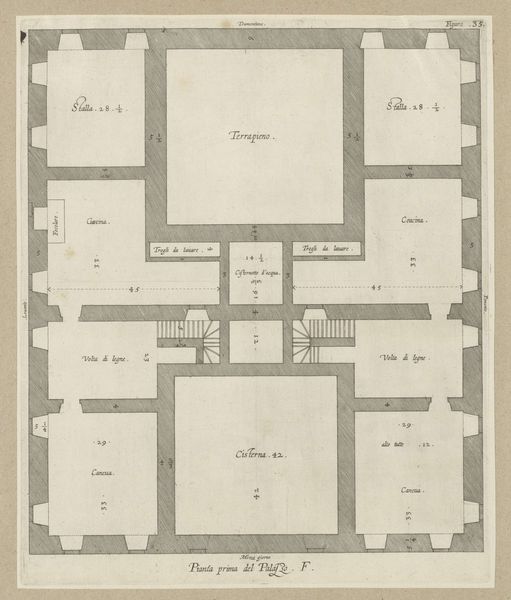
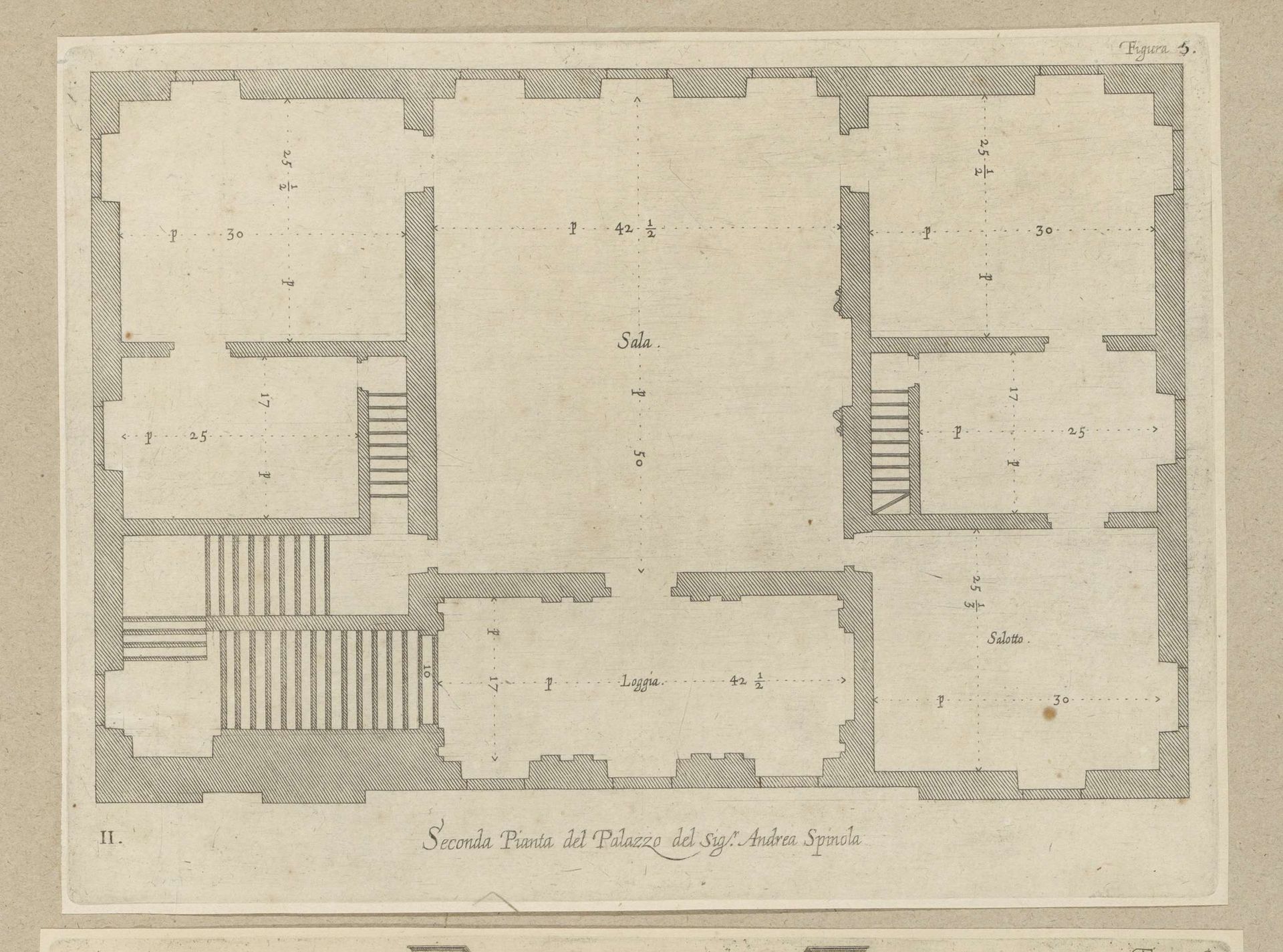
Nicolaes Ryckmans created this architectural drawing, "Plattegrond van de eerste verdieping van het Palazzo Gambaro te Genua," using pen and brown ink and grey wash. The drawing presents a bird’s-eye view of a floor plan, meticulously detailing the arrangement of rooms and spaces. Ryckmans employs precise lines and geometric forms to define the architecture. We see an interplay of rectangles and squares which divide the space logically. The balanced composition, divided into distinct yet connected areas, evokes a sense of order and control. The floor plan becomes more than just a technical diagram; it is a cultural artifact. The strategic placement of rooms—the "Sala," "Loggia," and smaller chambers—suggests a carefully considered hierarchy and flow, reflecting the social dynamics and power structures of its time. Ryckmans has used architectural drawing conventions to give us a glimpse of the era’s values and ideologies related to space and its occupation.
Plattegrond van de eerste verdieping van het Palazzo Gambaro te Genua 1622

Nicolaes Ryckmans
1595Location
RijksmuseumArtwork details
- Medium
- drawing, print, paper, architecture
- Dimensions
- height 201 mm, width 270 mm, height 583 mm, width 435 mm
- Location
- Rijksmuseum
- Copyright
- Rijks Museum: Open Domain
Tags
drawing
paper
11_renaissance
geometric
cityscape
architecture
Comments
No comments
About this artwork
Nicolaes Ryckmans created this architectural drawing, "Plattegrond van de eerste verdieping van het Palazzo Gambaro te Genua," using pen and brown ink and grey wash. The drawing presents a bird’s-eye view of a floor plan, meticulously detailing the arrangement of rooms and spaces. Ryckmans employs precise lines and geometric forms to define the architecture. We see an interplay of rectangles and squares which divide the space logically. The balanced composition, divided into distinct yet connected areas, evokes a sense of order and control. The floor plan becomes more than just a technical diagram; it is a cultural artifact. The strategic placement of rooms—the "Sala," "Loggia," and smaller chambers—suggests a carefully considered hierarchy and flow, reflecting the social dynamics and power structures of its time. Ryckmans has used architectural drawing conventions to give us a glimpse of the era’s values and ideologies related to space and its occupation.
Comments
No comments