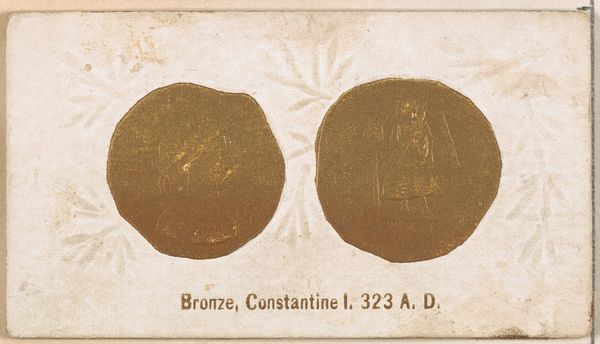
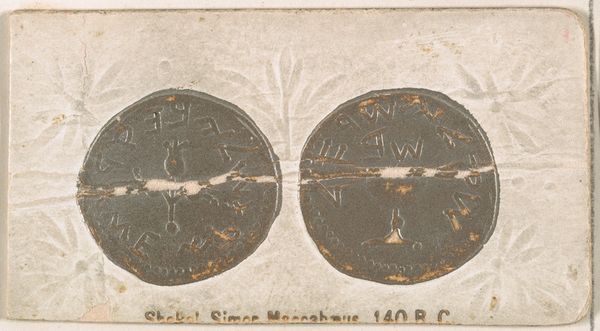
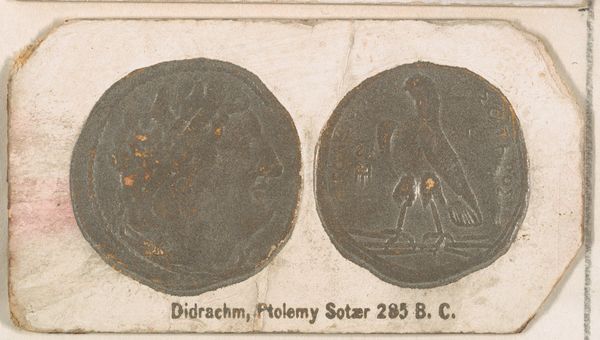
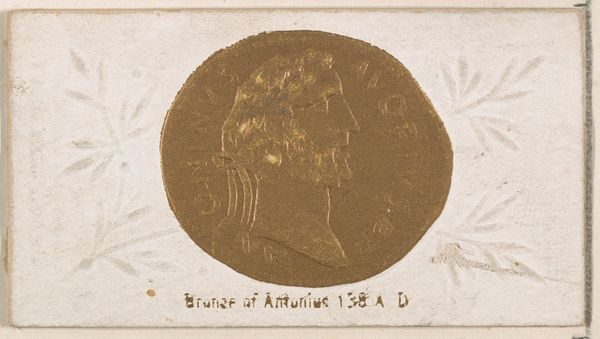
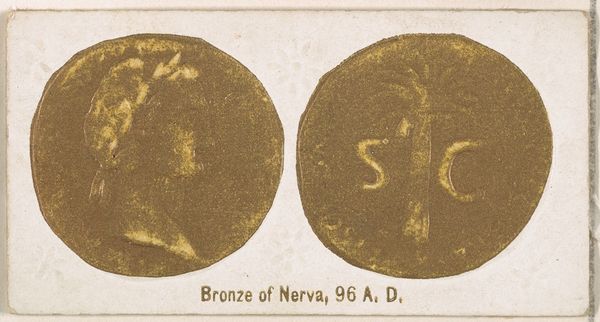
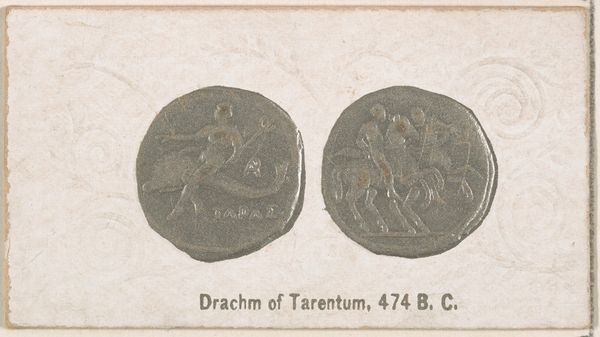
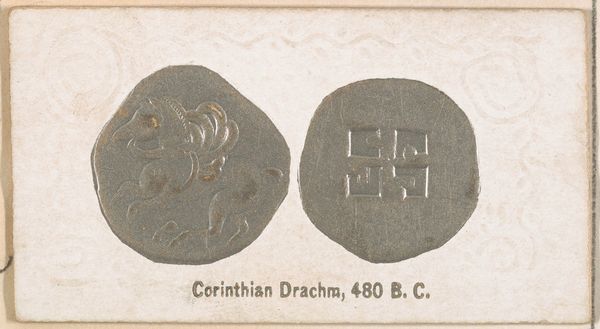
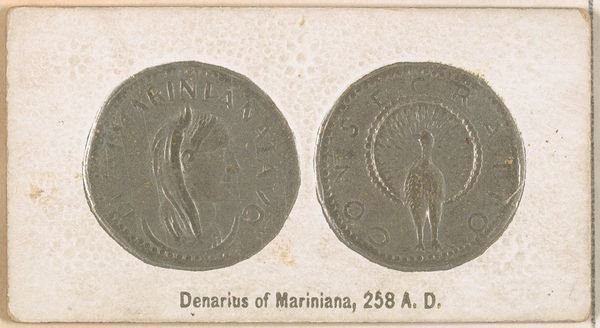
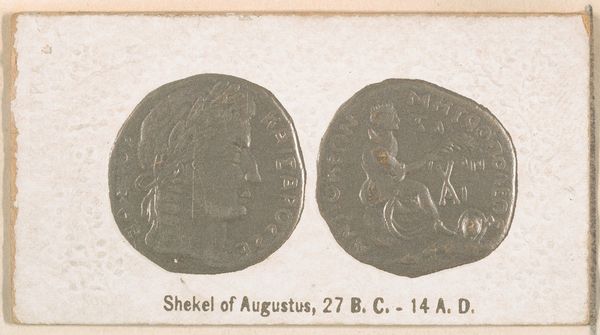
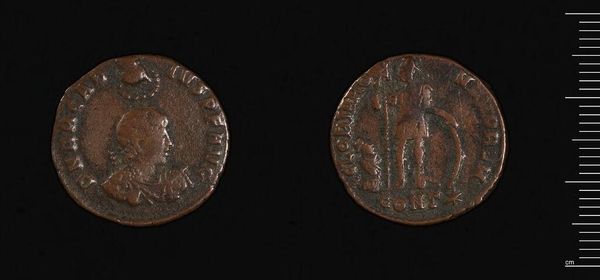
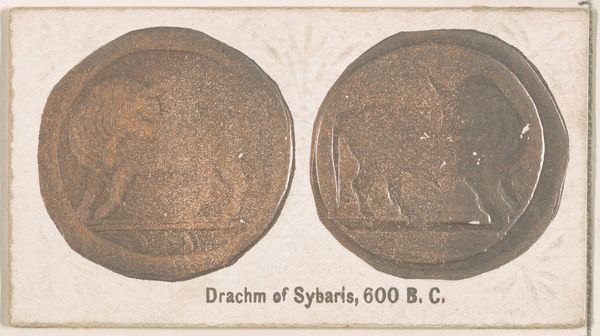
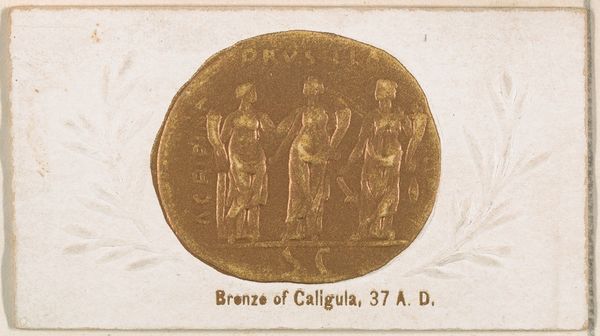
Bronze, Commodus, 180 A.D., from the Ancient Coins series (N180) issued by Wm. S. Kimball & Co. 1888
0:00
0:00


print, bronze
#
portrait
# print
#
bronze
#
ancient-mediterranean
Dimensions: Sheet: 1 1/2 × 2 5/8 in. (3.8 × 6.7 cm)
Copyright: Public Domain
Editor: So, here we have a print from 1888 by William S. Kimball & Co., depicting a bronze coin of Commodus from 180 A.D.. The ancient coin itself features a portrait of Commodus on one side and a scene of figures with animals on the other. I’m struck by how a mass-produced print from the late 19th century attempts to capture this unique, ancient artifact. What story do you think this image is telling us? Curator: Well, it's fascinating to consider this print as an object of cultural appropriation and historical interpretation. Kimball's series attempts to repackage the "romance" and authority of the Roman Empire for a contemporary, mass audience. Editor: Interesting. What do you mean by "romance" and authority"? Curator: Kimball is using visual culture and collectible cards to make ancient power structures easily digestible for American consumers. It reduces a complex political entity to just its imagery: powerful portraits of Commodus on those bronze coins and stereotypical visuals for "history buffs". But consider who is deciding which visuals make the cut to fit on a collectible card in the first place and why. This seemingly neutral reproduction of a coin becomes another tool to glorify particular periods or ideas about Roman glory. It almost idealizes Commodus, whose rule was, shall we say, problematic. How might the perception of the Roman Empire been different without selective appropriation? Editor: That makes me see this little card in a whole new way. It's not just a reproduction; it's an active re-shaping of historical narrative through capitalist ventures! I guess every representation, even the seemingly objective ones, comes loaded with someone’s agenda. Curator: Exactly. It forces us to question how historical objects gain meaning through layers of reinterpretation and commercial dissemination.
Comments
No comments
Be the first to comment and join the conversation on the ultimate creative platform.
 Collect
 React
React Comment
More like this