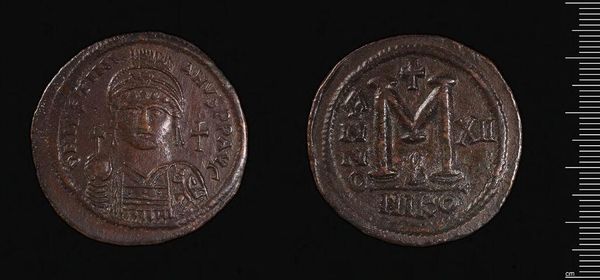
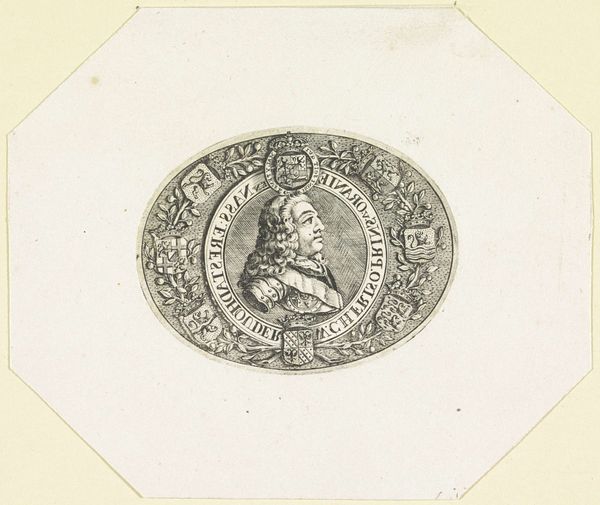
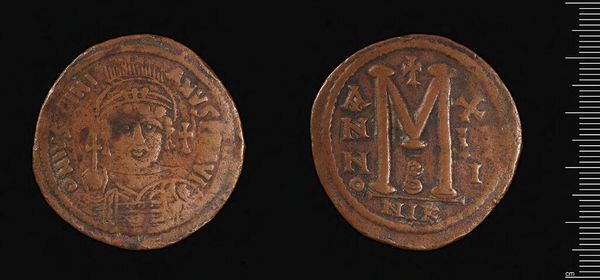
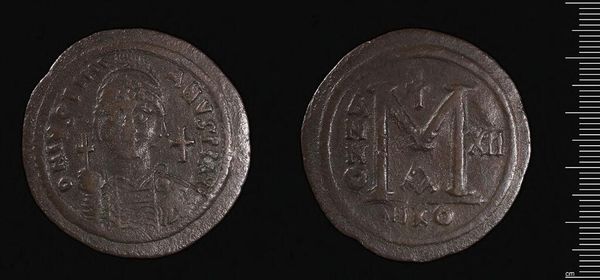
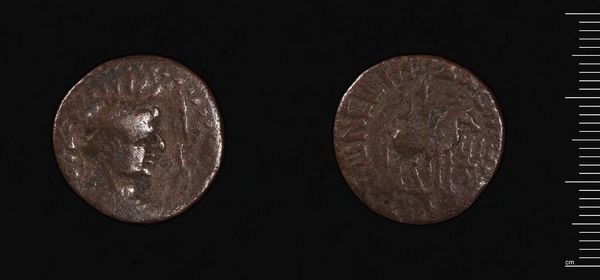
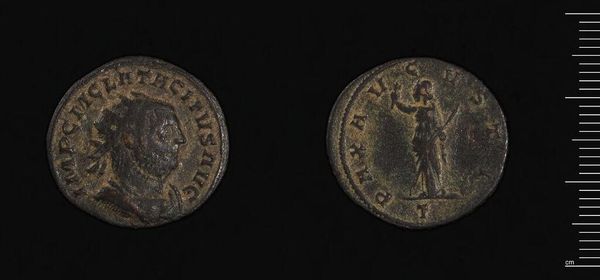
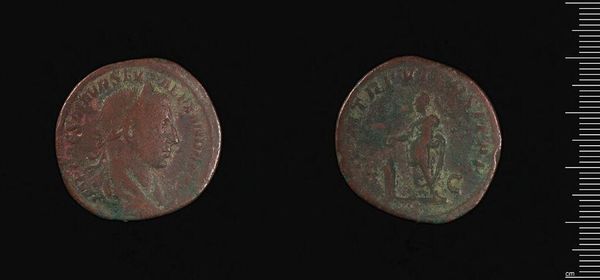
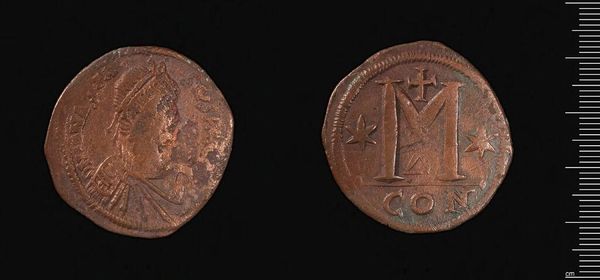
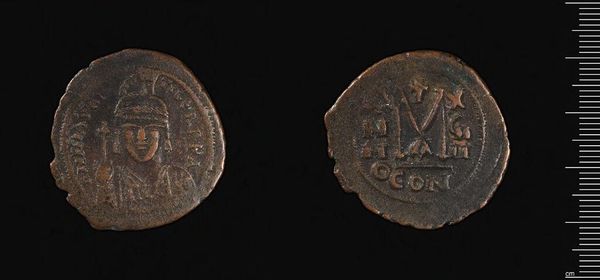
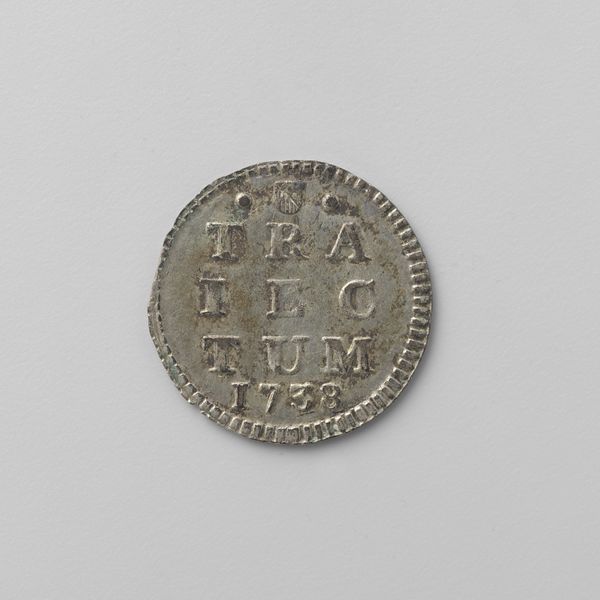
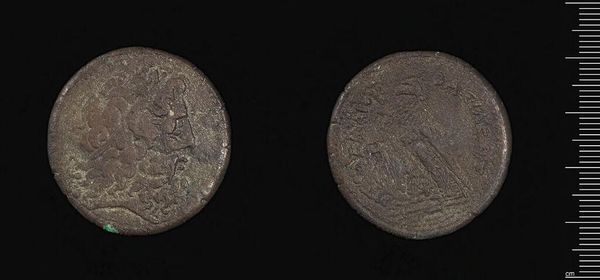
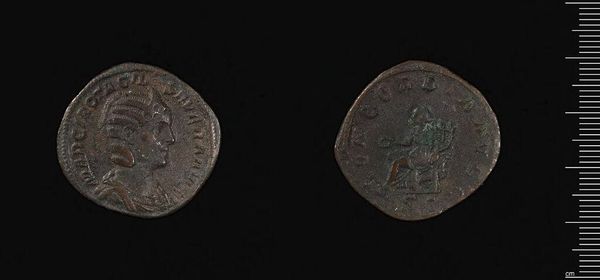
Denarius of Mariniana, 258 A.D., from the Ancient Coins series (N180) issued by Wm. S. Kimball & Co. 1888
0:00
0:00


print, metal, photography, collotype
#
portrait
# print
#
metal
#
photography
#
collotype
#
ancient-mediterranean
#
coin
Dimensions: Sheet: 1 1/2 × 2 5/8 in. (3.8 × 6.7 cm)
Copyright: Public Domain
Editor: Here we have a photograph of an ancient coin, specifically a Denarius of Mariniana, dating back to 258 A.D. The print was part of a series produced by Wm. S. Kimball & Co. around 1888. It's intriguing how this photograph captures the texture of the metal. What stands out to you in terms of form and composition? Curator: The composition offers a dual study in relief. Consider how the photograph emphasizes the concentric circles on each coin. The coin on the left, with the portrait of Mariniana, contrasts strikingly with the reverse side. Note the figure of the peacock: how is it framed by its radiant plumage? And how does that geometric field interplay with the implied circular frame, and then the field in which that geometry unfolds? Editor: So, you're focusing on the shapes and the way they interact within the photographic frame, regardless of the coin’s historical significance? Curator: Precisely. We can appreciate the artistic choices made in both the original coin design and in this photographic reproduction by attending to line, form, and spatial relations. Observe the contrast between the smooth planes of Mariniana's face and the almost baroque extravagance of the peacock's tail feathers. How the numismatic artist utilized minimal relief to produce highly articulated surfaces. The geometry of the coin provides a ground for formal innovation and elaboration. Editor: It’s fascinating to think about the relationship between geometric discipline and ornamental expression! I will look closer at the different textures and their placement within the frame. Curator: Indeed, reflecting on the visual syntax, how different lines, planes, and symbols achieve specific relations in visual space – enriches our experience of the work immeasurably.
Comments
No comments
Be the first to comment and join the conversation on the ultimate creative platform.
 Collect
 React
React Comment
More like this