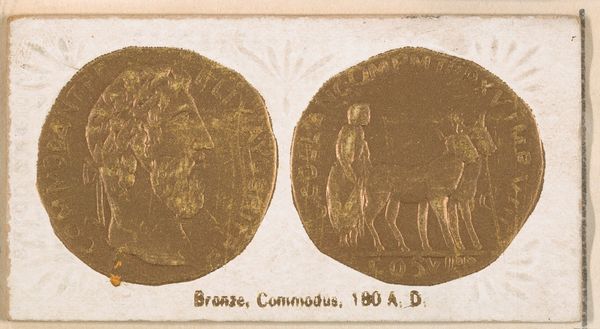
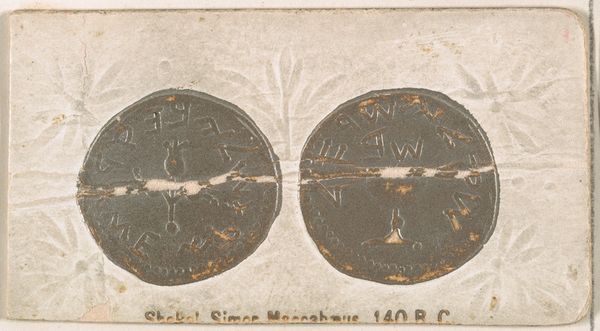
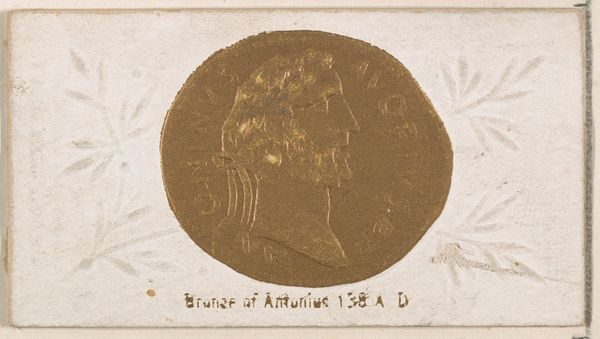
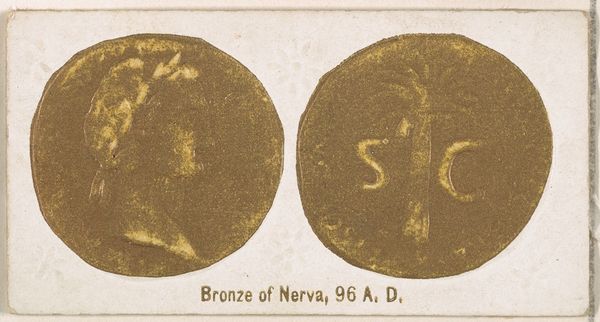
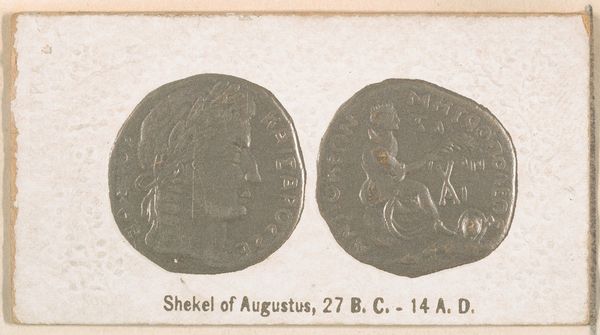
Bronze, Constantine I, 323 A.D., from the Ancient Coins series (N180) issued by Wm. S. Kimball & Co. 1888
0:00
0:00


print, bronze
#
portrait
# print
#
bronze
#
ancient-mediterranean
#
coin
Dimensions: Sheet: 1 1/2 × 2 5/8 in. (3.8 × 6.7 cm)
Copyright: Public Domain
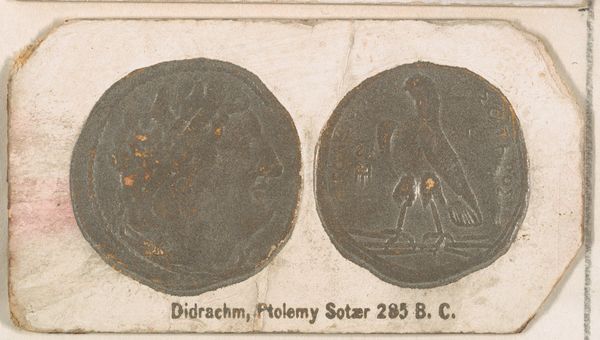
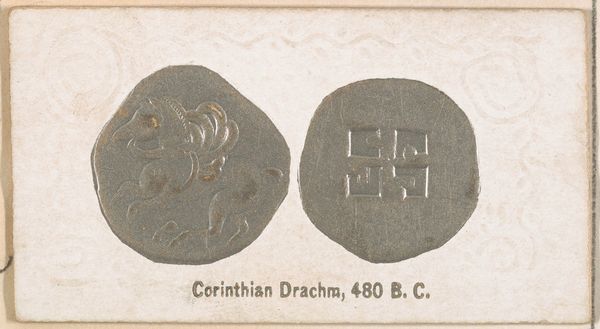
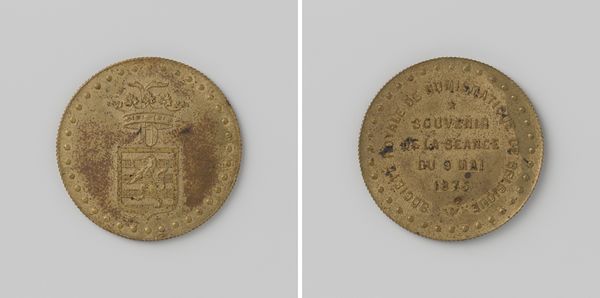
Curator: Two little moons, glinting in bronze, ancient and worn. I immediately feel the weight of centuries… what story do these old coins whisper to you? Editor: What you're looking at is an 1888 print by William S. Kimball & Company, part of their “Ancient Coins” series. It depicts bronze coins dating back to 323 A.D., during the reign of Constantine I. This card is currently housed here at the Met. Curator: 323 A.D.! Constantine. To think, fingers long gone held those very pieces... This isn't just history, it's almost a tangible connection. Editor: Absolutely. Think of how these were circulated, and what role Kimball and other companies played at the turn of the century making the classical past a mass market experience, distributed through cigarette packages. The past became almost disposable. Curator: Disposable antiquity… That's almost heartbreaking. Do you think they captured the essence of those coins? Editor: Visually, yes, even within the limitations of the print. It serves its purpose to display the coins, which have images of the emperor. But as an object of the time, mass produced ephemera in trading cards are inherently disconnected from the gravitas the originals carried in society. Curator: I see it now. Still, each time the past resurfaces in our consciousness, even like this, is a chance for connection and for us to learn how those objects gained power. A pale reflection perhaps, but a reminder nonetheless. Editor: I agree, their accessibility created an audience keen on looking at classical works and coinage, and through these circulating images, a dialogue, however brief, starts between their time and ours. Curator: It makes me think of how everything filters through new lenses...a photo of a coin, layered with the artistry and historical fingerprint of its time. That adds to its mystique, and the mystery grows even larger as time keeps marching on. Editor: And those layers of re-representation ultimately change the object's meaning through time. I wonder how people a hundred years from now will interpret it all over again. Curator: Maybe they'll find an unexpected kind of beauty or meaning in all that layering that neither of us see. It's a hopeful thought, actually.
Comments
No comments
Be the first to comment and join the conversation on the ultimate creative platform.
 Collect
 React
React Comment
More like this