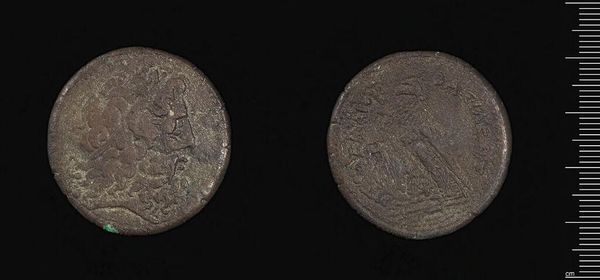
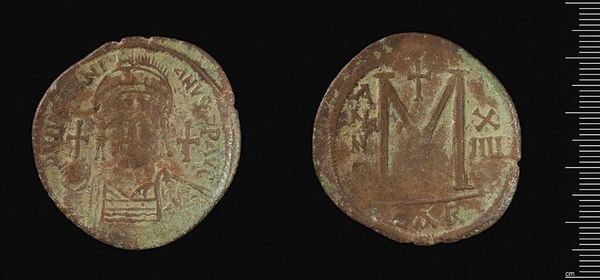
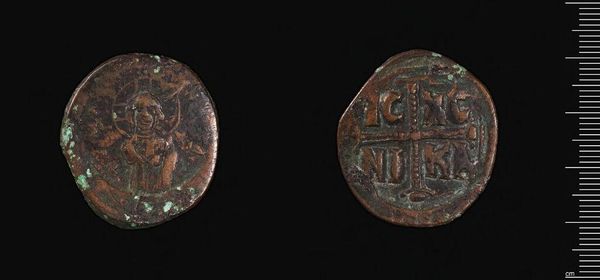
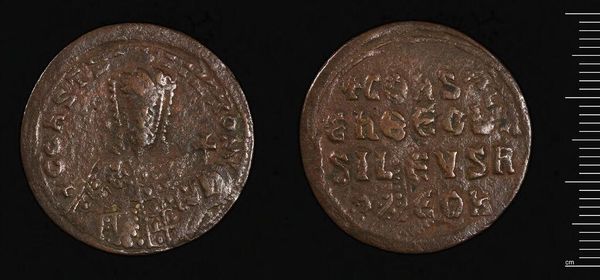
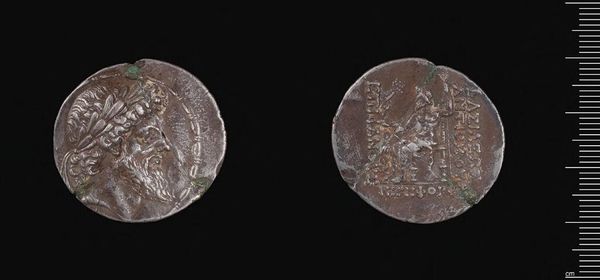
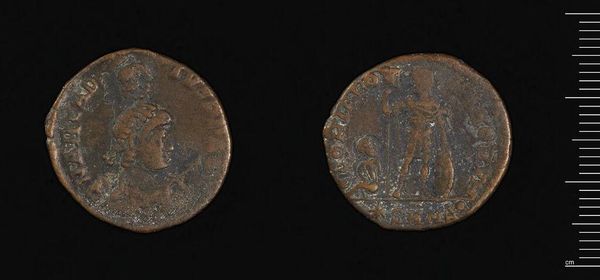
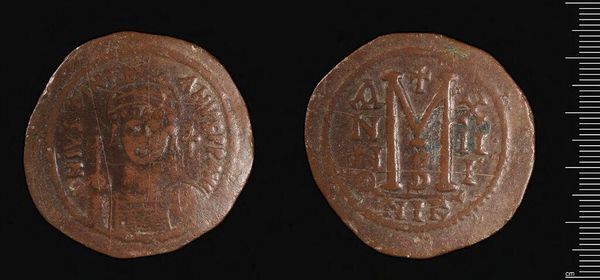
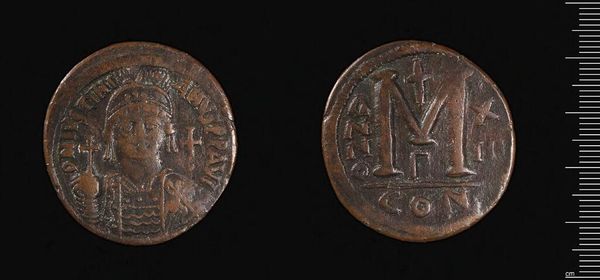
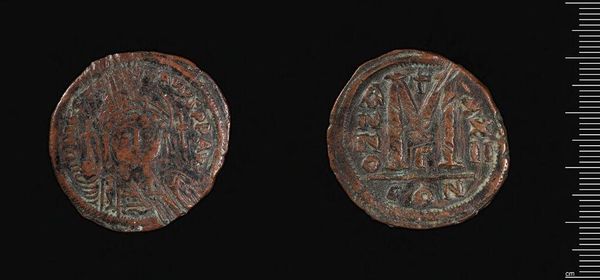
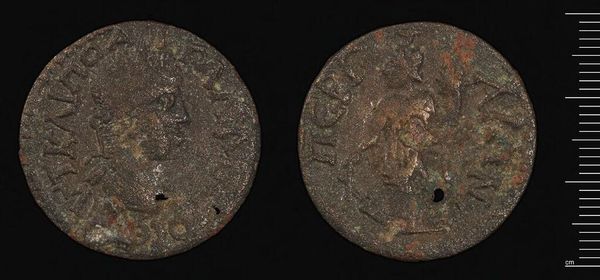
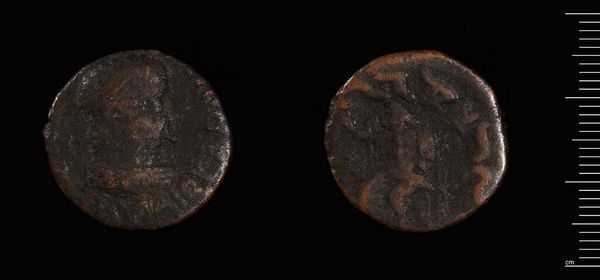
Didrachm Ptolemy Sotaer, 285 B.C., from the Ancient Coins series (N180) issued by Wm. S. Kimball & Co. 1888
0:00
0:00


drawing, print
#
portrait
#
drawing
# print
#
coloured pencil
#
ancient-mediterranean
Dimensions: Sheet: 1 1/2 × 2 5/8 in. (3.8 × 6.7 cm)
Copyright: Public Domain
Editor: This is a print from 1888 by William S. Kimball & Co., titled "Didrachm Ptolemy Sotaer, 285 B.C.". It depicts two ancient coins. The details are really interesting for something that’s essentially a promotional item. What strikes you about this work? Curator: Formally, the print’s composition employs a diptych structure, neatly separating obverse and reverse of the coin. Note the artist's subtle use of shading to simulate the coins' three-dimensionality. How does the texture, rendered through printmaking, affect your perception? Editor: It’s interesting you bring that up; there is almost a sense of age, given how the texture appears to have depth through different lines and shapes. I hadn’t initially thought about that… Curator: Exactly. The arrangement calls attention to both the profile portrait and the symbolic image of the eagle, carefully contrasting royal authority and divine power, thus forming meaning. Do you observe any disruptions or compositional challenges within the visual field? Editor: Perhaps the fact that the color palette appears limited—it is not as vibrant, perhaps? This could distract the eye from the symbolism and significance you speak about. Curator: Indeed. The subdued palette redirects the viewer’s attention towards the lines and shapes that define the image. Ultimately, the interplay between form and symbol reveals the meticulous considerations the artist brought forth. Editor: This formal breakdown has made me consider the nuances of its composition with new eyes. Thank you. Curator: Likewise; analyzing the artwork this way emphasizes the way artistic intent shapes meaning.
Comments
No comments
Be the first to comment and join the conversation on the ultimate creative platform.
 Collect
 React
React Comment
More like this