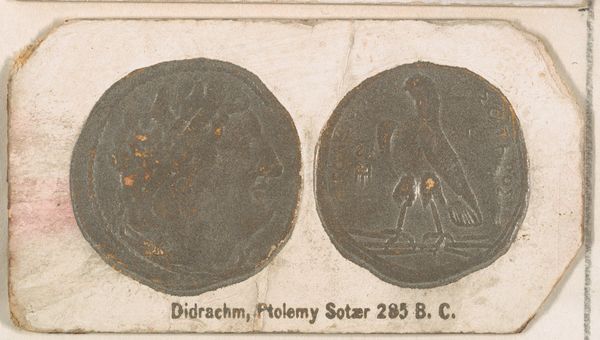
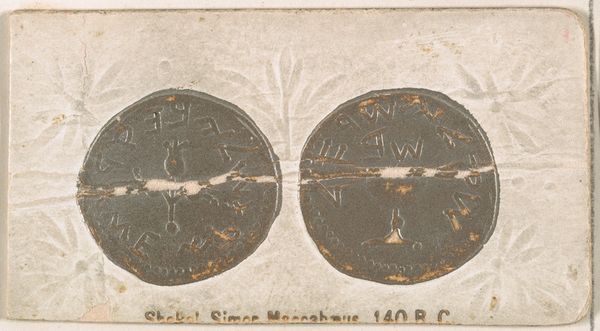
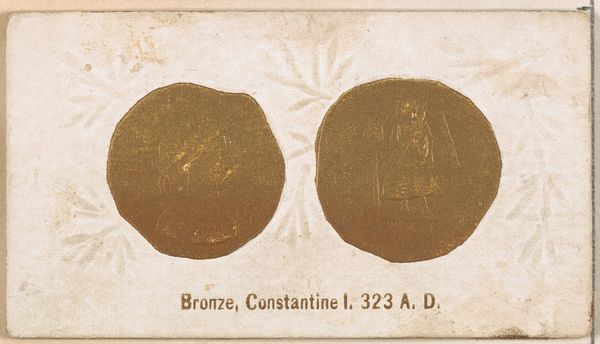
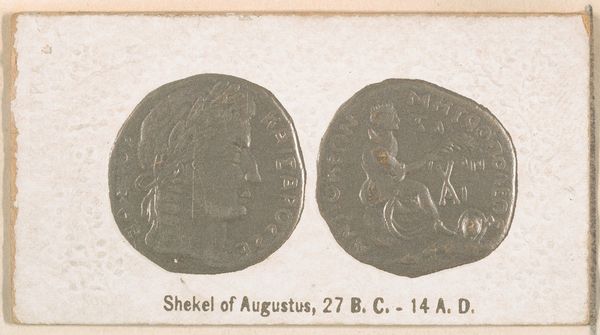
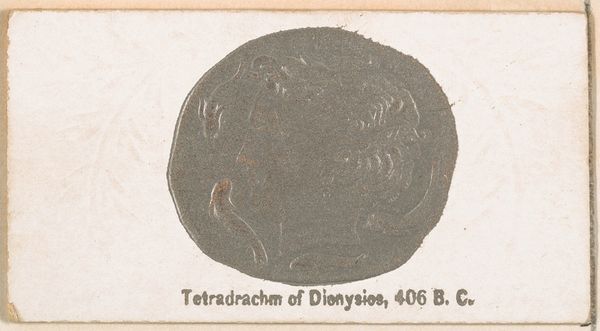
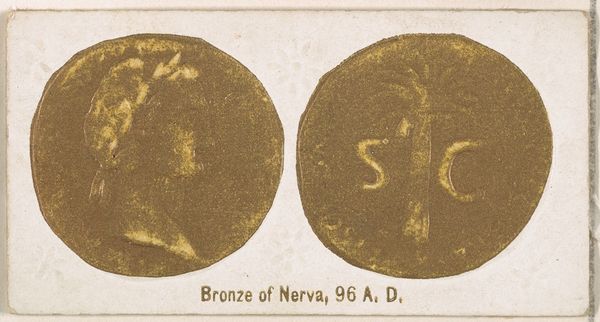
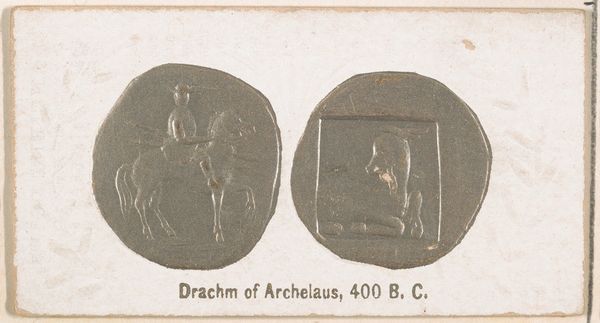
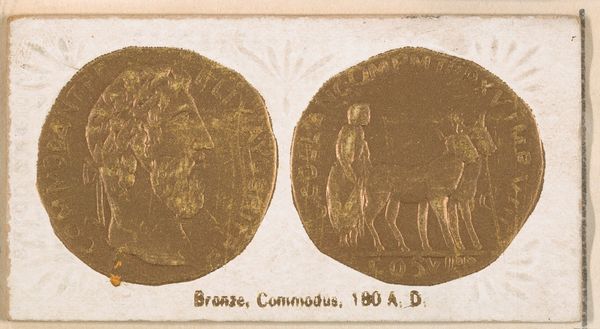
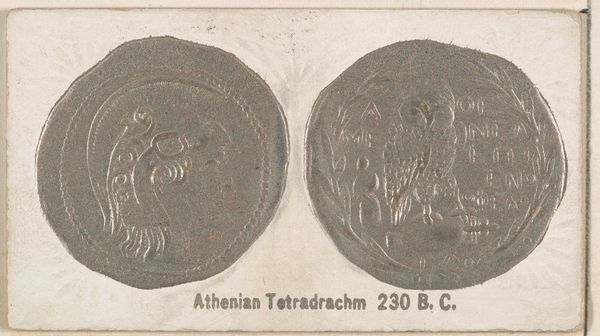
Bronze of Antonius, 138 A.D., from the Ancient Coins series (N180) issued by Wm. S. Kimball & Co. 1888
0:00
0:00


print, engraving
#
portrait
#
aged paper
#
toned paper
#
yellowing background
# print
#
greek-and-roman-art
#
old engraving style
#
ancient-mediterranean
#
men
#
history-painting
#
engraving
Dimensions: Sheet: 1 1/2 × 2 5/8 in. (3.8 × 6.7 cm)
Copyright: Public Domain
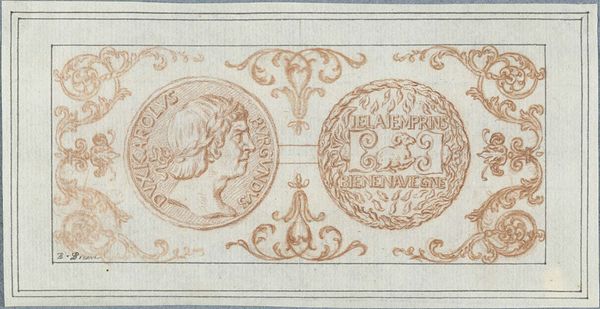
Editor: This print, “Bronze of Antonius, 138 A.D.” made in 1888 by Wm. S. Kimball & Co. showcases an aged aesthetic and it's intriguing. It's clearly referencing ancient coinage but doing so through the means of late 19th-century printmaking. What draws your attention when you examine it? Curator: The most compelling aspect is the deliberate use of period-specific methods to replicate and, therefore, circulate an image of historical significance. This raises critical questions about labor: who created the original coin die, and who produced this engraving? Also, note the 'aged paper' and 'yellowing background' – artificial effects introduced during the printmaking process, speaking volumes about 19th-century notions of antiquity and how objects accrue cultural value over time through materiality and appearance of age. Editor: That’s interesting. So, it’s not just about the image of Antonius, but also about the social implications of how this image was made and consumed? Curator: Precisely! Consider the 'Ancient Coins' series context and purpose of the item being produced in the first place, likely intended as a trade card included with tobacco products. The high art of classical portraiture meets mass production and popular consumption. Does this democratize art, or cheapen the representation of history for commercial gains? Editor: It makes me think about how much the choices about material and technique shape our understanding and interaction with historical imagery. Curator: Right, examining the engraving process unveils a network of labor, consumerism, and even a certain degree of cultural appropriation. These “ancient coins” in mass produced form tell as much, or even more, about their time of manufacture and distribution than the emperor. Editor: I see what you mean. It’s more than just a portrait, it's a reflection on production and its relationship to art. Curator: Yes! The tension and the dialogue between different materialities are very important and give us a great starting point for more research and observation.
Comments
No comments
Be the first to comment and join the conversation on the ultimate creative platform.
 Collect
 React
React Comment
More like this