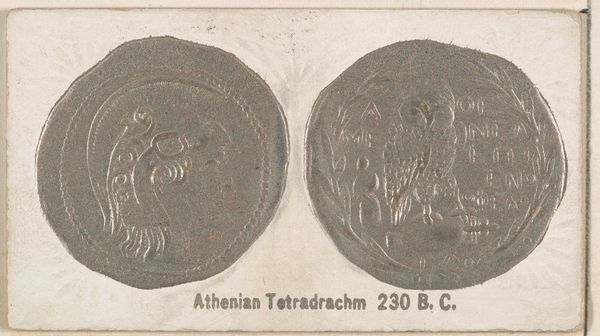
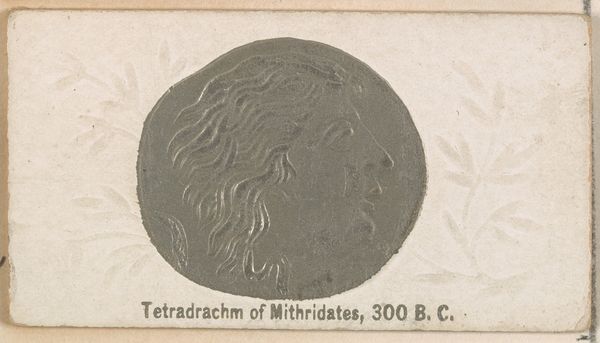
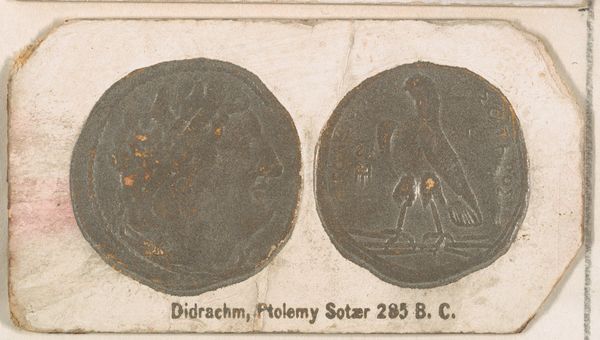
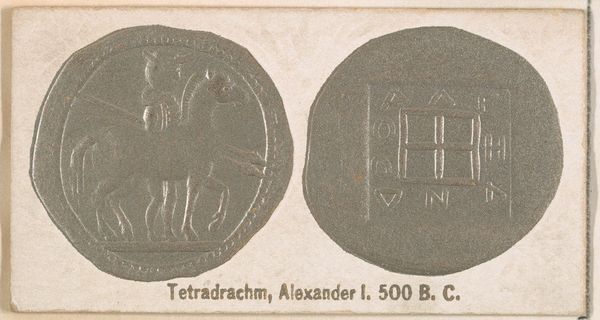
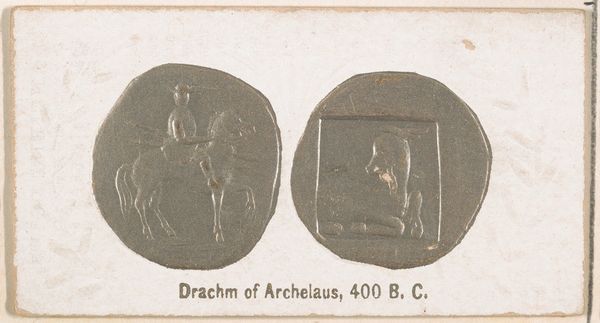
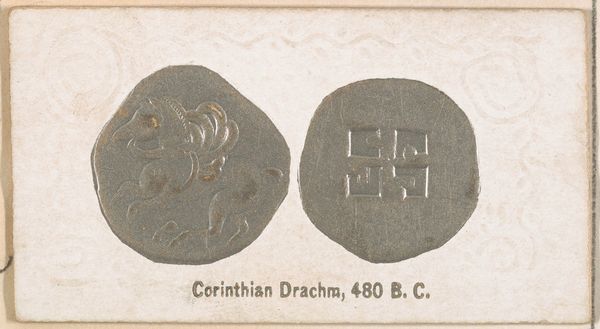
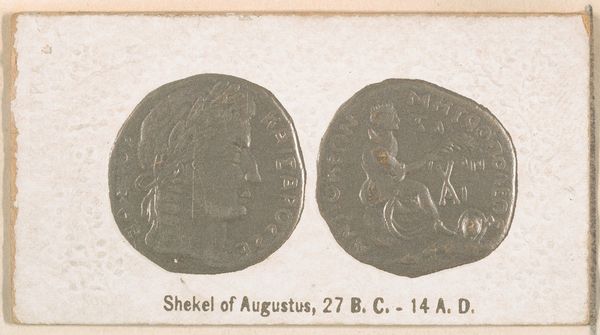
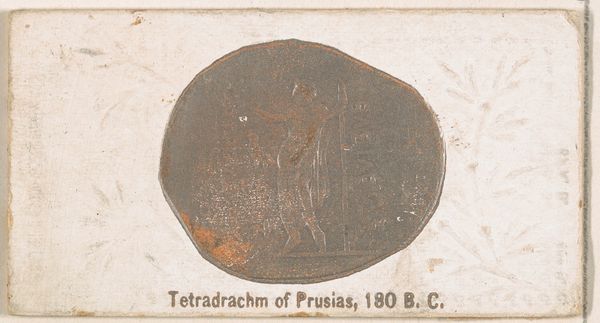
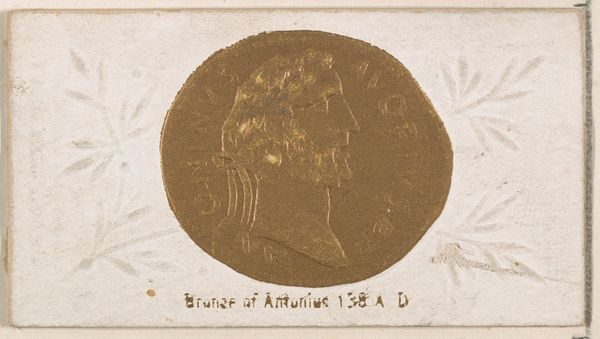
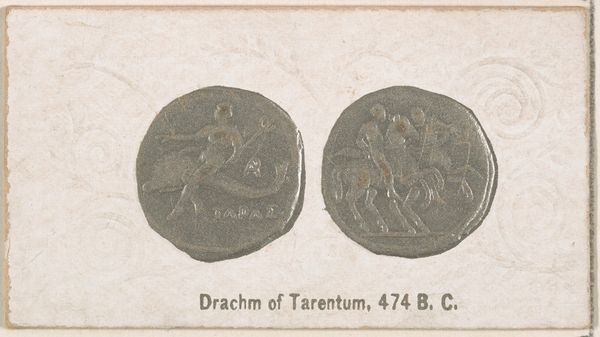
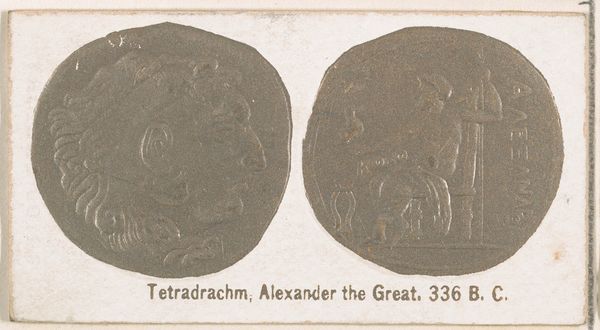
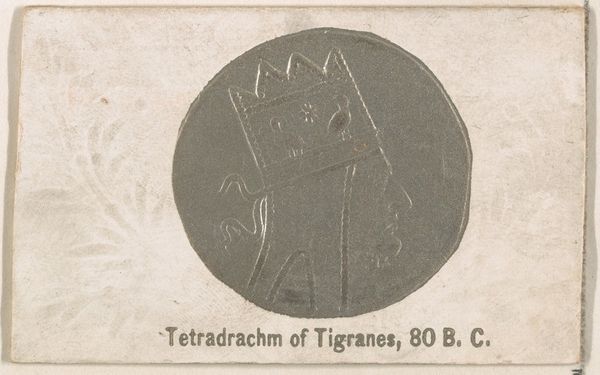
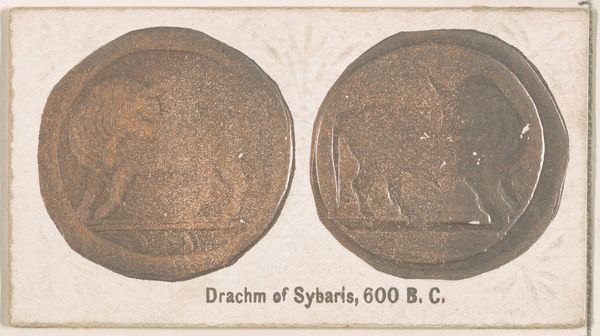
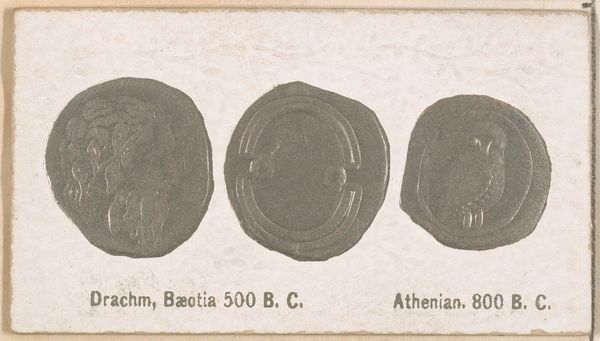
Tetradrachm of Dionysios, 406 B.C., from the Ancient Coins series (N180) issued by Wm. S. Kimball & Co. 1888
0:00
0:00


print, etching, photography
#
portrait
# print
#
etching
#
greek-and-roman-art
#
photography
#
ancient-mediterranean
#
coin
Dimensions: Sheet: 1 1/2 × 2 5/8 in. (3.8 × 6.7 cm)
Copyright: Public Domain
This is a printed card from the Wm. S. Kimball & Co.'s "Ancient Coins" series, featuring a tetradrachm of Dionysios dating back to 406 B.C. These cards, trading cards really, reflect the late 19th century's fascination with antiquity. Think about it: mass-produced images of ancient artifacts distributed with tobacco products. It's a strange mix of commerce, education, and the burgeoning field of archaeology. This card presents the coin of Dionysios, likely produced in Syracuse, a powerful Greek city in Sicily. The coin's imagery, probably Dionysus himself, reflects the cultural values and political ambitions of its time. The choice to reproduce this coin, and others like it in this series, speaks volumes about the institutional forces shaping public perceptions of history and value in the United States at the time. To understand this image better, we might research Kimball & Co.'s marketing strategies, the popularity of collecting at the time, or even the broader context of American imperialism and its relationship to the classical world. Art, even on a small card like this, is always embedded in layers of social and institutional history.
Comments
No comments
Be the first to comment and join the conversation on the ultimate creative platform.
 Collect
 React
React Comment
More like this