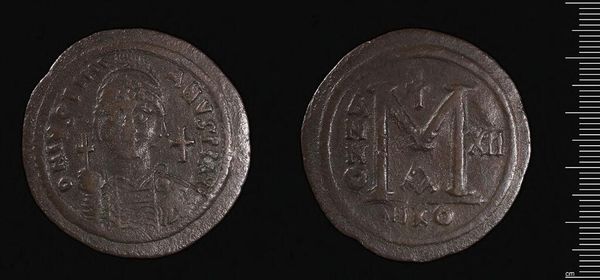
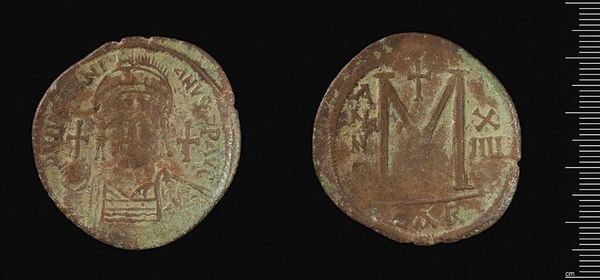
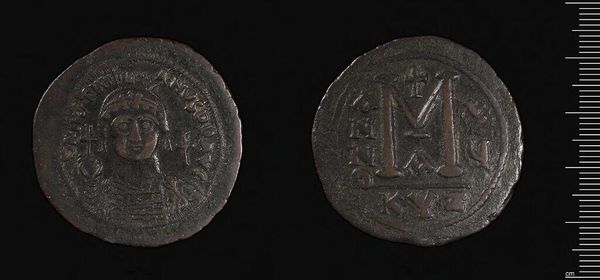
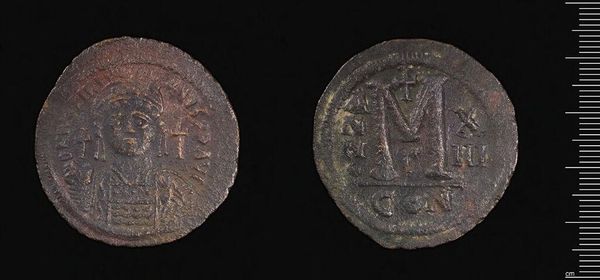
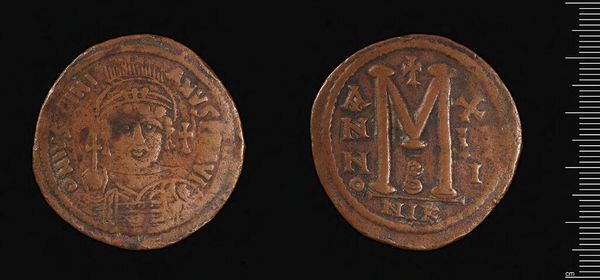
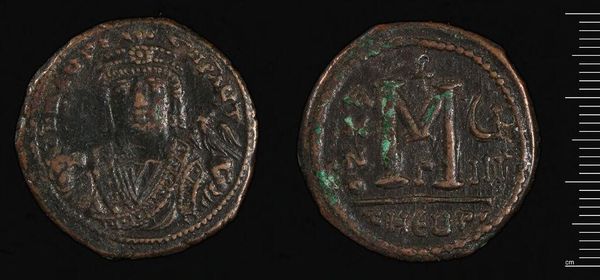
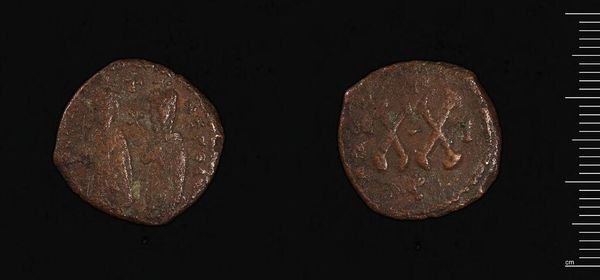
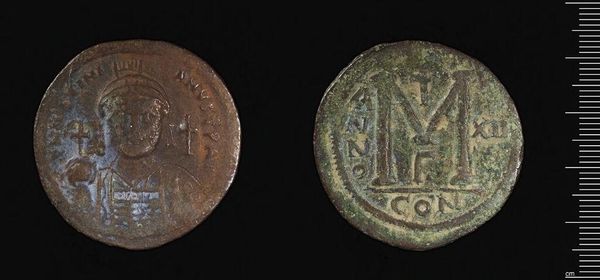
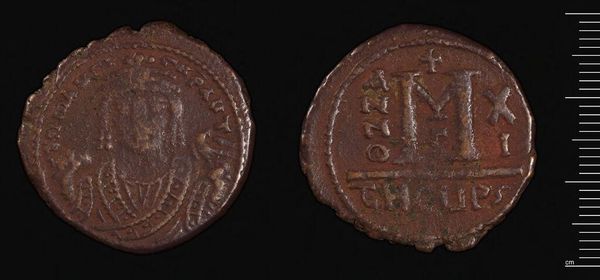
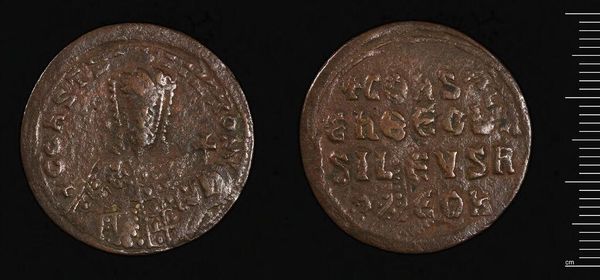
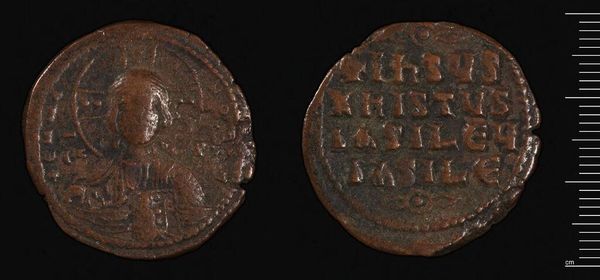
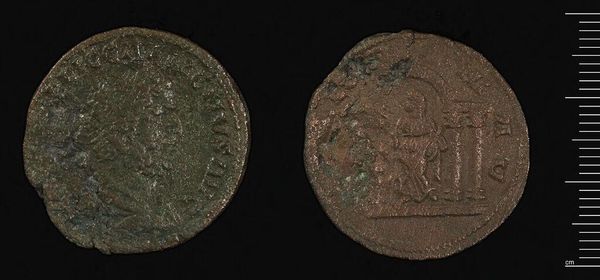
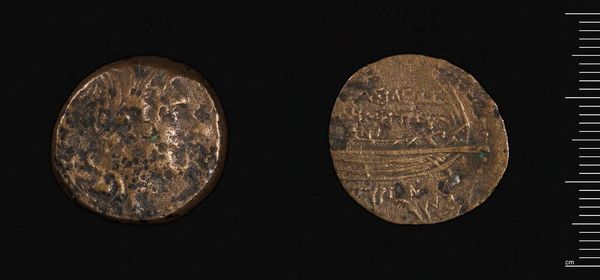
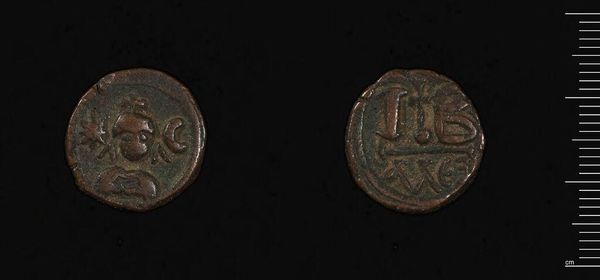
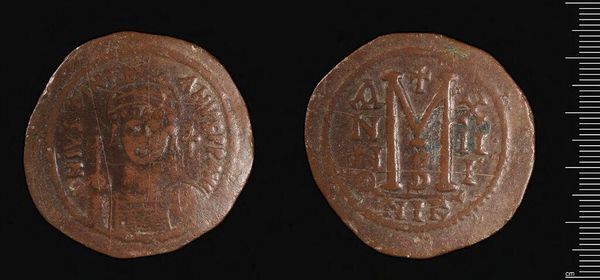
Drachm of Tarentum, 474 B.C., from the Ancient Coins series (N180) issued by Wm. S. Kimball & Co. 1888
0:00
0:00


graphic-art, print, engraving
#
graphic-art
# print
#
greek-and-roman-art
#
ancient-mediterranean
#
coin
#
engraving
Dimensions: Sheet: 1 1/2 × 2 5/8 in. (3.8 × 6.7 cm)
Copyright: Public Domain
Curator: The artwork before us, titled "Drachm of Tarentum, 474 B.C., from the Ancient Coins series (N180)" was issued in 1888 by Wm. S. Kimball & Co. It is currently housed here at the Metropolitan Museum of Art. Editor: It's deceptively simple. There is a stark contrast with the rough material surrounding the images. It immediately evokes a feeling of age and endurance. What was it originally printed on? Curator: The print employs graphic art and engraving techniques, focusing our attention on the textures achieved by the medium itself. Considering that this is part of a series created by a tobacco company, the means of production interests me—to what extent was mass culture already relying on ancient symbols for added cultural weight? Editor: That is certainly something to consider. These aren't mere reproductions; they're layered with the complex narrative of how classical antiquity was consumed and reinterpreted during the Industrial Age. The images showcase, respectively, a figure riding a dolphin and horsemen, perhaps reflecting trade and military power, yet, who had access to these symbols, and what did they represent in a society still grappling with social inequalities? Curator: Precisely, we are faced with understanding the socio-economic status of those consuming Kimball's products, reflecting also on artistic choices, the engraver’s decisions regarding line, depth, and emphasis which are all embedded with value. How much was true to the original? Editor: I’m wondering about the political implications embedded within this dissemination of classical imagery to mass audiences, connecting it to notions of national identity. To what extent does the artwork reflect a colonial gaze, idealizing and appropriating ancient cultures? It raises pertinent questions about power, privilege, and representation. Curator: The choice of medium—printmaking, meant for wide distribution—speaks to a very conscious decision to imbue mass-produced items with an air of antiquity and timelessness, embedding products with historical context and perceived high culture, wouldn’t you say? Editor: Absolutely, understanding art within a broader scope and relating it to power dynamics can change the narrative, bringing up uncomfortable but urgent discussions about our shared responsibility in engaging with this art consciously. Curator: Well said. Exploring art with that lens allows a deeper, richer appreciation for artistic endeavor. Editor: Agreed; contextualizing through these themes opens up exciting critical perspectives.
Comments
No comments
Be the first to comment and join the conversation on the ultimate creative platform.
 Collect
 React
React Comment
More like this