
Curatorial notes
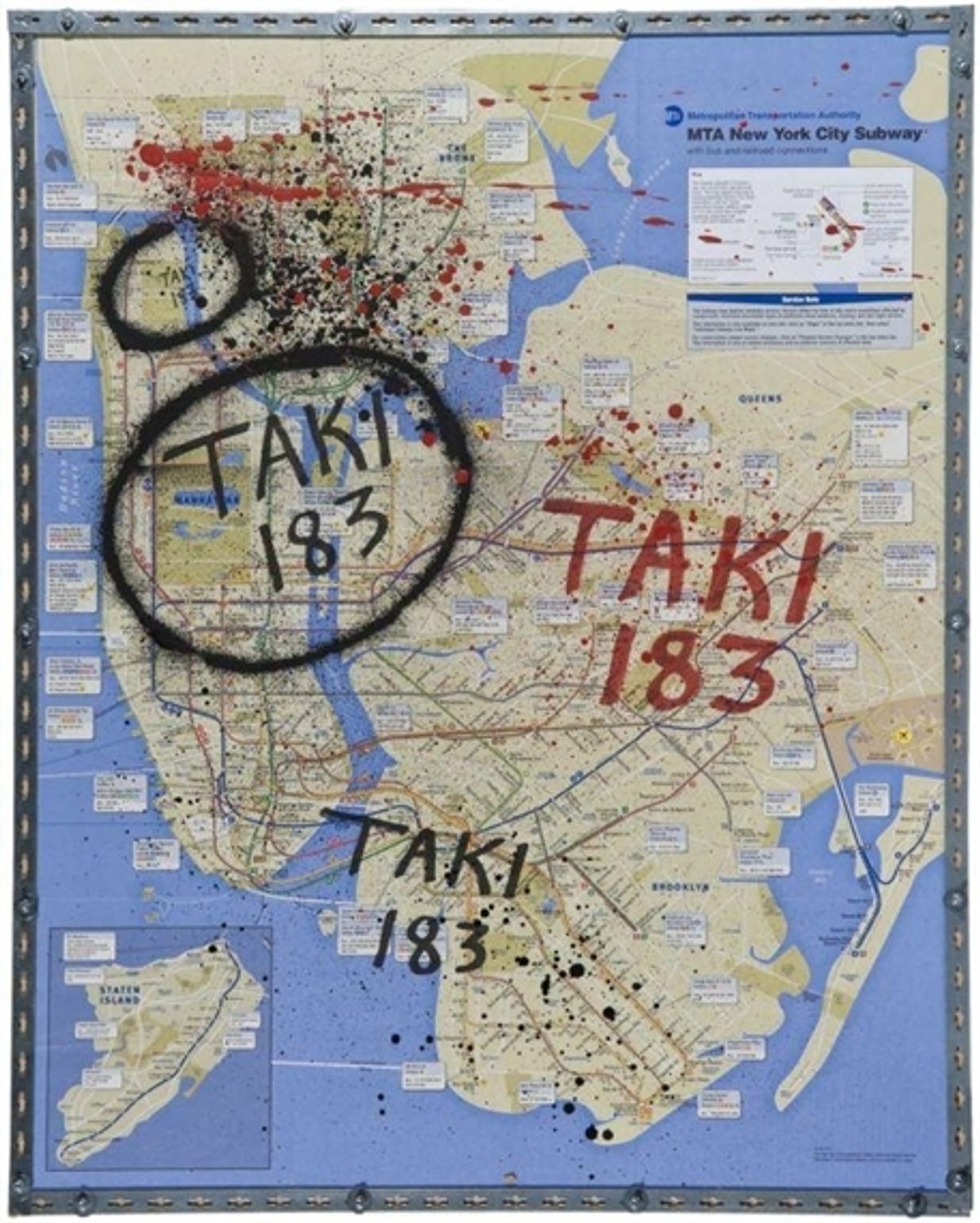
Curator: Here we have TAKI 183's "New York City Subway Map," created in 2010. It’s a mixed-media piece, primarily associated with street and graffiti art movements. Editor: My first thought? It's a visual tag—territory claimed. A bold, messy declaration splattered over the neat grid of city life. It gives me a pang of urban nostalgia and rebellious joy. Curator: Absolutely. The MTA map is quite literally used as a canvas. Taki's iconic tag is applied multiple times. Its scale, context, and even its medium subvert traditional artistic hierarchies. The choice of a public utility document raises questions of ownership and the appropriation of urban space. Editor: And the energy! Those splashes of red and black—like tiny explosions marking territory. It reminds me of Pollock, but with an unapologetic streetwise edge. The official map wants to guide you; Taki’s map dares you to witness. Curator: Indeed. Taki’s tag evolved as graffiti became intertwined with media attention and its cultural perception changed. What started as a personal expression in a marginalized community eventually became a subject of fascination and, arguably, glamorization in the mainstream. Editor: Glamorization, sure, but also a form of cultural critique. By disrupting the clean, rational face of the city with his mark, Taki calls attention to the narratives that are often ignored or erased – the stories of those who navigate those very streets every day. Curator: It is also the narrative and commercial interest that has given validity and a platform for marginalized expression within artistic spheres. Works like this push institutions to reassess the values attached to more formalized conventions of art and its cultural meaning. Editor: Well said. Looking at it now, I feel a blend of history and raw human impulse. Art where life scrawls its name, daring the city to forget it. Curator: Yes, it makes you think how one defiant signature can evolve, transforming mundane objects and the larger social fabric.