graphic-art, print, etching
#
graphic-art
#
dutch-golden-age
# print
#
etching
#
landscape
#
etching
Dimensions: height 502 mm, width 711 mm
Copyright: Rijks Museum: Open Domain
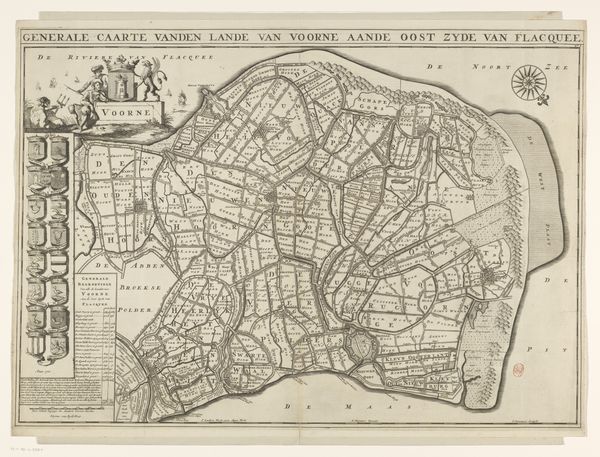
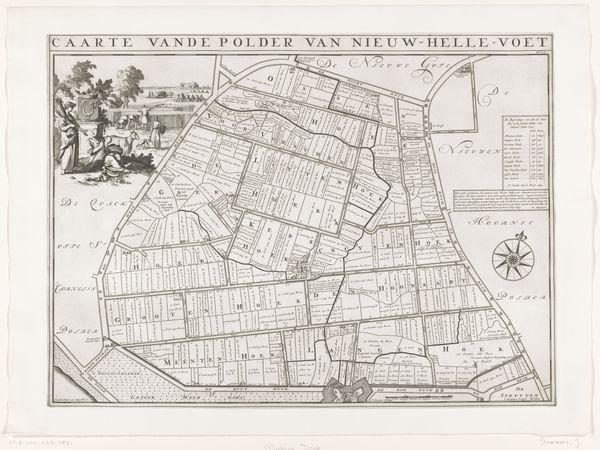
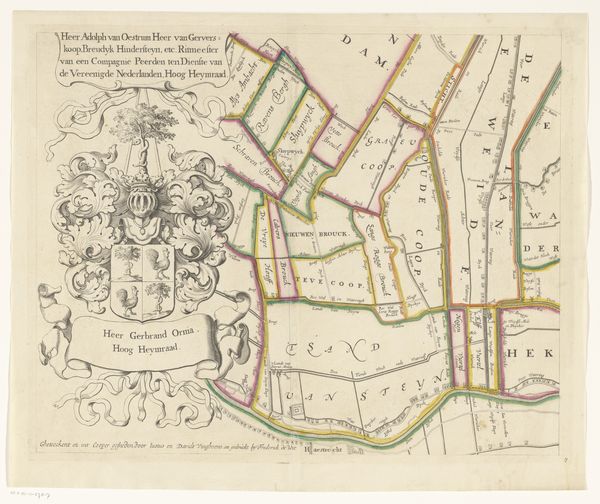
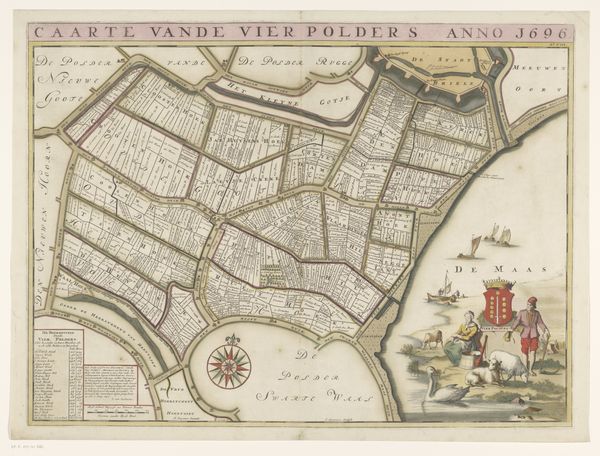
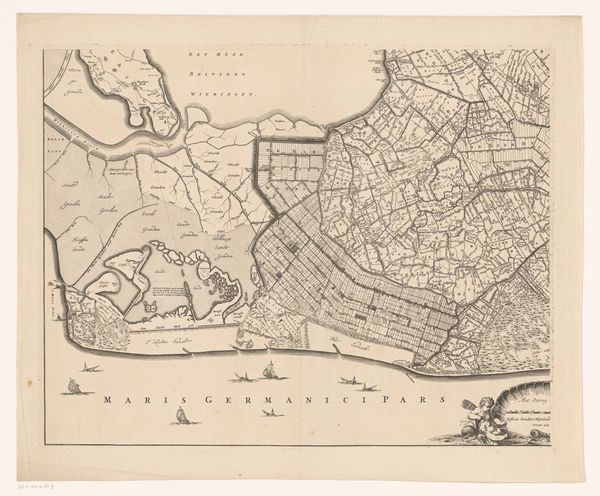
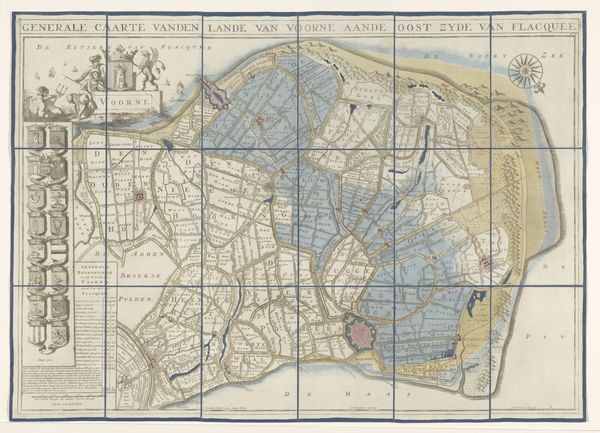
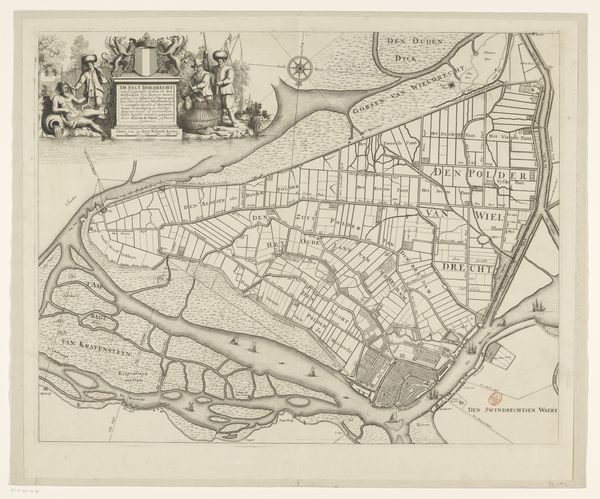
Editor: This is "Kaart van Zuid-Voorne (Overflakkee)," a map of the region, made sometime between 1701 and 1729 by Jan Stemmers. It’s an etching, a kind of printmaking. It’s fascinating how this detailed picture was made using etching! How would you interpret the work from a Materialist perspective? Curator: From a Materialist lens, the etching reveals much about the labor and processes behind mapmaking at the time. The lines etched into the metal plate, the application of ink, the paper itself - all speak to the skilled labor involved in disseminating knowledge and control over territory. What about the materiality of the map strikes you most? Editor: Well, considering it’s from the Dutch Golden Age, I’m struck by how it represents both artistic skill and practical need. It wasn't just art; it was crucial for navigation, land ownership, and even warfare. How do you see this map relating to the social context of its time? Curator: Absolutely. These maps, created with meticulous etching techniques, aided the burgeoning merchant class and expanding colonial interests. The very act of surveying, etching, and printing positioned the Dutch in control of geographical representation, and consequently, of trade routes and territorial claims. This map becomes less about representation and more about a form of material control. Does that resonate with you? Editor: Yes, I see your point. The map is almost like a commodity itself, representing power through knowledge. Something that the owner would cherish because it contains value beyond art and aesthetics. How were maps regarded during this historical time? Curator: Maps held immense economic and political value; they dictated trade, informed military strategy, and visualized burgeoning global empires. Each inked impression played a small part in upholding that material power. Editor: So, understanding the material process and social context gives the artwork extra meaning? Curator: Exactly. Seeing art this way lets us examine art not just as an image, but as evidence of how it was made and consumed during its time. I have a deeper appreciation for the social value this represents.
Comments
No comments
Be the first to comment and join the conversation on the ultimate creative platform.
 Collect
 React
React Comment
More like this