graphic-art, print, etching, engraving
#
graphic-art
#
dutch-golden-age
# print
#
etching
#
landscape
#
etching
#
geometric
#
engraving
Dimensions: height 506 mm, width 720 mm
Copyright: Rijks Museum: Open Domain
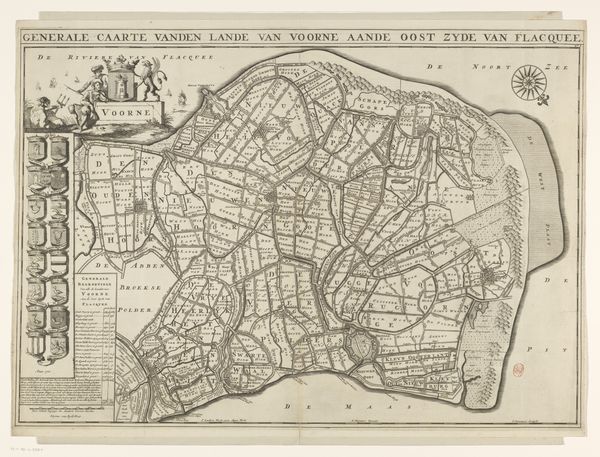
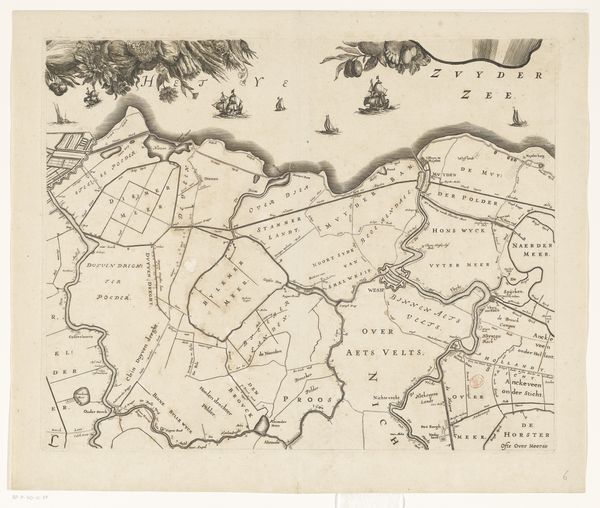
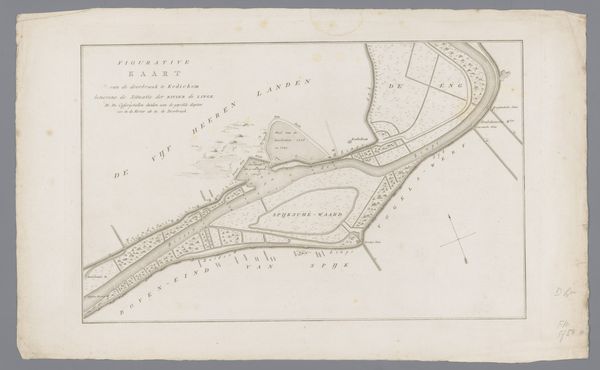
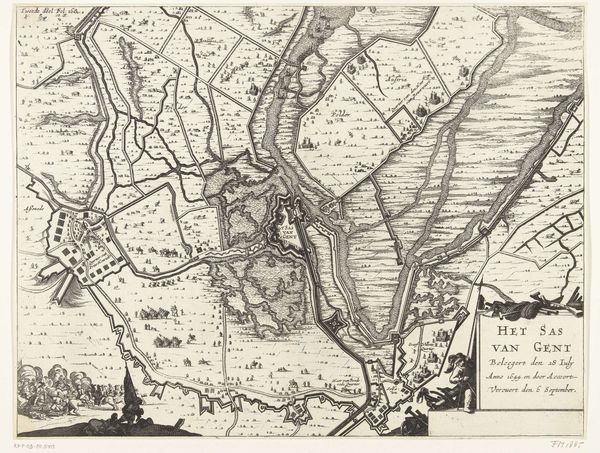
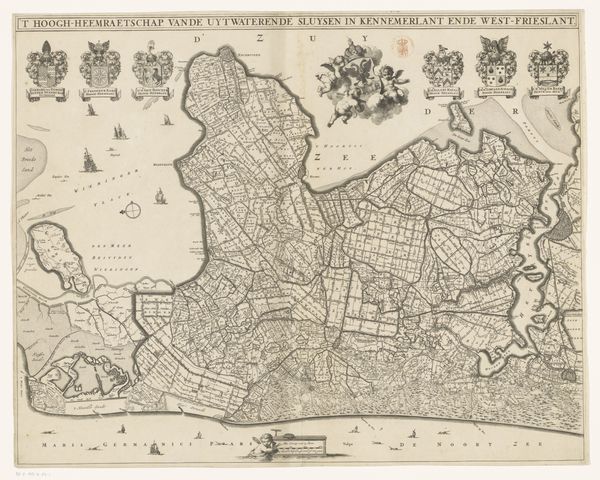
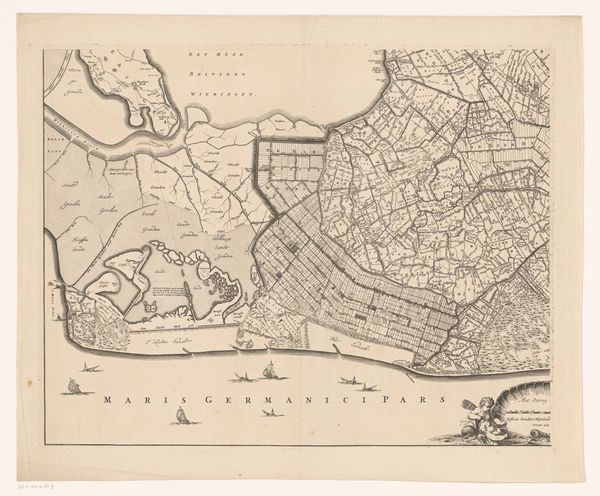
Curator: Let’s discuss this intriguing piece, an engraved map titled "Kaart van West-Voorne (Goeree)" by Jan Stemmers, dating from the early 18th century, currently residing here at the Rijksmuseum. It presents a detailed rendering of the island, West-Voorne. Editor: My initial impression is that this map, beyond its functional purpose, resonates deeply with a sense of ownership, almost like a family portrait of the land itself. The meticulous detail suggests great care. Curator: Maps from this era were frequently instruments of power. Note the elegant cartouches, the inclusion of the compass rose; these aren’t just navigational aids, but assertions of Dutch dominion and meticulous management of space and resources. The Golden Age witnessed the rise of Dutch cartography as a reflection of mercantile influence and global reach. Editor: Absolutely. And in that context, water takes center stage as an important image. Note Neptune with his trident dominating the bottom left, overseeing trade and defense? The abundance of symbolic iconography reinforces the prosperity derived from its coastal location. This isn't simply geographical data; it’s a statement of power made through imagery. Curator: Precisely. The etching process allowed for intricate linework, enabling the clear delineation of land parcels, settlements, and even forests. Each element emphasizes the extent of Dutch authority and infrastructural organization, displaying land division that shaped political control during this period. Editor: Looking closely, you can see how the symbolism elevates what could have been merely utilitarian. Those neatly organized fields within the island's perimeter offer visual testimony of human cultivation. Each tree, each pathway suggests continuity with nature and historical progress. Curator: It is indeed fascinating to consider how this image played a role in solidifying national identity and shaping public perception of Dutch power. Editor: Seeing how historical narrative blends seamlessly with graphic representation offers new ways to think about history!
Comments
No comments
Be the first to comment and join the conversation on the ultimate creative platform.
 Collect
 React
React Comment
More like this