drawing, pencil
#
portrait
#
pencil drawn
#
drawing
#
pencil sketch
#
pencil drawing
#
intimism
#
romanticism
#
pencil
#
portrait drawing
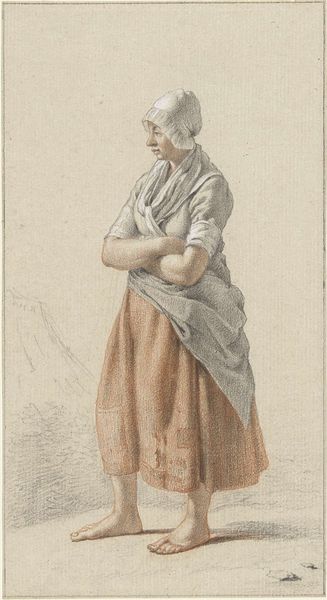
Dimensions: height 112 mm, width 75 mm
Copyright: Rijks Museum: Open Domain
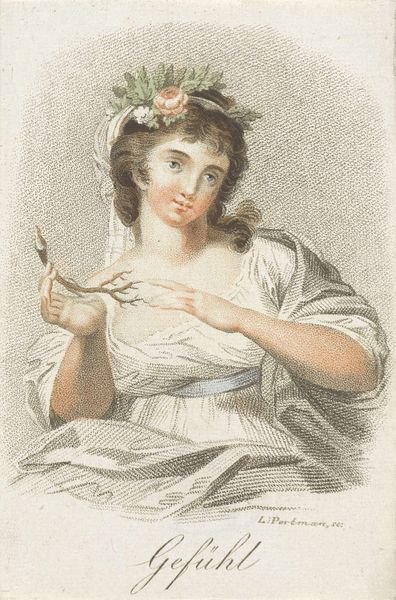
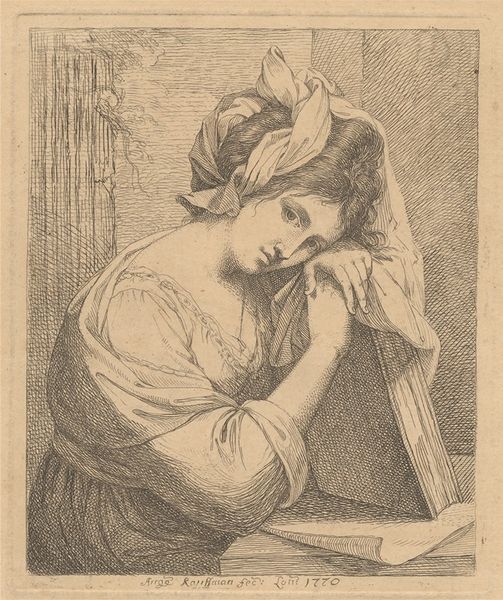
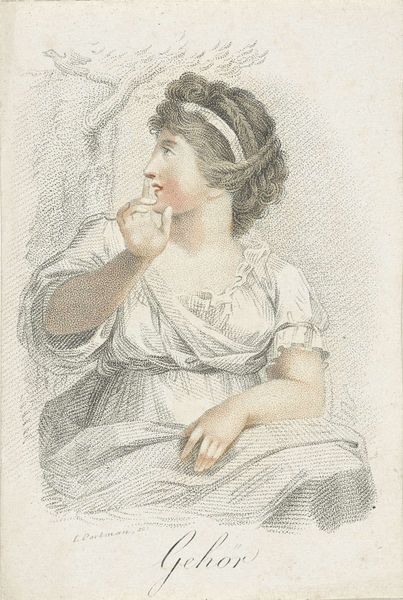
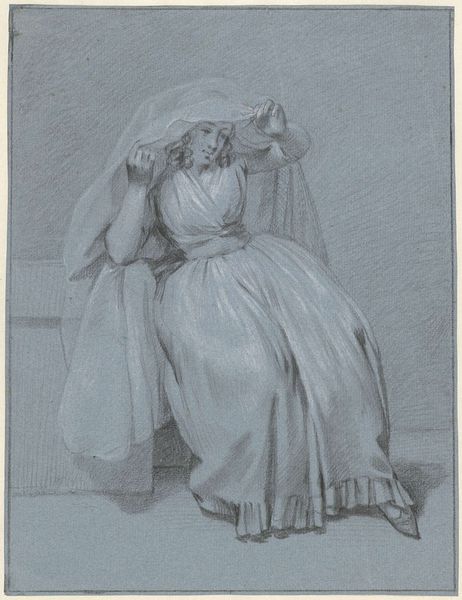
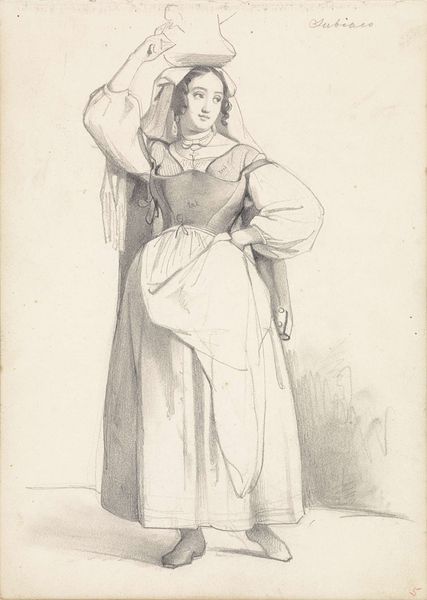
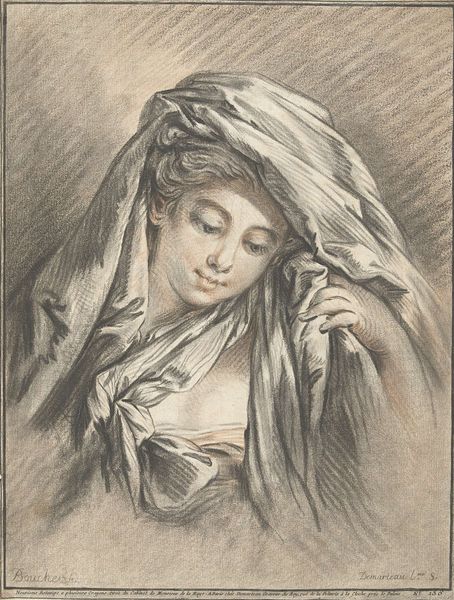
Curator: Ludwig Gottlieb Portman created this piece, titled “Gezicht,” sometime between 1787 and 1828. It's currently held here at the Rijksmuseum. What strikes you initially about it? Editor: I'm getting a strong sense of intimacy, you know? The delicate pencil lines, the way she’s adjusting her headscarf. It feels like a stolen moment. Almost as if she thinks she's unobserved. Curator: Precisely! That's a quality often associated with Romanticism, which this artwork leans into. We're drawn into this very private, almost secretive ritual of grooming. The mirror, of course, is central here—a potent symbol of self-reflection and perhaps vanity, but also of societal expectations placed on women. Editor: The headscarf itself adds a layer, doesn't it? Is it purely practical or is there something more? It feels almost theatrical. Is she veiled or unveiled? Curator: I'm inclined to think that its practical origins have perhaps taken on an element of exoticism. We need to recall Europe's fascination with Ottoman and North African cultures during this period. What's interesting to me, beyond this nod to another culture, is that her partially obscured face asks us to look closer. What is hidden becomes fascinating, right? Editor: Yes, the mystery invites our gaze, certainly. Also the choice to capture the subject in pencil sketch is such a bold choice. It highlights vulnerability, a study of both self and culture, rendered in the most fragile way. Curator: Very true! It highlights how beauty ideals of the day permeated even the most private moments. I wonder what her expectations might have been? Portman really prompts such questions, and makes one ask oneself what are some of the expectations placed on us? Editor: It’s more than just the pencil technique too; the Romantic undertones give it this feeling, a push-pull between external expectations and an inner, maybe conflicted self-image. It resonates. It also hints to me at a story untold, an unfolding drama of identity. Curator: And that, in essence, is why portraiture, and art in general, continues to move us! Thank you for adding some more layers for our visitors today! Editor: Anytime. It's always refreshing to view the classics under a new light!
Comments
No comments
Be the first to comment and join the conversation on the ultimate creative platform.
 Collect
 React
React Comment
More like this