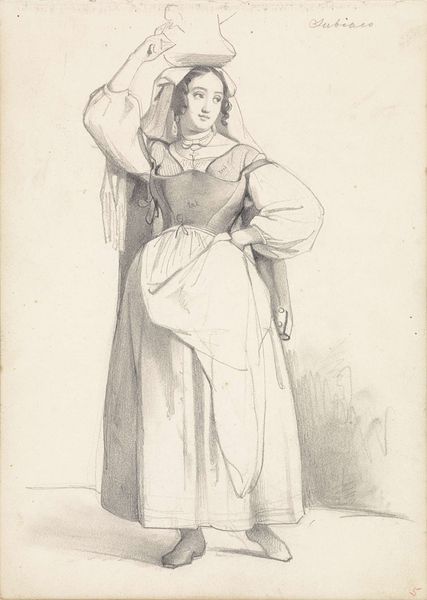
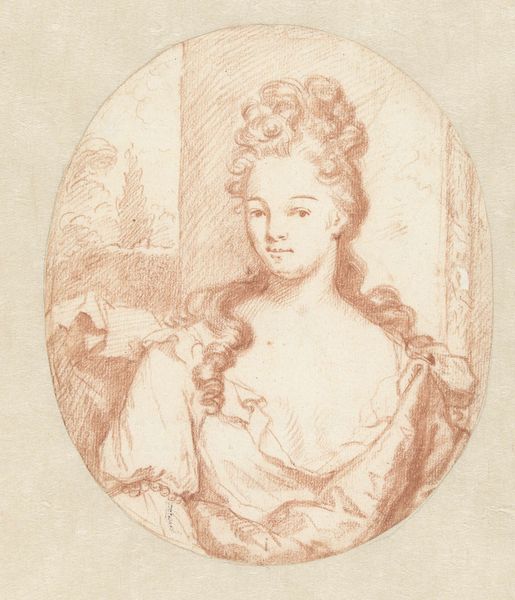
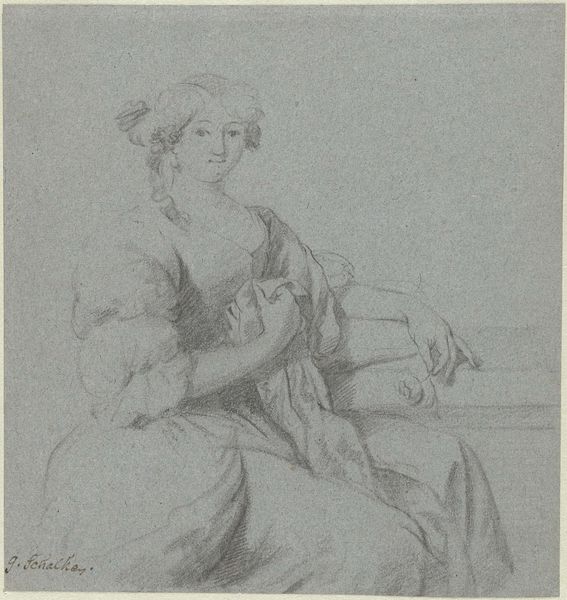
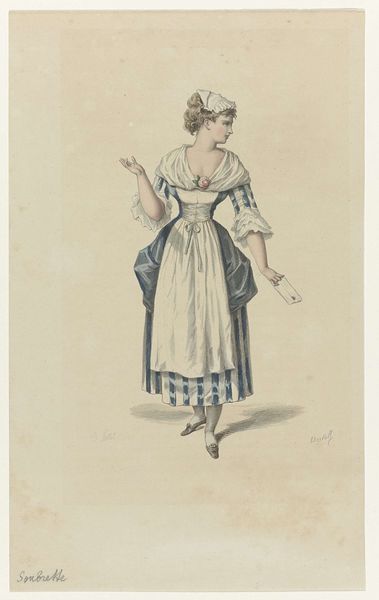
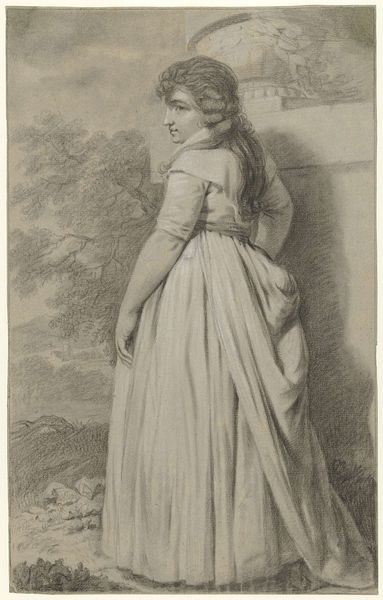
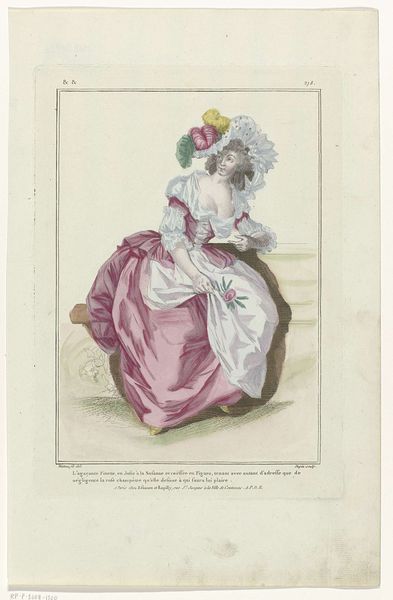
drawing, pencil
#
portrait
#
pencil drawn
#
drawing
#
figuration
#
pencil drawing
#
romanticism
#
pencil
#
portrait drawing
Dimensions: height 112 mm, width 75 mm
Copyright: Rijks Museum: Open Domain
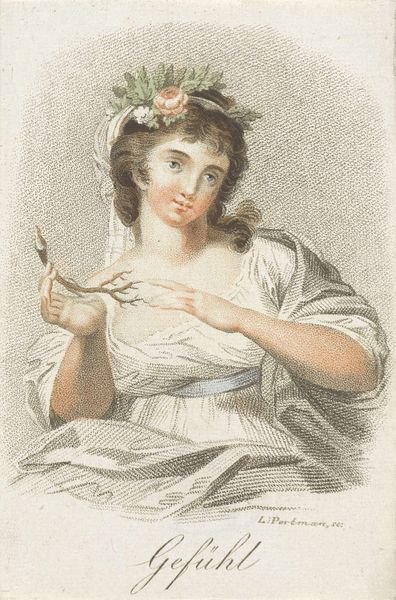
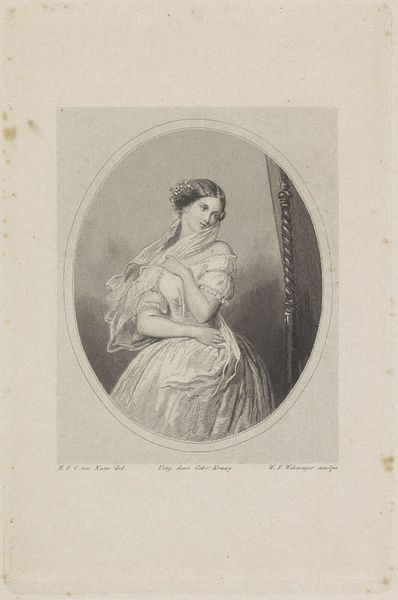
Ludwig Gottlieb Portman created 'Gehoor' using stipple engraving, a printmaking technique that relies on producing many tiny dots to build up areas of light and shadow. If you look closely, you can see how the entire image is composed of these minute marks, giving the figure a soft, almost dreamlike quality. This painstaking process demanded exceptional skill and patience from the engraver, and the result is an image with delicate tonal gradations. It is a labour-intensive process compared to other printmaking methods that rely on lines. During the late 18th and early 19th centuries, stipple engraving was a popular method for reproducing paintings and drawings, making art more accessible to a wider audience. The method allowed for the creation of multiple copies of an artwork, thus democratizing art ownership. Consider how Portman's choice of technique reflects both artistic skill and the social context of his time, where the rise of print culture was transforming access to images. By valuing these elements we move beyond mere appreciation of aesthetics and towards a more profound understanding of art history.
Comments
No comments
Be the first to comment and join the conversation on the ultimate creative platform.
 Collect
 React
React Comment
More like this