print, engraving
#
portrait
# print
#
figuration
#
romanticism
#
genre-painting
#
engraving
Dimensions: height 113 mm, width 75 mm
Copyright: Rijks Museum: Open Domain
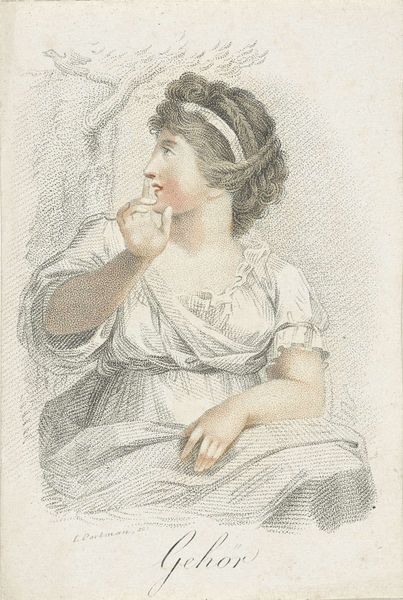
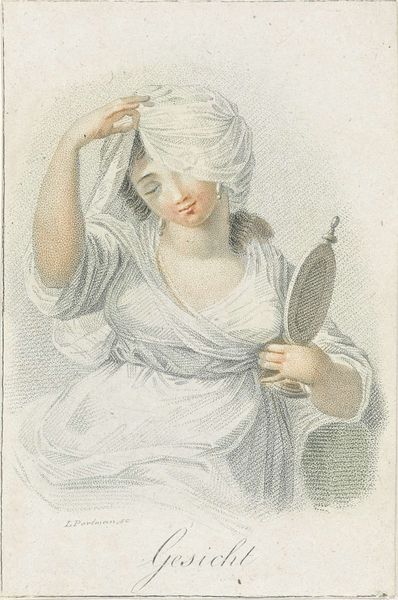
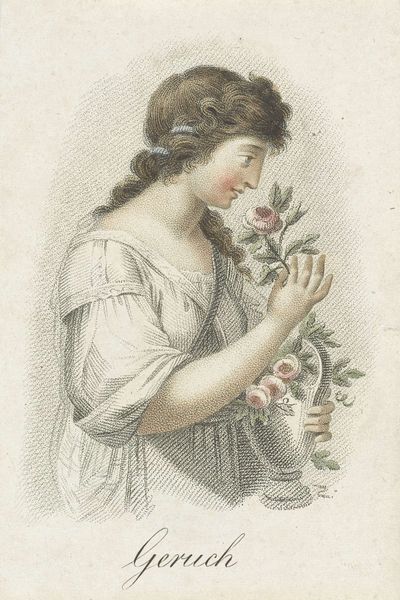
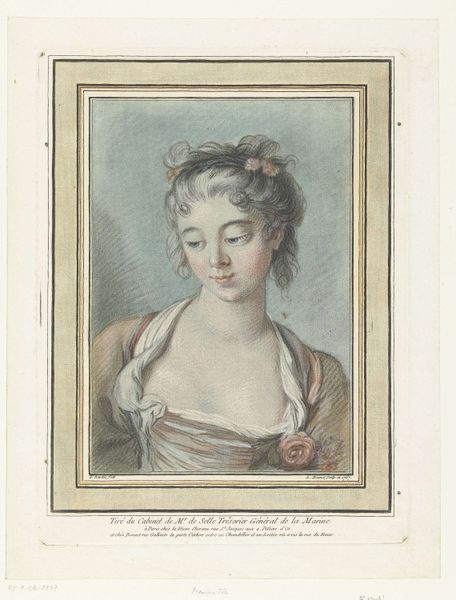
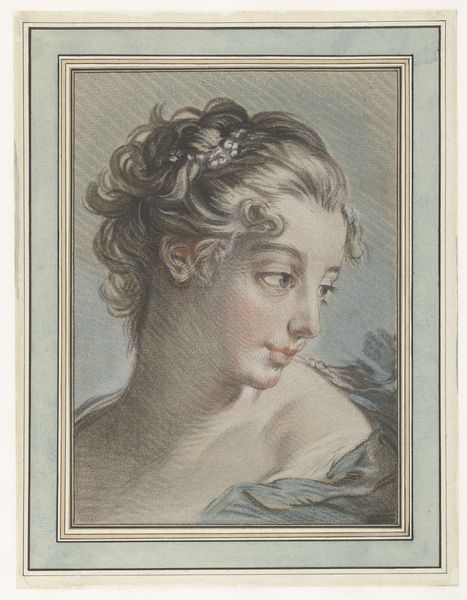
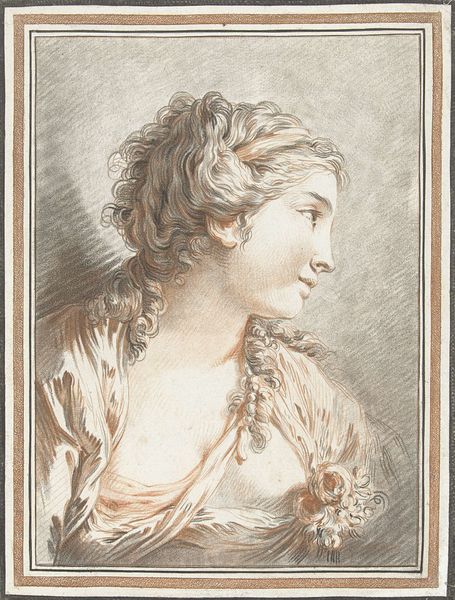
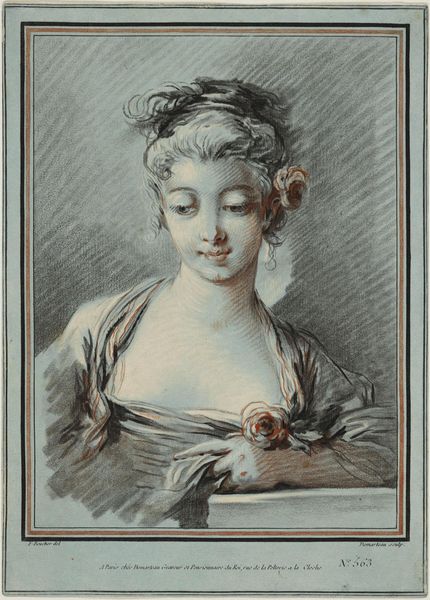
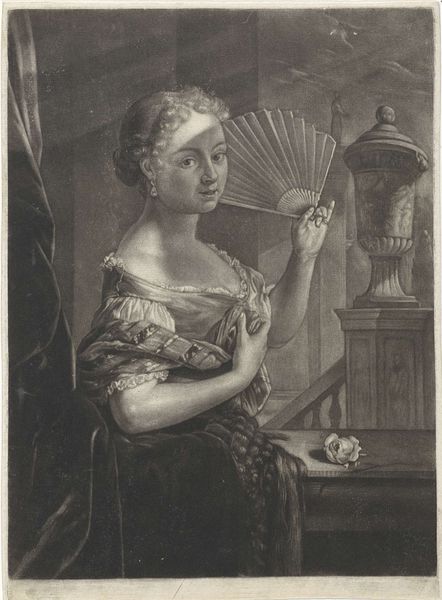
This is an etching by Ludwig Gottlieb Portman, made sometime in the late 18th or early 19th century. The central figure, adorned with a floral wreath, delicately holds a bare twig. This motif immediately calls to mind images of renewal and the cyclical nature of life, reminiscent of ancient fertility rituals and the rebirth myths. Consider the wreath—a symbol of victory and eternity since ancient Greece—juxtaposed with the barren twig, hinting at both the promise of spring and the stark reality of winter. This contrast echoes through art history, seen in depictions of Persephone's annual return from the underworld, or even in vanitas paintings where flowers bloom beside skulls. The twig itself, devoid of leaves, is a potent symbol. Perhaps it is a memento mori, a reminder of life's fragility, or a sign of hope for the coming spring. In psychological terms, this speaks to our collective memory, the subconscious understanding of nature's cycles imprinted on our minds. The emotional power lies in this tension, in the delicate balance between life and death, beauty and decay, forever captured in this timeless image.
Comments
No comments
Be the first to comment and join the conversation on the ultimate creative platform.
 Collect
 React
React Comment
More like this