drawing, print, paper, ink, engraving
#
drawing
#
pen drawing
#
dutch-golden-age
# print
#
pen illustration
#
pen sketch
#
paper
#
ink
#
pen-ink sketch
#
orientalism
#
genre-painting
#
engraving
Dimensions: height 422 mm, width 542 mm
Copyright: Rijks Museum: Open Domain
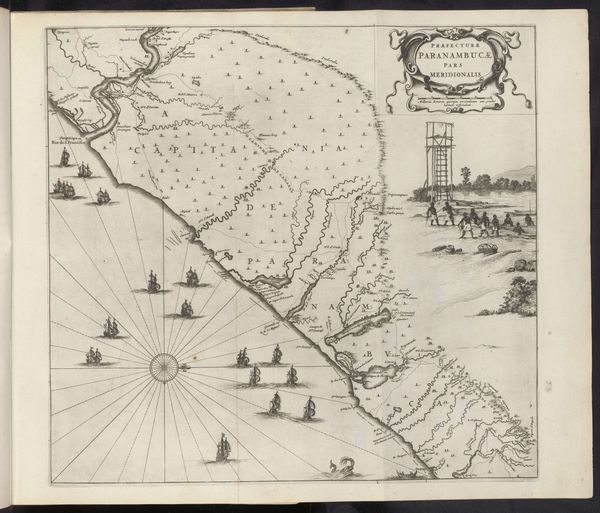
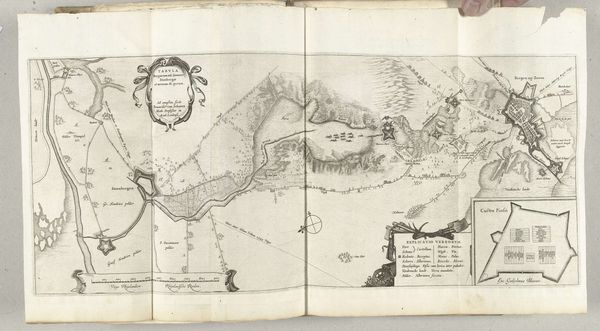
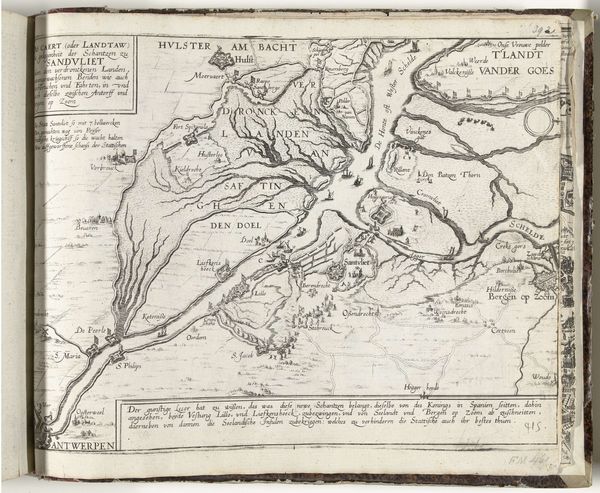
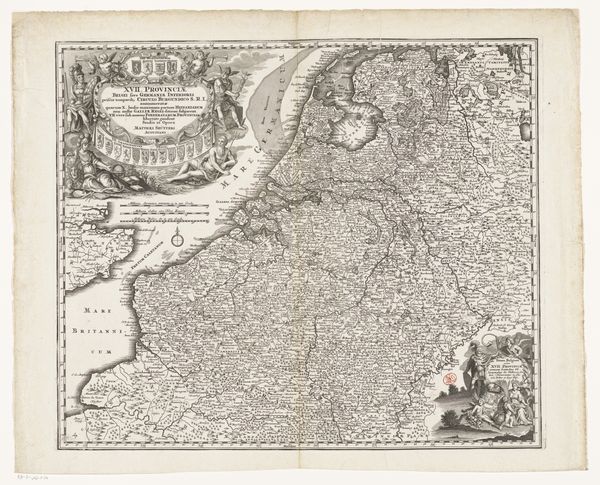
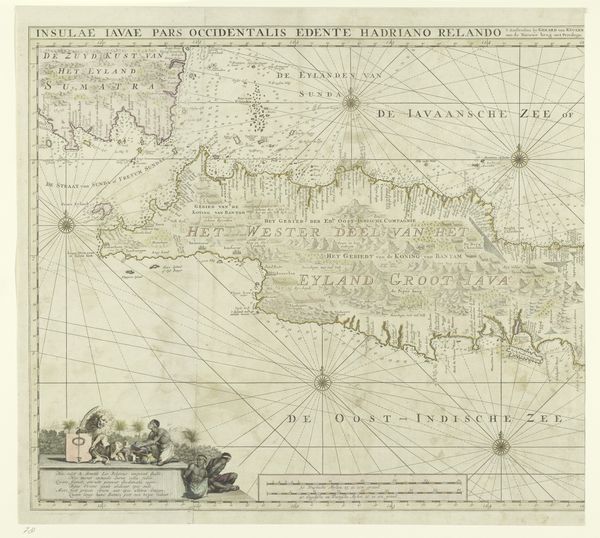
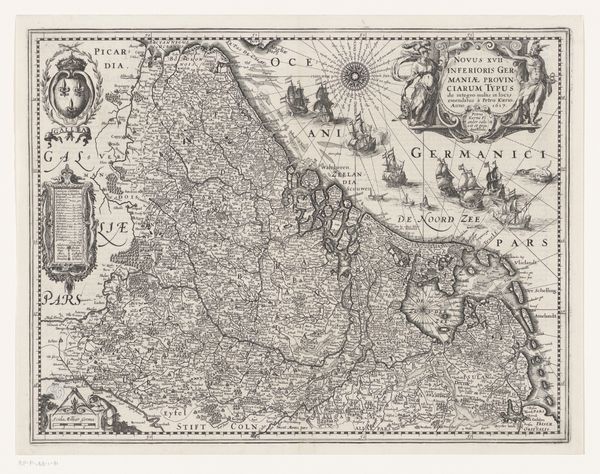
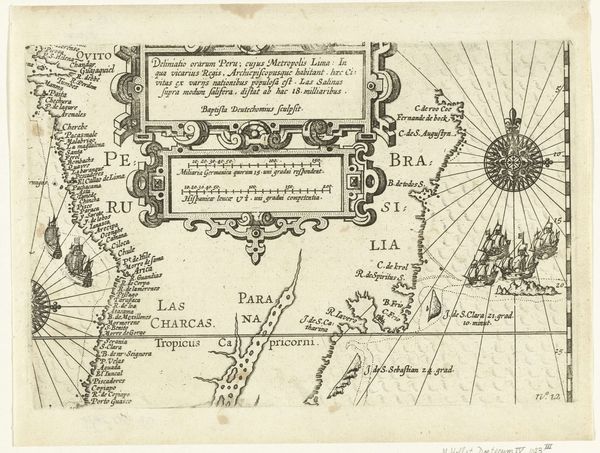
Curator: This map, rendered in ink on paper, is entitled "Kaart van de kust van Brazilië," dating from 1645 to 1647. Editor: There’s a stark elegance to its lines. The starkness speaks to precision but the images added almost anthropomorphize the region, as though making it into a character or figure to be understood on European terms. Curator: Indeed, maps weren’t purely objective documents; they actively shaped the colonizer's perceptions of colonized spaces, particularly during the Dutch Golden Age when the impetus for expanded global power was intimately tied to mercantilist ventures and the subjugation of Indigenous communities. Editor: Look at the top embellishments, this decorative garland filled with what look like exotic fruits, alongside the animals sketched inland. It presents nature, tamed but still brimming with its own power—this interplay creates tension. Curator: Absolutely. This map functions as an act of appropriation by symbolically domesticating the land; a way of reducing the threat of the unknown. It's about claiming authority by transforming lived spaces into knowable, controllable representations for external consumption. Editor: How do you see this applying in formalist terms, when one looks at design decisions and pictorial intent? Curator: When considering this engraving through a feminist lens, we can observe how seemingly benign visual choices subtly advance ideological ends that reinforced an idea that land can and should be possessed by dominant outside entities, with scant concern shown for those whose lived experience and indigenous rights were violated at that same moment. Editor: Fascinating. For me, even beyond context, the graphic quality—its linearity, its balance of empty and inscribed space—is immediately powerful and elegant, so a close consideration of the colonial backdrop is required to see past mere form. Curator: Precisely; and it serves as a potent reminder of how aesthetic appreciation often becomes complicated by underlying power dynamics woven into art’s very creation. Editor: So, while this print seduces aesthetically, one cannot, must not, dismiss its colonial legacy.
Comments
No comments
Be the first to comment and join the conversation on the ultimate creative platform.
 Collect
 React
React Comment
More like this