About this artwork
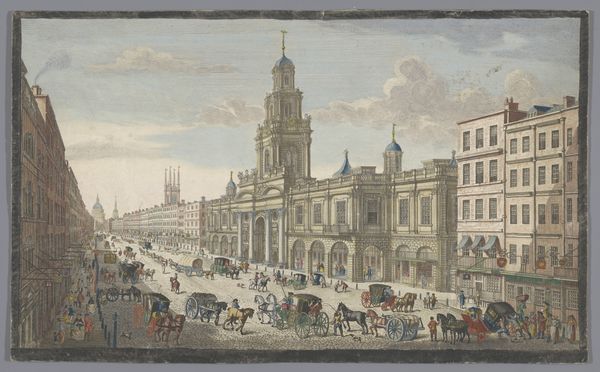
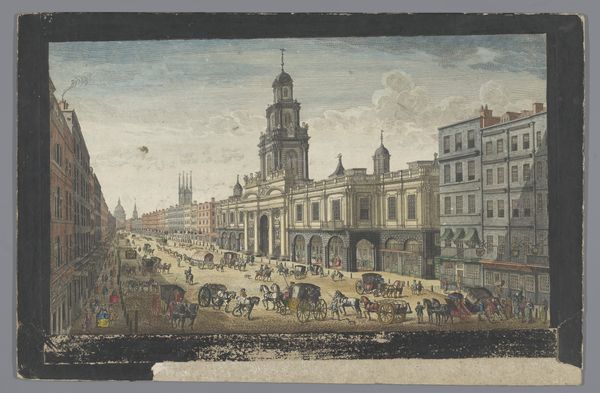
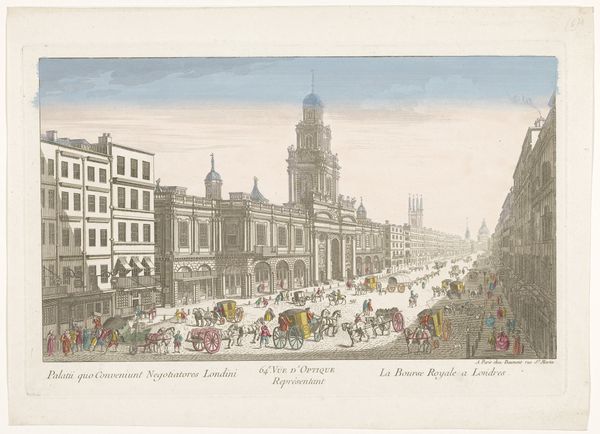
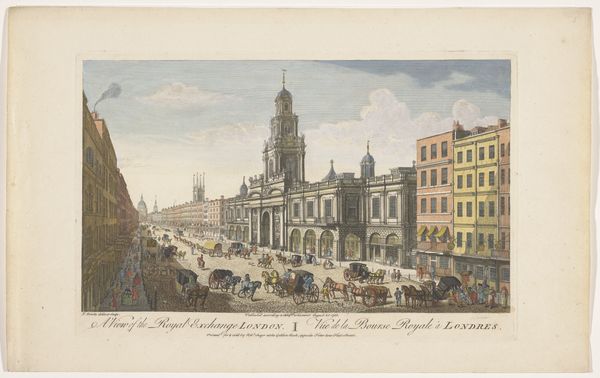
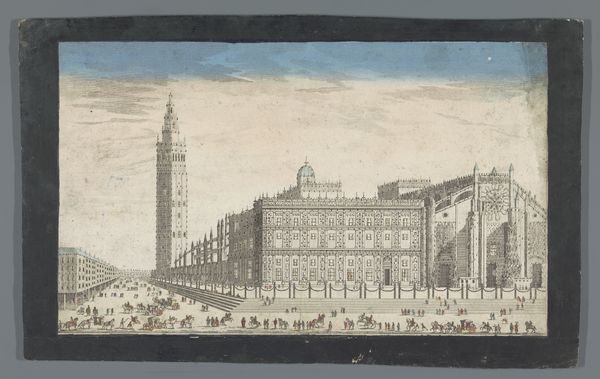
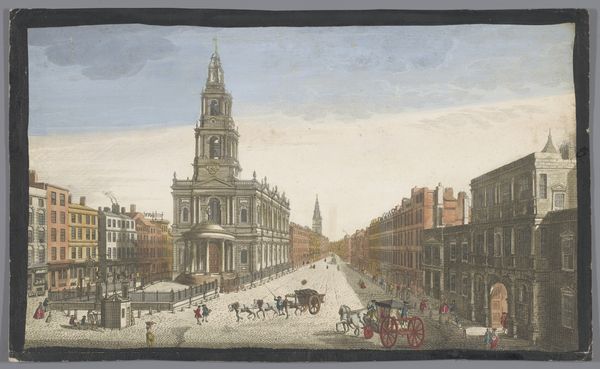
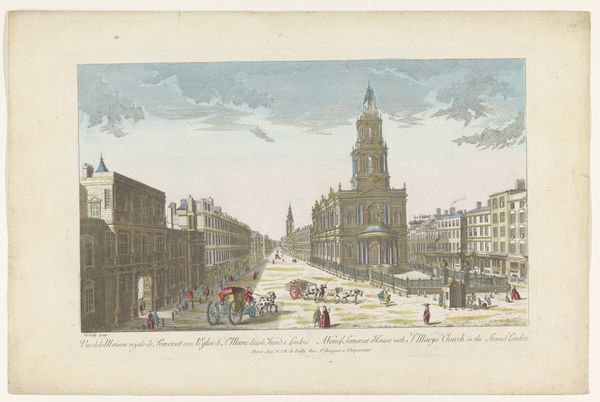
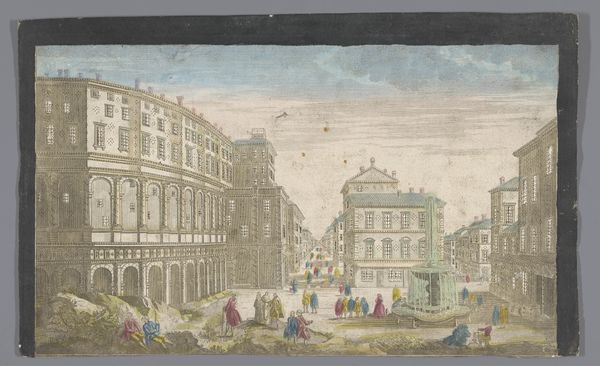
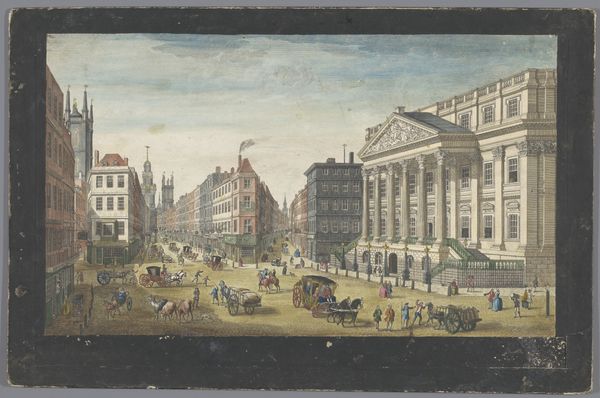
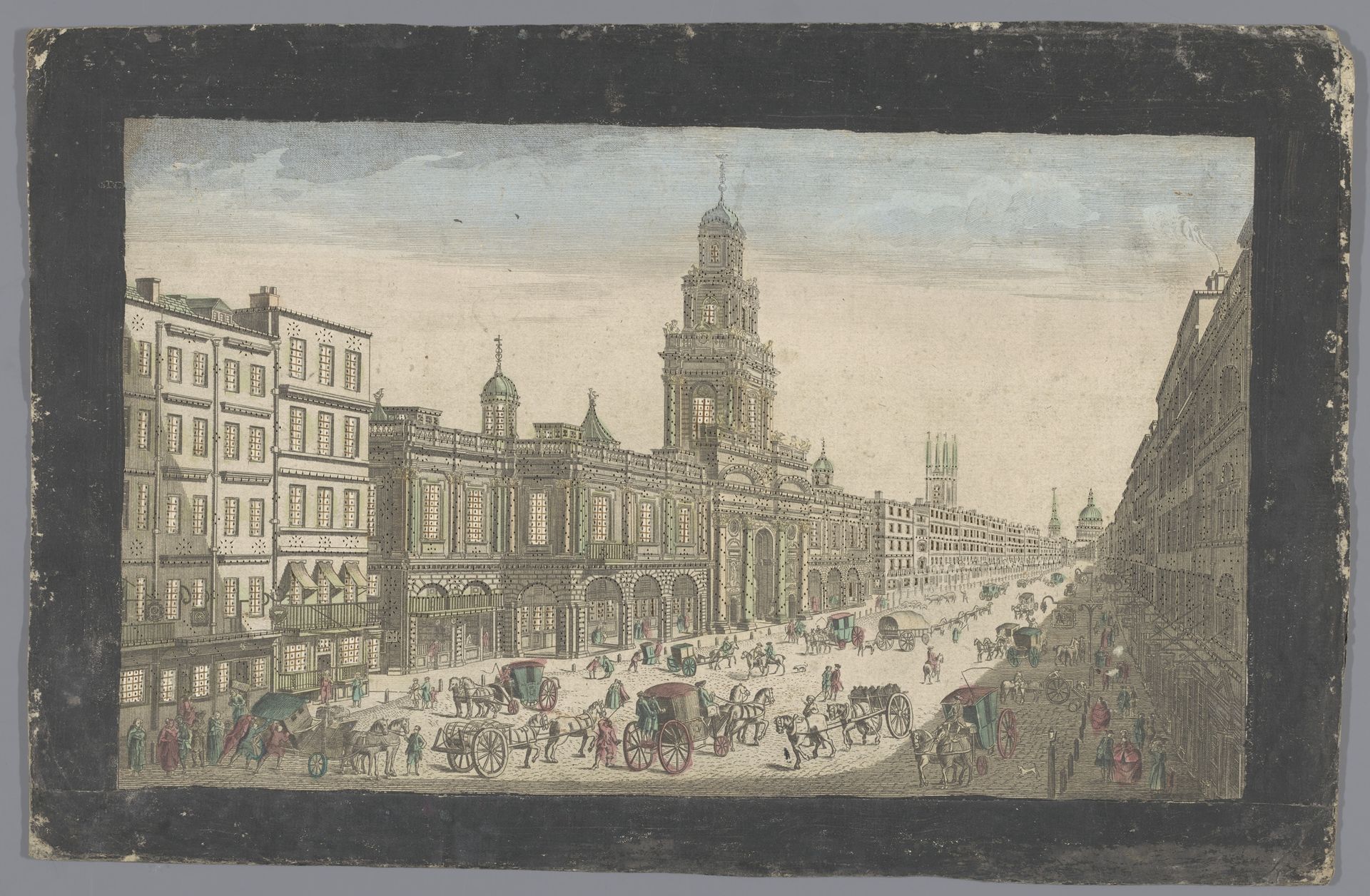
Jean-François Daumont created this print of the Royal Exchange in London, a place for trading stocks and commodities, sometime before his death in 1775. Prints like this one offered a window into the world. They played a crucial role in shaping perceptions of national identity and economic power. The Royal Exchange, prominently displayed, symbolized London's central role in global commerce and the burgeoning wealth of the British Empire. Yet, if we look closely, what isn’t shown here is just as telling. The wealth that made such grand buildings possible was built on colonial exploitation and the labor of enslaved people. Daumont’s print invites us to reflect on how economic prosperity is visualized and whose stories are included. It reminds us to consider the complex narratives behind seemingly straightforward depictions of urban life. What emotional responses does this scene evoke in you, and how does it connect to our present-day understanding of global commerce and its impact?
Gezicht op de Royal Exchange te Londen 1745 - 1775

Jean-François Daumont
1775Location
RijksmuseumArtwork details
- Medium
- drawing, coloured-pencil, pencil
- Dimensions
- height 291 mm, width 449 mm
- Location
- Rijksmuseum
- Copyright
- Rijks Museum: Open Domain
Tags
drawing
coloured-pencil
coloured pencil
pencil
cityscape
genre-painting
watercolor
rococo
Comments
No comments
About this artwork
Jean-François Daumont created this print of the Royal Exchange in London, a place for trading stocks and commodities, sometime before his death in 1775. Prints like this one offered a window into the world. They played a crucial role in shaping perceptions of national identity and economic power. The Royal Exchange, prominently displayed, symbolized London's central role in global commerce and the burgeoning wealth of the British Empire. Yet, if we look closely, what isn’t shown here is just as telling. The wealth that made such grand buildings possible was built on colonial exploitation and the labor of enslaved people. Daumont’s print invites us to reflect on how economic prosperity is visualized and whose stories are included. It reminds us to consider the complex narratives behind seemingly straightforward depictions of urban life. What emotional responses does this scene evoke in you, and how does it connect to our present-day understanding of global commerce and its impact?
Comments
No comments