About this artwork
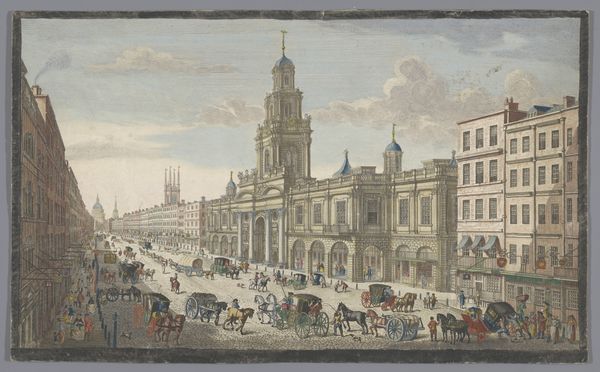
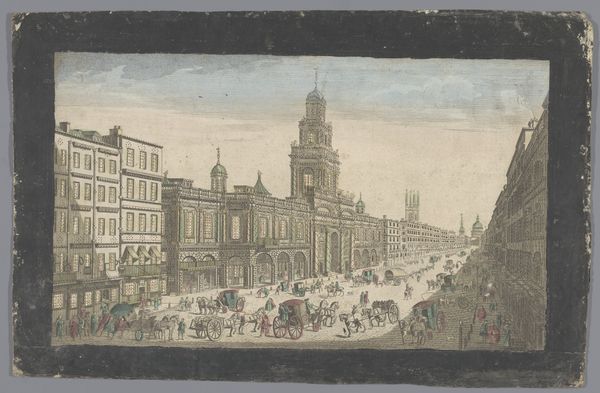
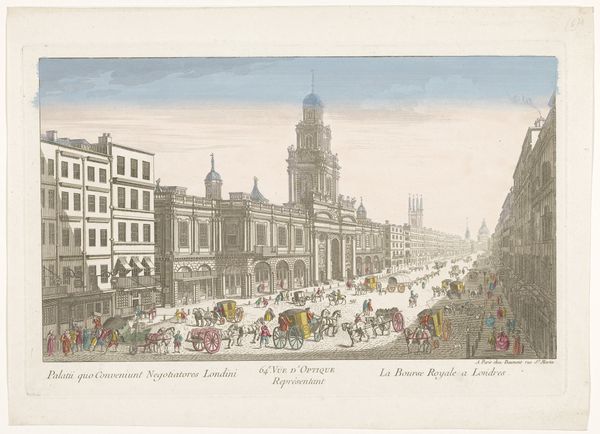
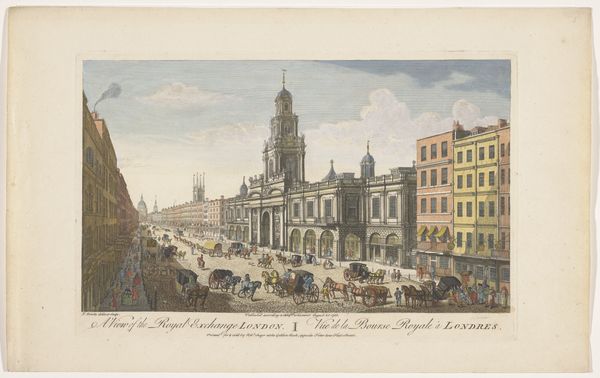
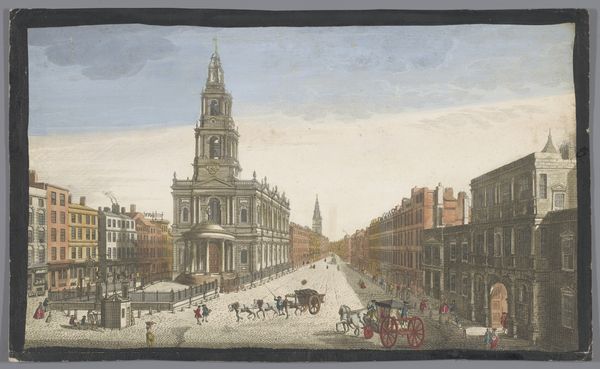
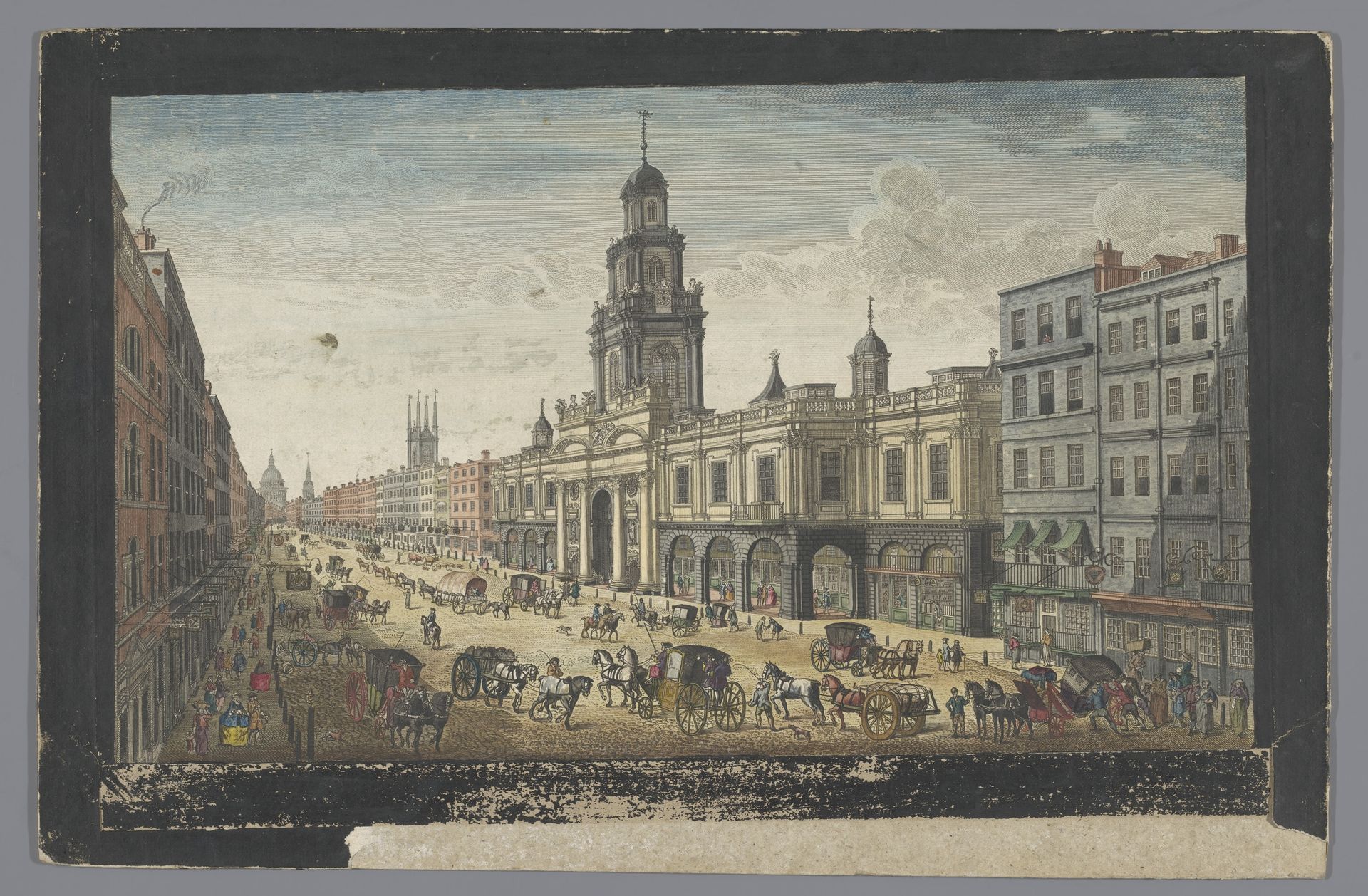
Editor: This mixed media piece, likely from between 1751 and 1758, captures "A View of the Royal Exchange in London" by Robert Sayer. The delicate watercolour and etching feel quite formal. What historical context shaped a scene like this? Curator: Consider London's rapid growth during that era. Commercial expansion fueled not just the city's physical space, as depicted here, but also its social hierarchies. Notice how the Royal Exchange, as a locus of economic activity, dominates the composition. Does this idealize or critique London’s obsession with trade? Editor: I hadn't thought about it as either idealized or critical, just…presenting. But focusing on the Exchange itself, its architectural grandeur seems to represent the power of commerce. Is the "genre painting" tag accurate; are the carriages and people simply staffage? Curator: Genre painting captures everyday life. Here, it's less about individuals and more about a collective portrait of a society structured around mercantile exchange. The careful arrangement of carriages, the figures almost blurring together—doesn’t that convey a sense of regulated activity, perhaps a reflection of emerging economic theories and the institutionalization of trade? Editor: So the artwork documents a shift, embedding economic policy in how Londoners perceived their own city. I now notice how the image is ordered but lacks strong personality, reflecting possibly neoclassical principles. Curator: Precisely. It’s a compelling snapshot, revealing the ambition and emerging social structures of 18th-century London and the artist's relationship to them. Editor: It’s been valuable thinking about how commercial structures were embodied in city views of this era!
Gezicht op de Royal Exchange te Londen
Possibly 1751 - 1758

Robert Sayer
1725 - 1794Location
RijksmuseumArtwork details
- Medium
- drawing, etching, watercolor
- Dimensions
- height 289 mm, width 444 mm
- Location
- Rijksmuseum
- Copyright
- Rijks Museum: Open Domain
Tags
drawing
neoclacissism
water colours
etching
watercolor
coloured pencil
cityscape
genre-painting
mixed media
watercolor
Comments
Be the first to share your thoughts about this work.
About this artwork
Editor: This mixed media piece, likely from between 1751 and 1758, captures "A View of the Royal Exchange in London" by Robert Sayer. The delicate watercolour and etching feel quite formal. What historical context shaped a scene like this? Curator: Consider London's rapid growth during that era. Commercial expansion fueled not just the city's physical space, as depicted here, but also its social hierarchies. Notice how the Royal Exchange, as a locus of economic activity, dominates the composition. Does this idealize or critique London’s obsession with trade? Editor: I hadn't thought about it as either idealized or critical, just…presenting. But focusing on the Exchange itself, its architectural grandeur seems to represent the power of commerce. Is the "genre painting" tag accurate; are the carriages and people simply staffage? Curator: Genre painting captures everyday life. Here, it's less about individuals and more about a collective portrait of a society structured around mercantile exchange. The careful arrangement of carriages, the figures almost blurring together—doesn’t that convey a sense of regulated activity, perhaps a reflection of emerging economic theories and the institutionalization of trade? Editor: So the artwork documents a shift, embedding economic policy in how Londoners perceived their own city. I now notice how the image is ordered but lacks strong personality, reflecting possibly neoclassical principles. Curator: Precisely. It’s a compelling snapshot, revealing the ambition and emerging social structures of 18th-century London and the artist's relationship to them. Editor: It’s been valuable thinking about how commercial structures were embodied in city views of this era!
Comments
Be the first to share your thoughts about this work.