About this artwork
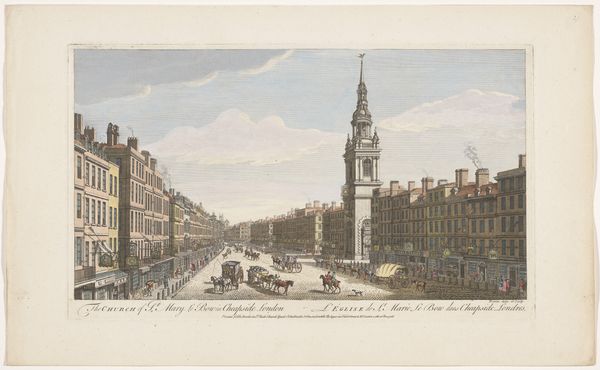
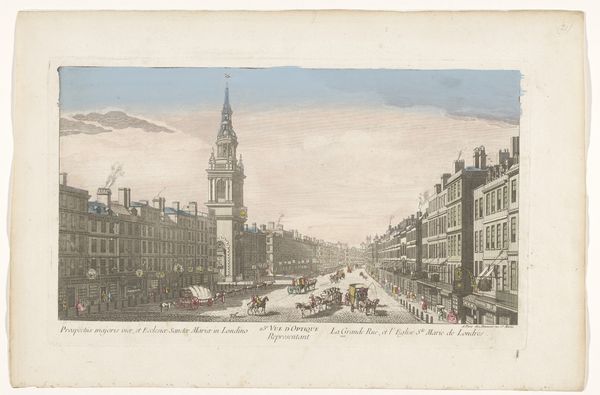
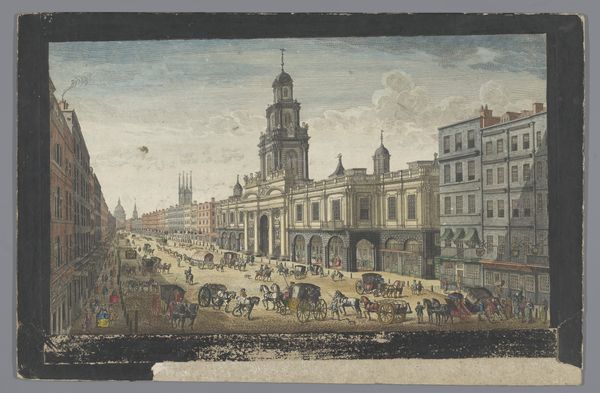
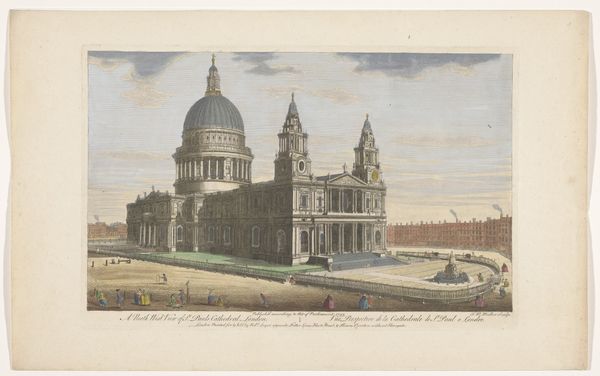
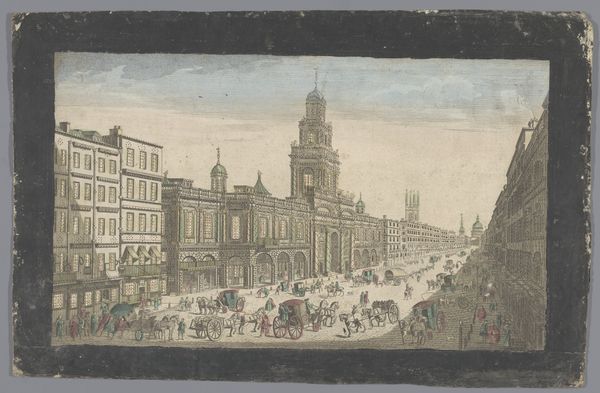
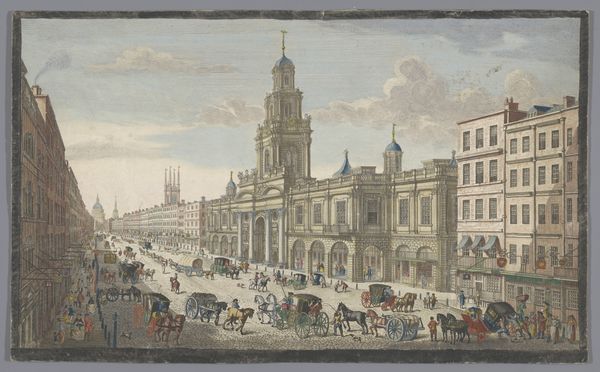
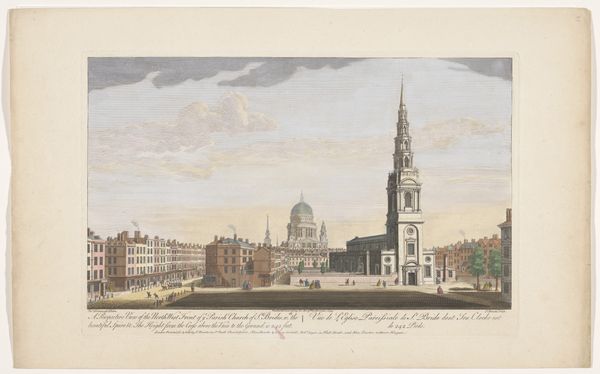
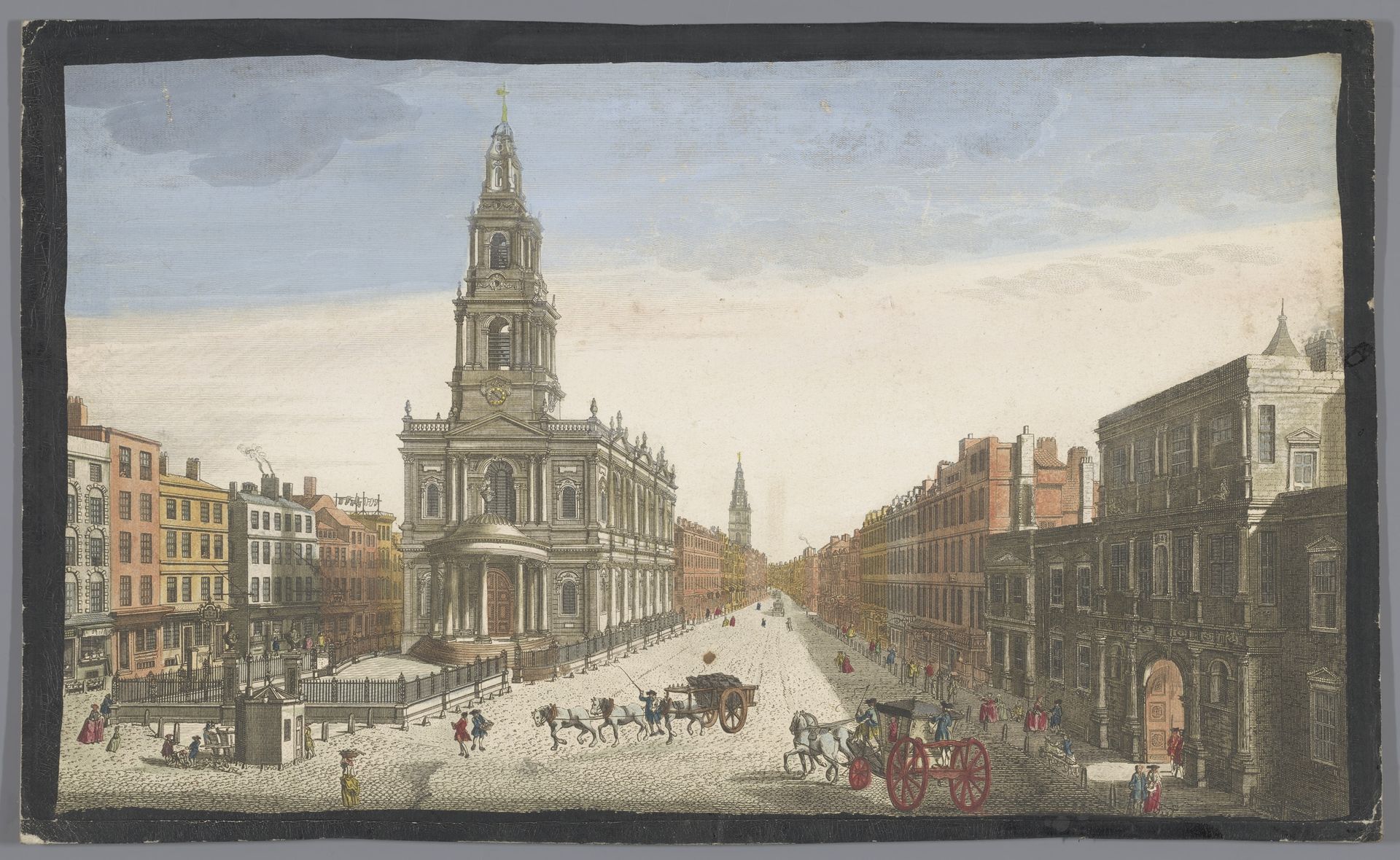
Robert Sayer's print depicts London's Somerset House and Saint Mary-le-Strand Church, rendered with etching and engraving techniques. The image begins with a metal plate, likely copper, where the design is etched with acid, or incised with a burin. Ink is then applied, and the plate pressed onto paper. The final coloring, added by hand, softens the architectural rigor. The printmaking process, crucial to understanding this artwork, involves division of labor. Sayer, as publisher, likely employed skilled craftsmen. This print isn't just an image; it’s a product of 18th-century capitalism, made for mass consumption. Each line, each shade, represents labor, skill, and economic exchange. By appreciating this, we move beyond aesthetics to the socio-economic forces shaping our visual world.
Gezicht op Somerset House en de kerk Saint Mary-le-Strand te Londen 1753

Robert Sayer
1725 - 1794Location
RijksmuseumArtwork details
- Medium
- drawing, watercolor
- Dimensions
- height 247 mm, width 408 mm
- Location
- Rijksmuseum
- Copyright
- Rijks Museum: Open Domain
Tags
drawing
neoclacissism
watercolor
coloured pencil
cityscape
Comments
No comments
About this artwork
Robert Sayer's print depicts London's Somerset House and Saint Mary-le-Strand Church, rendered with etching and engraving techniques. The image begins with a metal plate, likely copper, where the design is etched with acid, or incised with a burin. Ink is then applied, and the plate pressed onto paper. The final coloring, added by hand, softens the architectural rigor. The printmaking process, crucial to understanding this artwork, involves division of labor. Sayer, as publisher, likely employed skilled craftsmen. This print isn't just an image; it’s a product of 18th-century capitalism, made for mass consumption. Each line, each shade, represents labor, skill, and economic exchange. By appreciating this, we move beyond aesthetics to the socio-economic forces shaping our visual world.
Comments
No comments