About this artwork
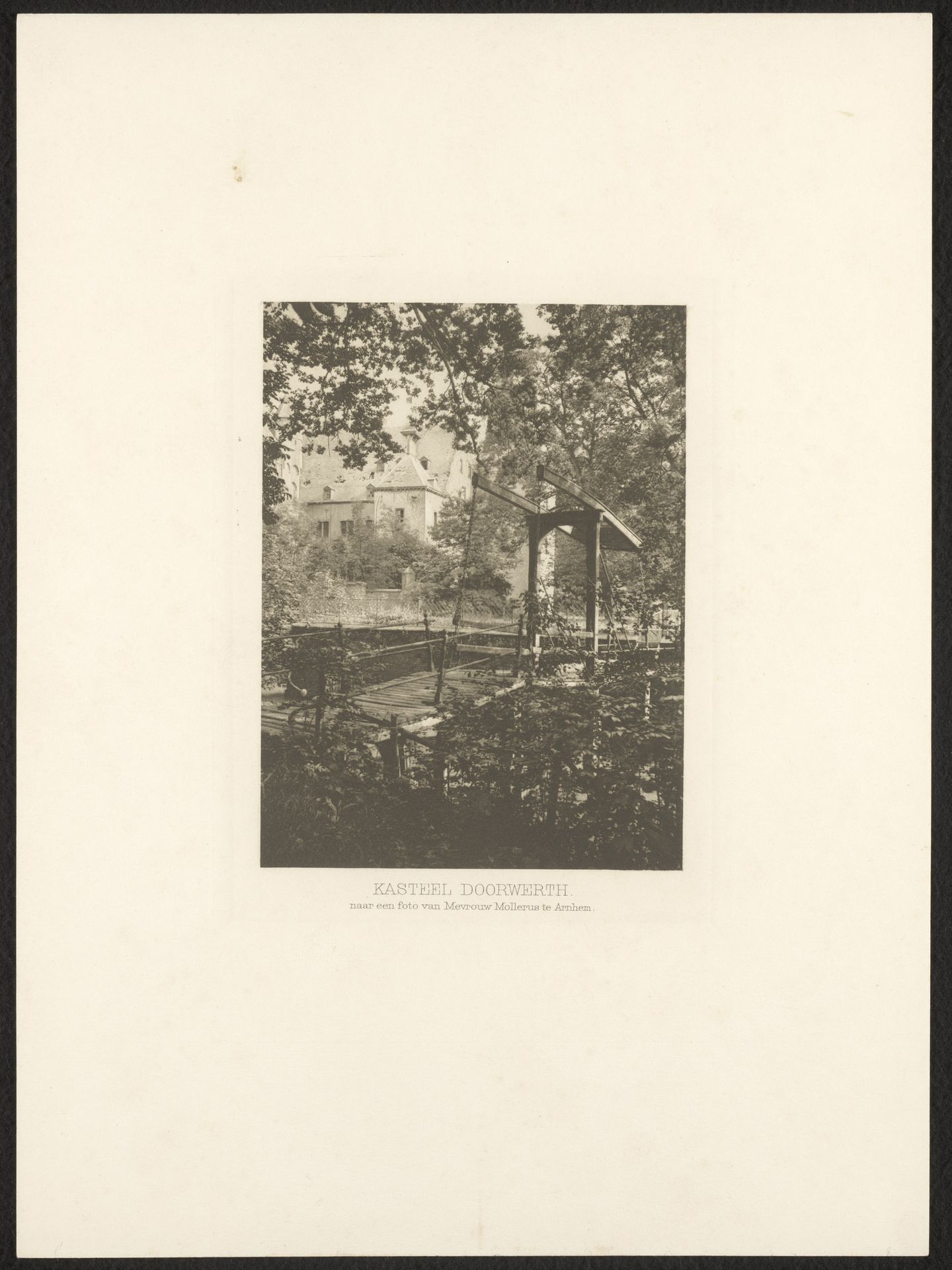
Curator: "Ophaalbrug bij Kasteel Doorwerth" or, "Drawbridge at Doorwerth Castle" is the title of this gelatin-silver print. The photograph dates from before 1905 and is attributed to Mollerus. What's your first impression of it? Editor: There’s something very dreamlike about it, almost ghostly. The tones are so muted, it's as if the scene is viewed through time itself, making the familiar subject rather melancholic. Curator: The softness contributes to that mood, I think. Mollerus seems to be consciously referencing the aesthetics of pictorialism, favoring atmosphere over sharp detail. Look at how the trees are rendered; they frame the castle in this almost protective embrace. Editor: And the castle itself isn’t quite the focal point, is it? The drawbridge apparatus seems almost centered, like a symbol – maybe the link between two worlds, the mundane and the monumental. It feels as though that axis creates an invitation, albeit a rather faded one, to explore. Curator: Perhaps it speaks to the changing function of castles at the time. No longer purely defensive structures, they become relics of a feudal past, attracting visitors. The bridge itself represents the crossing, both physical and temporal, into that history. Notice how Mollerus allows for significant negative space; this adds to the contemplative feeling, giving us room to consider our relationship to what came before. Editor: That's astute. There's also the curious effect of the light. Everything appears softly illuminated, which elevates the entire scene. It makes one ponder about collective memory in the transition from a very visible landmark as a testament to a more discreetly preserved idea, almost romantic. Curator: I concur, that light almost seems to cloak the scene in the soft hues of memory. This romantic pictorialist interpretation prompts reflection on our ongoing dialogues with history. Editor: Absolutely, and that interaction enriches our awareness of its ongoing influence on the present.

Artwork details
- Medium
- photography, gelatin-silver-print
- Dimensions
- height 154 mm, width 115 mm
- Copyright
- Rijks Museum: Open Domain
Tags
Comments
Share your thoughts
About this artwork
Curator: "Ophaalbrug bij Kasteel Doorwerth" or, "Drawbridge at Doorwerth Castle" is the title of this gelatin-silver print. The photograph dates from before 1905 and is attributed to Mollerus. What's your first impression of it? Editor: There’s something very dreamlike about it, almost ghostly. The tones are so muted, it's as if the scene is viewed through time itself, making the familiar subject rather melancholic. Curator: The softness contributes to that mood, I think. Mollerus seems to be consciously referencing the aesthetics of pictorialism, favoring atmosphere over sharp detail. Look at how the trees are rendered; they frame the castle in this almost protective embrace. Editor: And the castle itself isn’t quite the focal point, is it? The drawbridge apparatus seems almost centered, like a symbol – maybe the link between two worlds, the mundane and the monumental. It feels as though that axis creates an invitation, albeit a rather faded one, to explore. Curator: Perhaps it speaks to the changing function of castles at the time. No longer purely defensive structures, they become relics of a feudal past, attracting visitors. The bridge itself represents the crossing, both physical and temporal, into that history. Notice how Mollerus allows for significant negative space; this adds to the contemplative feeling, giving us room to consider our relationship to what came before. Editor: That's astute. There's also the curious effect of the light. Everything appears softly illuminated, which elevates the entire scene. It makes one ponder about collective memory in the transition from a very visible landmark as a testament to a more discreetly preserved idea, almost romantic. Curator: I concur, that light almost seems to cloak the scene in the soft hues of memory. This romantic pictorialist interpretation prompts reflection on our ongoing dialogues with history. Editor: Absolutely, and that interaction enriches our awareness of its ongoing influence on the present.
Comments
Share your thoughts