About this artwork
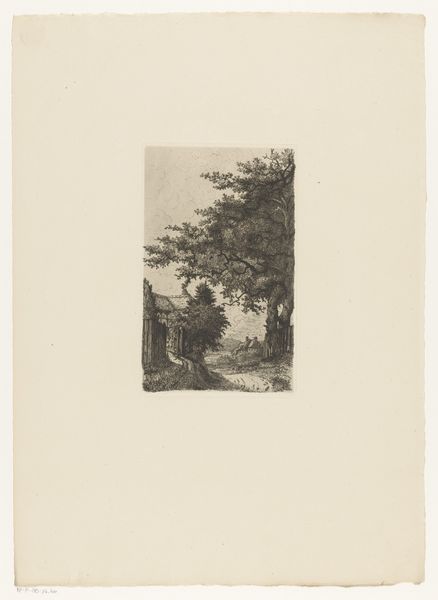
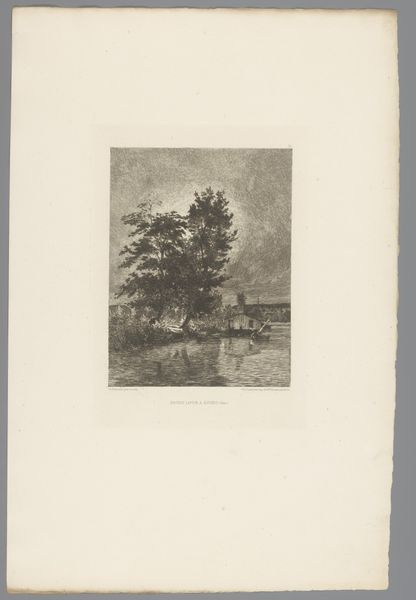
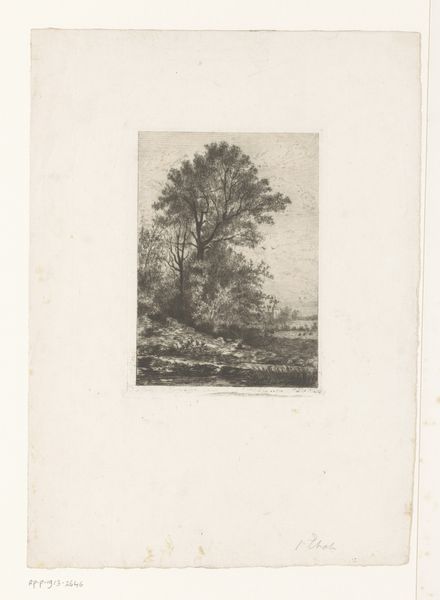
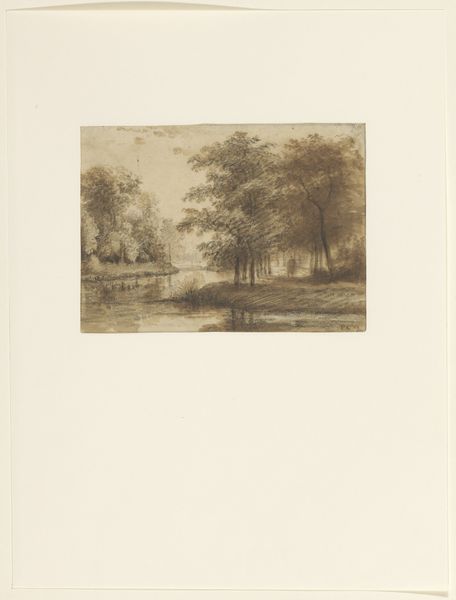
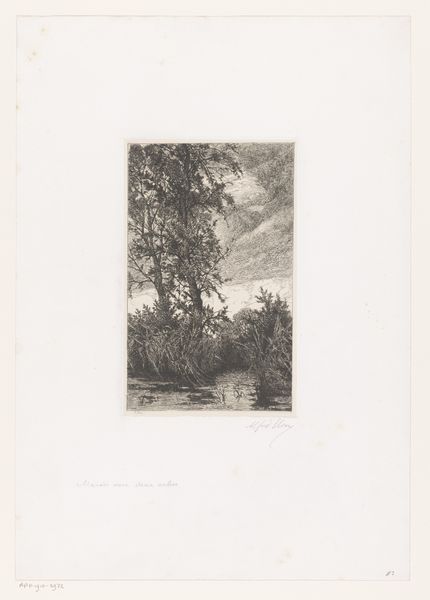
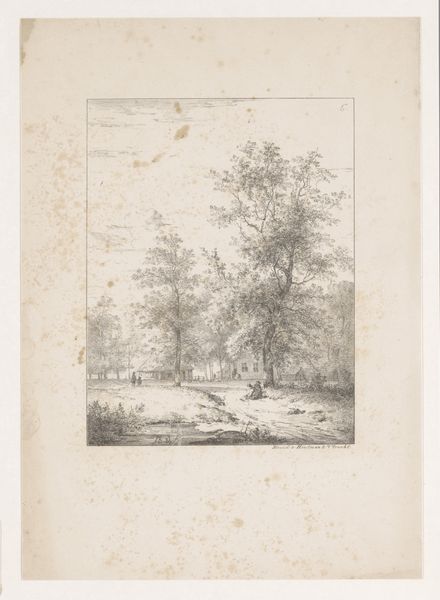
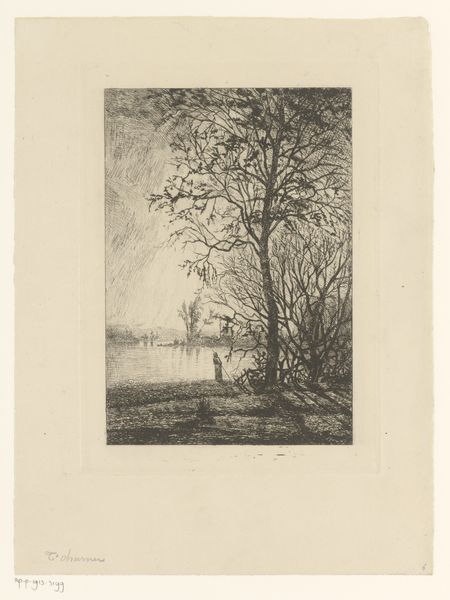
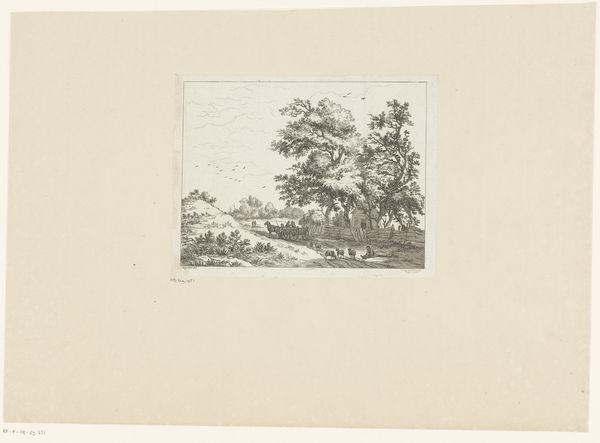
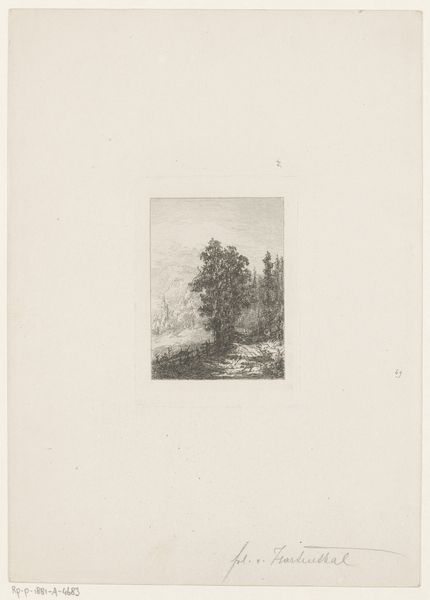
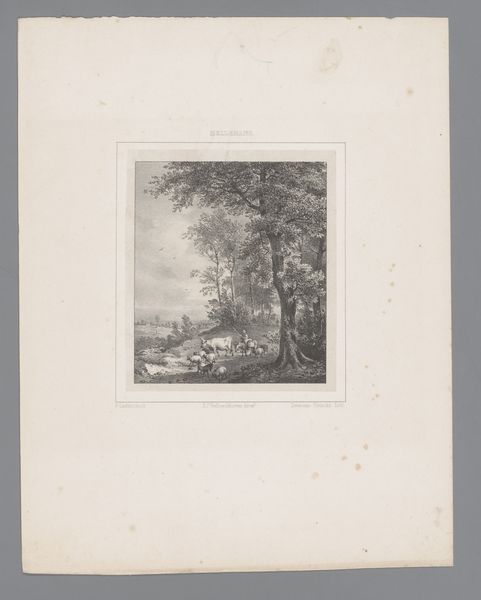
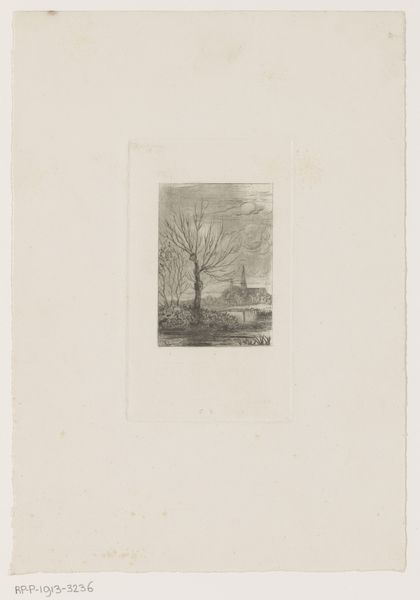
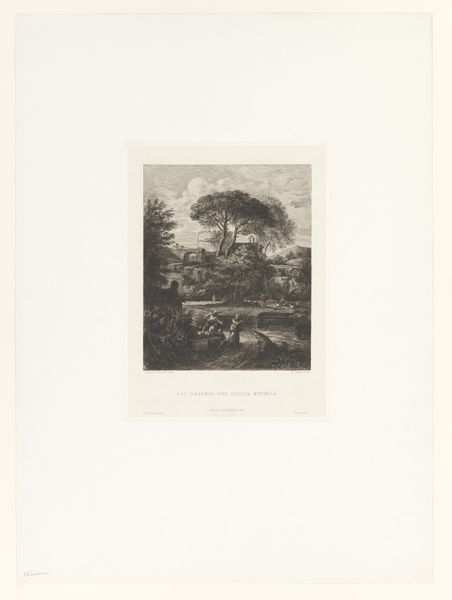
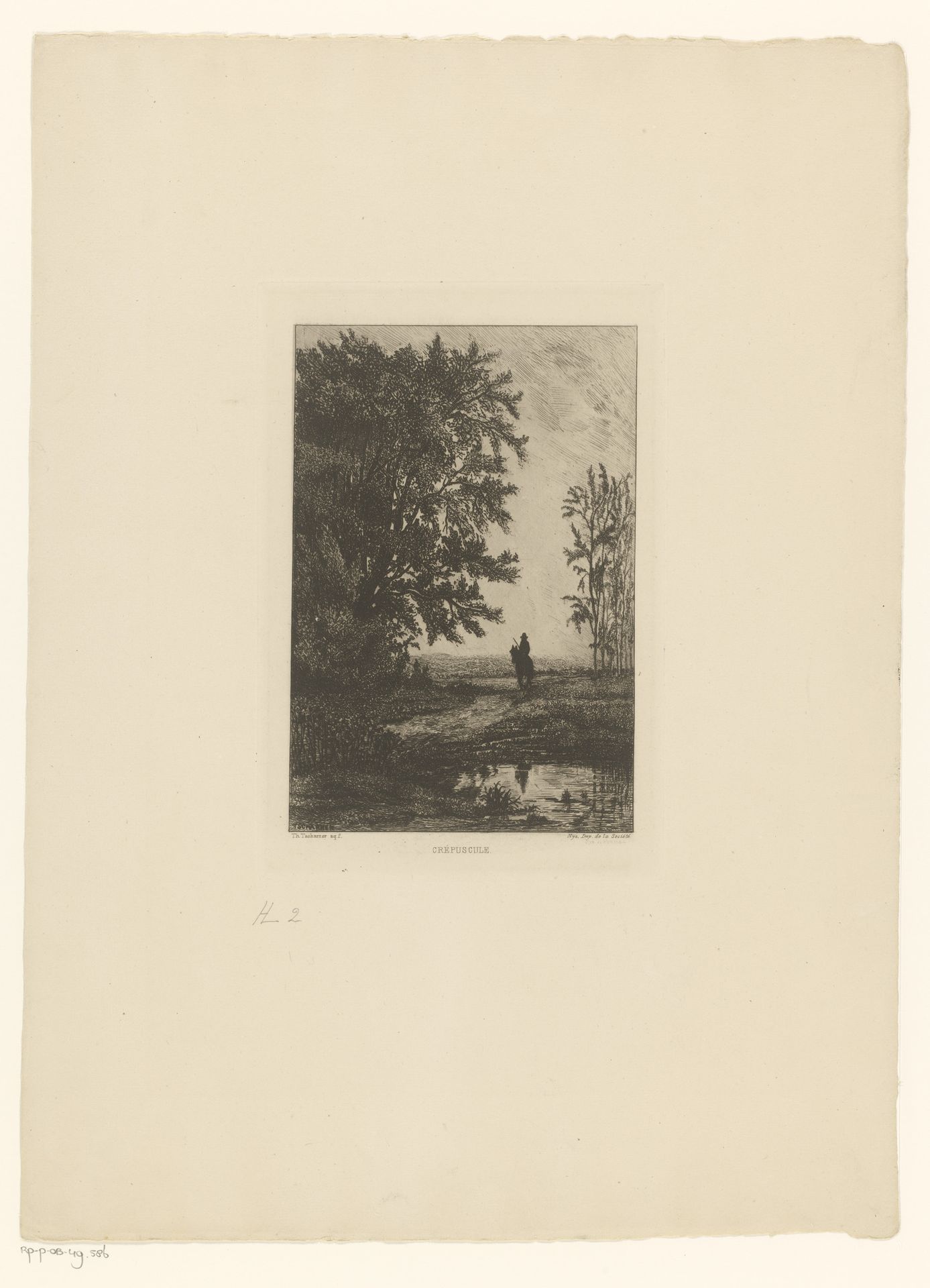
Théodore Tscharner created this small etching, "Ruiter in de schemering", using delicate lines and a subtle tonal range. The composition invites us into a tranquil landscape at dusk, where a lone rider and horse are depicted against a fading sky. The dark foreground contrasts with the emerging light in the background to evoke a feeling of mystery and quiet contemplation. Tscharner's approach to form and structure resonates with the Romantic ideals of the sublime, evoking the emotions through carefully balanced pictorial elements. Each etched line contributes to the overall atmosphere, blurring the boundary between the real and the imagined. The pond in the foreground acts as a mirror, reflecting not just the physical world, but also inviting a deeper meditation on the nature of perception itself. Consider how Tscharner uses the landscape as a semiotic device. By rendering the scene in shades of grey, Tscharner strips away the specificity, inviting us to question what is actually represented. He leaves space for the viewer to project their own interpretation onto the artwork. The meaning then, is not fixed, but relational, arising from the interplay between the artwork and the observer.

Artwork details
- Dimensions
- height 235 mm, width 160 mm
- Copyright
- Rijks Museum: Open Domain
Comments
No comments
About this artwork
Théodore Tscharner created this small etching, "Ruiter in de schemering", using delicate lines and a subtle tonal range. The composition invites us into a tranquil landscape at dusk, where a lone rider and horse are depicted against a fading sky. The dark foreground contrasts with the emerging light in the background to evoke a feeling of mystery and quiet contemplation. Tscharner's approach to form and structure resonates with the Romantic ideals of the sublime, evoking the emotions through carefully balanced pictorial elements. Each etched line contributes to the overall atmosphere, blurring the boundary between the real and the imagined. The pond in the foreground acts as a mirror, reflecting not just the physical world, but also inviting a deeper meditation on the nature of perception itself. Consider how Tscharner uses the landscape as a semiotic device. By rendering the scene in shades of grey, Tscharner strips away the specificity, inviting us to question what is actually represented. He leaves space for the viewer to project their own interpretation onto the artwork. The meaning then, is not fixed, but relational, arising from the interplay between the artwork and the observer.
Comments
No comments