About this artwork
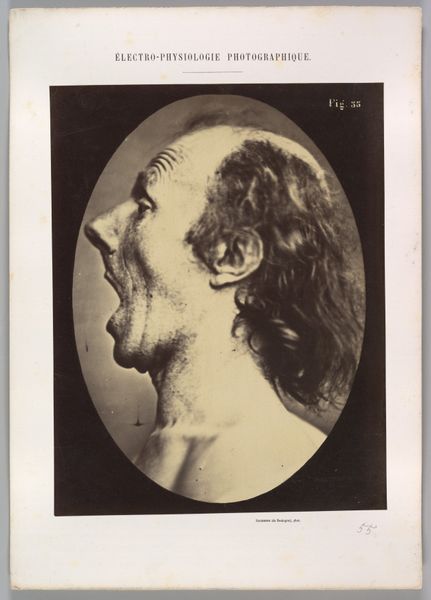
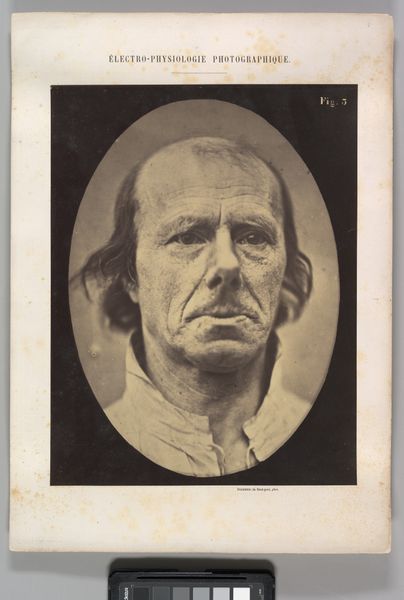
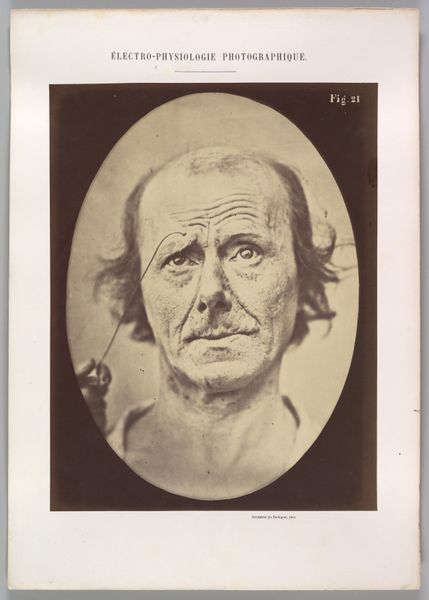
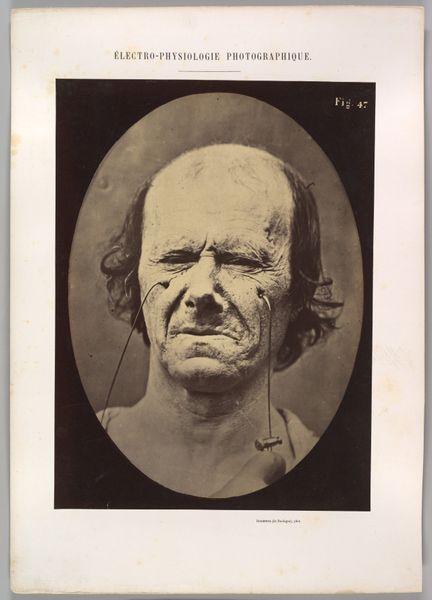
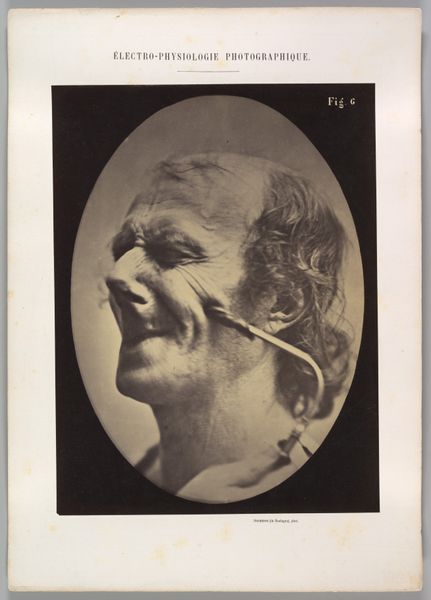
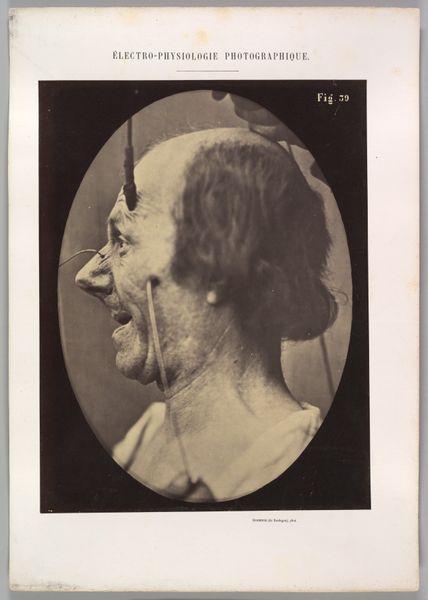
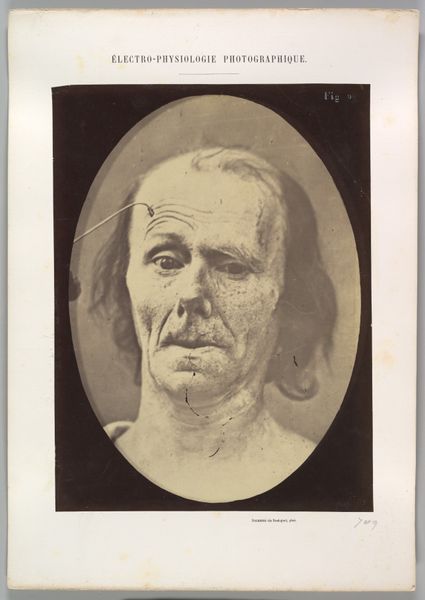
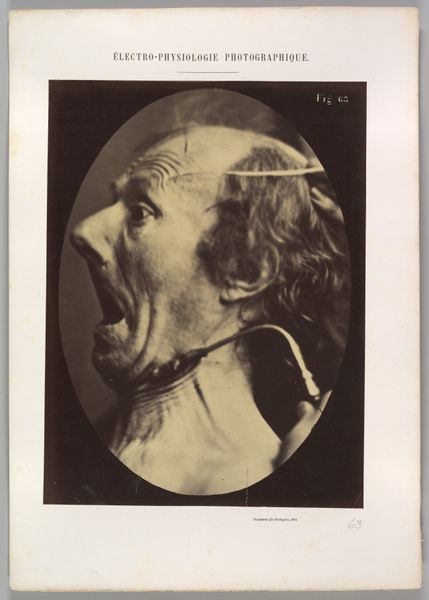
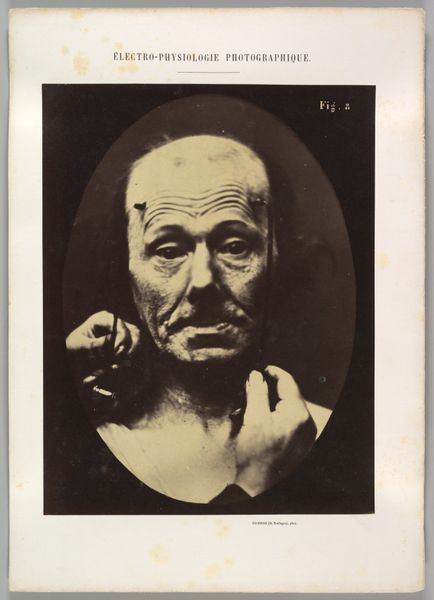
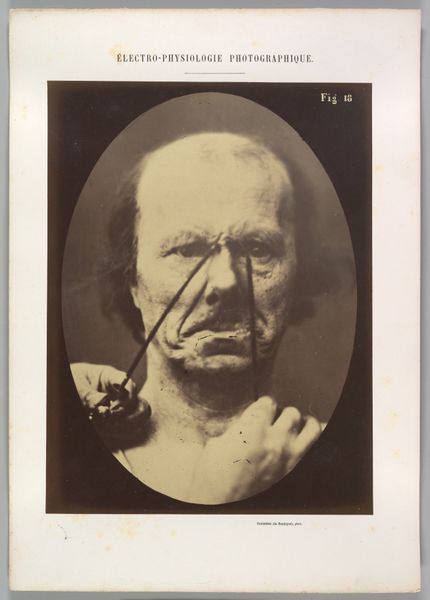
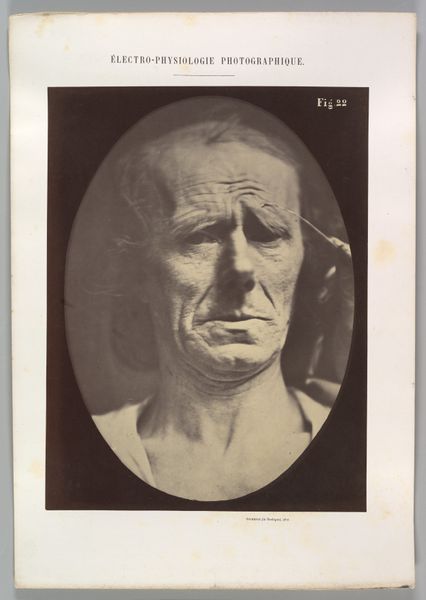
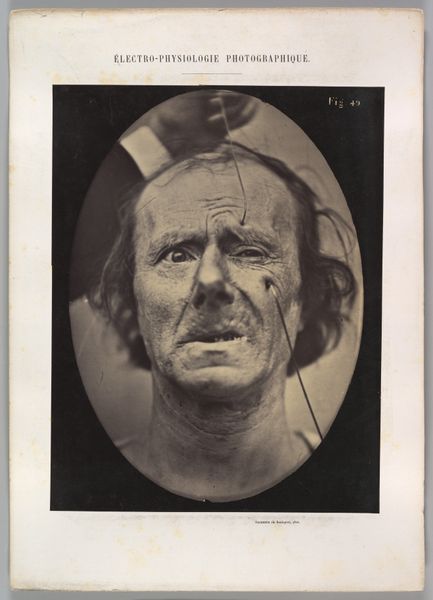
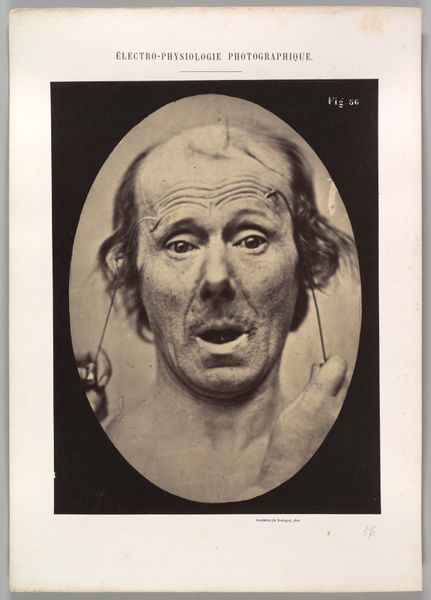
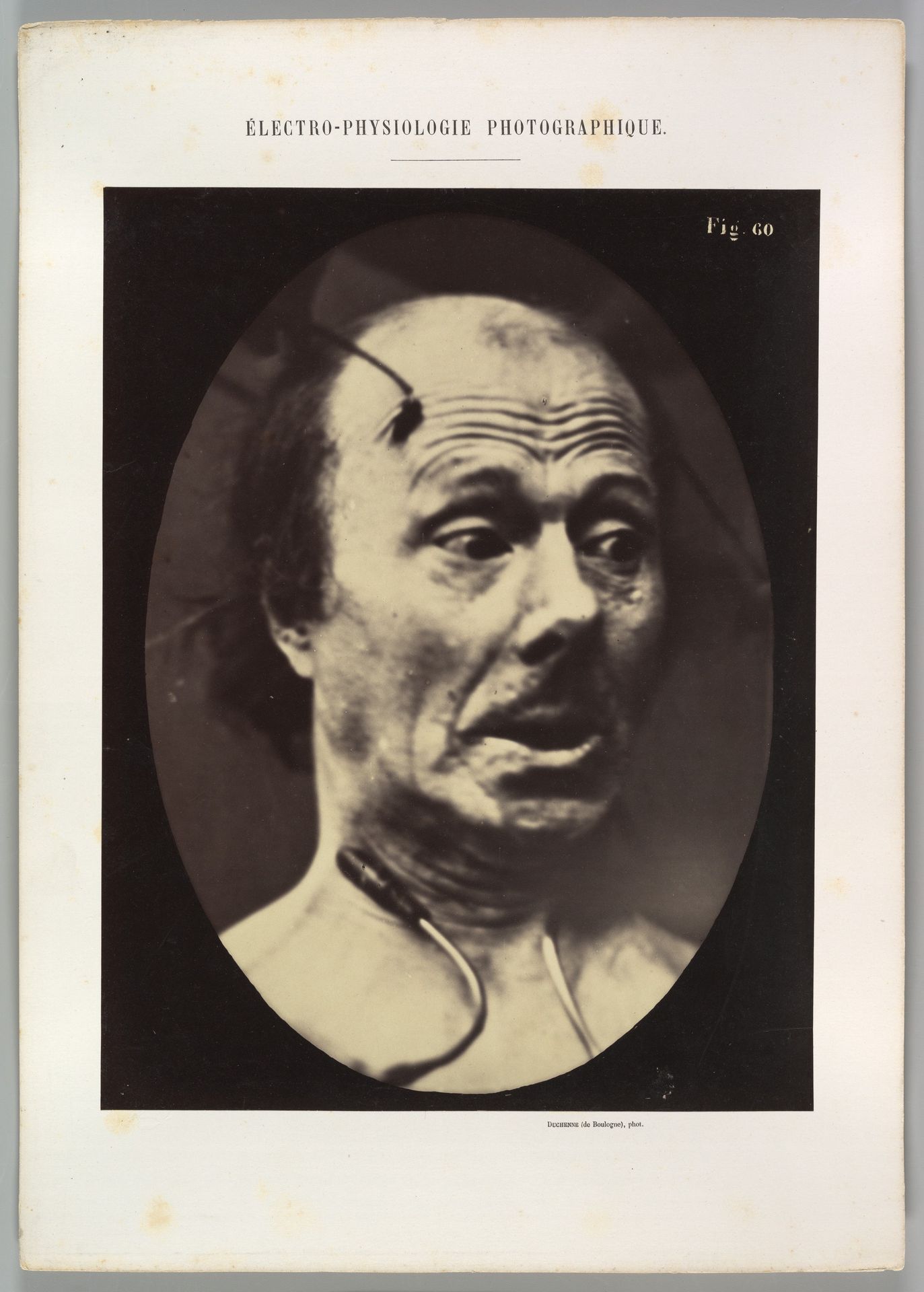
This photograph, "Figure 60: Fright," was created by Guillaume Benjamin Amand Duchenne in the 19th century. Duchenne was a French neurologist known for his work in mapping the muscles of the face and their relation to human emotions. During this period, scientific and medical discourse often intersected with social norms, influencing the representation and interpretation of human behavior. In this image, Duchenne used photography to capture and categorize the physical manifestations of "fright," attempting to create a universal visual language of emotion. But we must ask ourselves, who gets to define these emotions, and how do these definitions affect those being photographed? Duchenne's work, while groundbreaking, reflects the period's inclination to objectify and analyze the human body, raising ethical questions about medical experimentation and representation. Consider the emotional weight of being subjected to such scrutiny, the vulnerability of having one's expressions dissected and categorized. How does this photograph shape, or perhaps misshape, our understanding of human emotion?
Figure 60: Fright
1854 - 1856

Guillaume Benjamin Amand Duchenne
1806 - 1875
The Metropolitan Museum of Art
Metropolitan Museum of Art, New York, NYArtwork details
- Medium
- photography
- Dimensions
- Image (Oval): 28.3 × 20.3 cm (11 1/8 × 8 in.) Sheet: 29.8 × 23 cm (11 3/4 × 9 1/16 in.) Mount: 40.2 × 28.5 cm (15 13/16 × 11 1/4 in.)
- Location
- Metropolitan Museum of Art, New York, NY
- Copyright
- Public Domain
Tags
Comments
Share your thoughts
About this artwork
This photograph, "Figure 60: Fright," was created by Guillaume Benjamin Amand Duchenne in the 19th century. Duchenne was a French neurologist known for his work in mapping the muscles of the face and their relation to human emotions. During this period, scientific and medical discourse often intersected with social norms, influencing the representation and interpretation of human behavior. In this image, Duchenne used photography to capture and categorize the physical manifestations of "fright," attempting to create a universal visual language of emotion. But we must ask ourselves, who gets to define these emotions, and how do these definitions affect those being photographed? Duchenne's work, while groundbreaking, reflects the period's inclination to objectify and analyze the human body, raising ethical questions about medical experimentation and representation. Consider the emotional weight of being subjected to such scrutiny, the vulnerability of having one's expressions dissected and categorized. How does this photograph shape, or perhaps misshape, our understanding of human emotion?
Comments
Share your thoughts