About this artwork
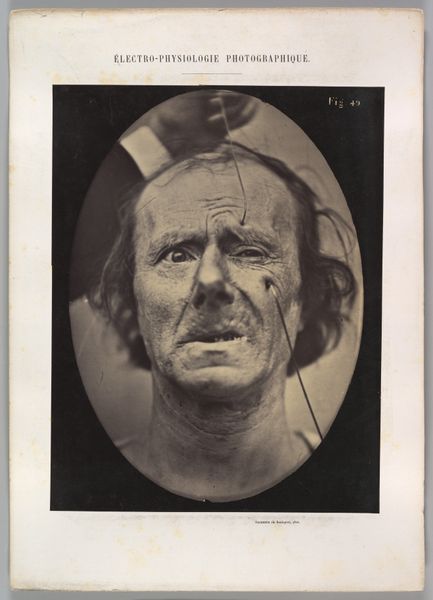
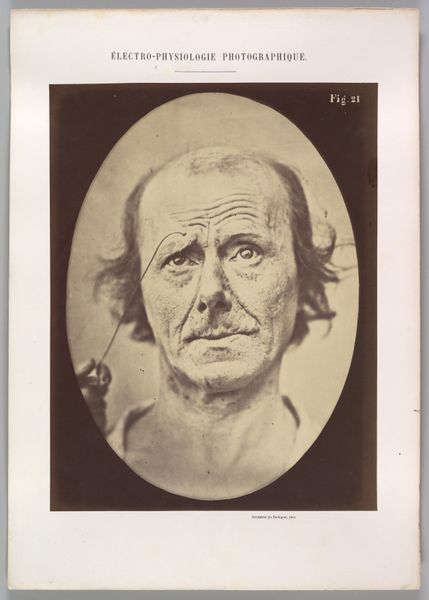
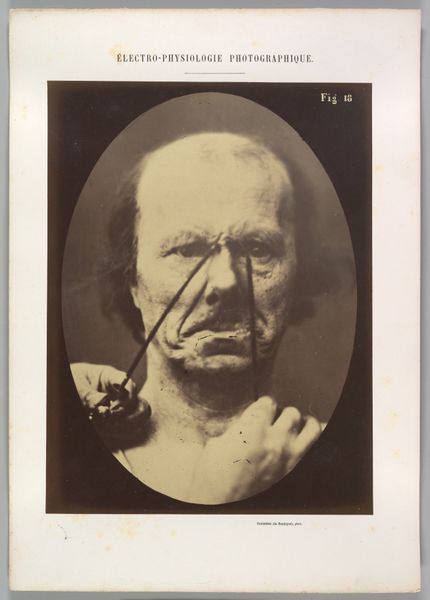
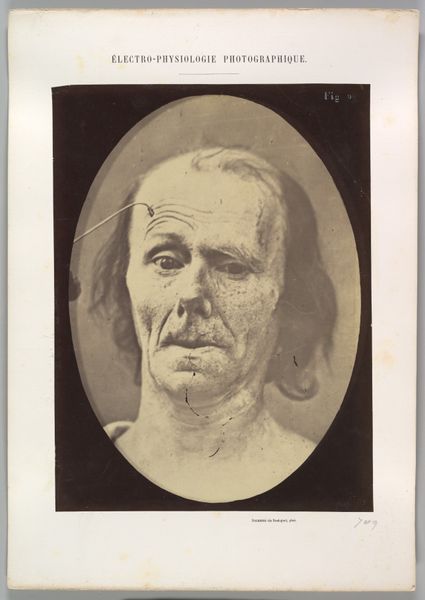
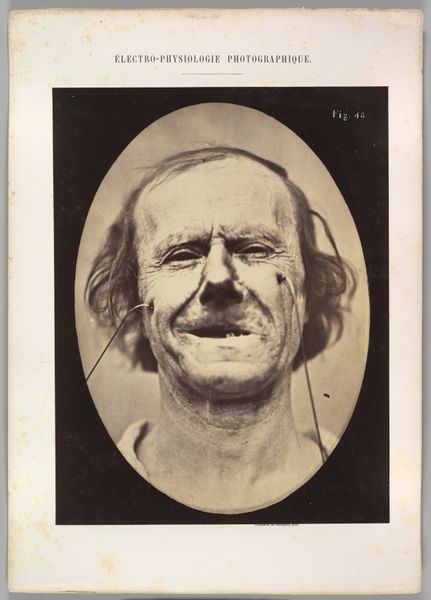
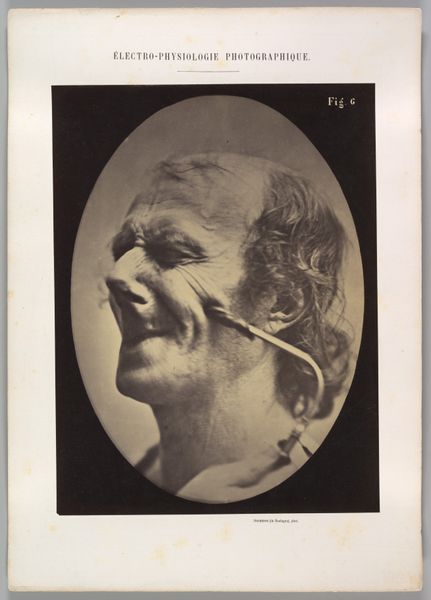
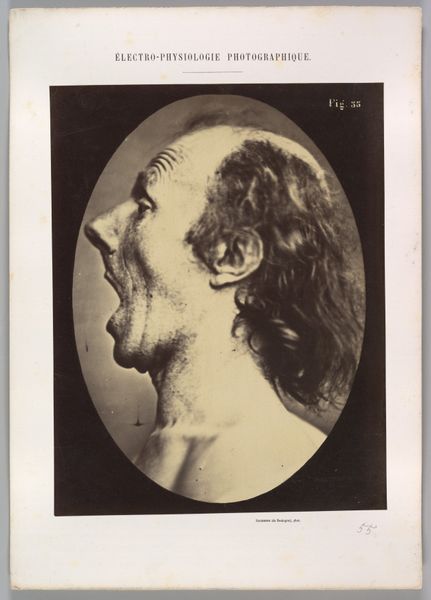
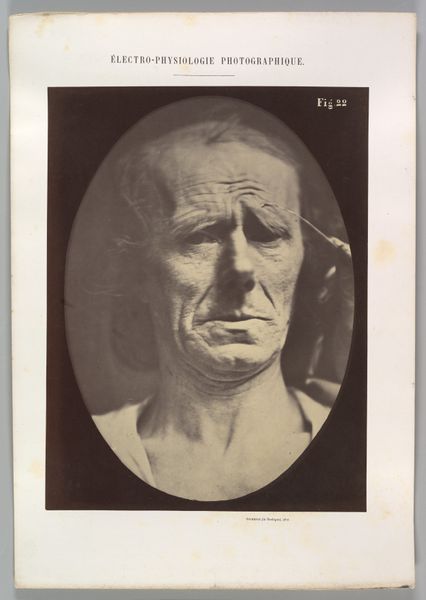
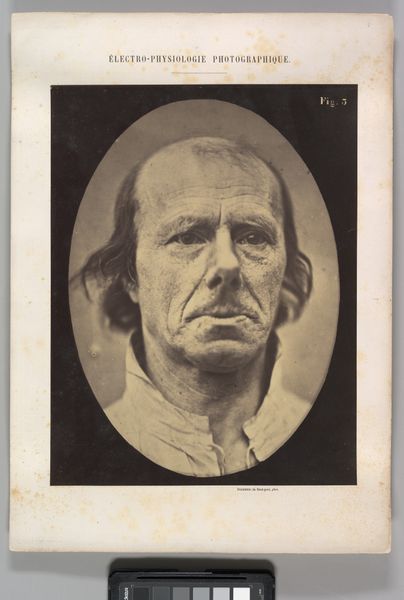
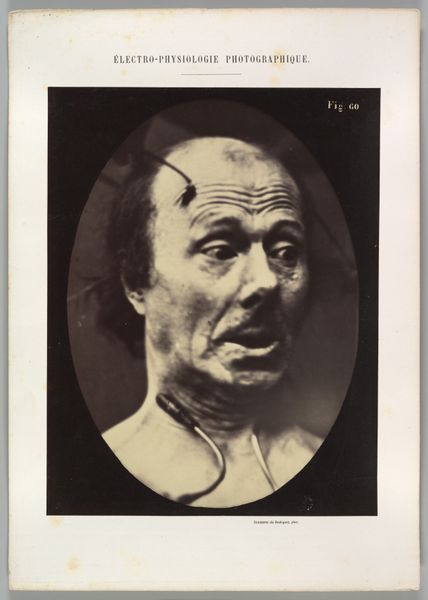
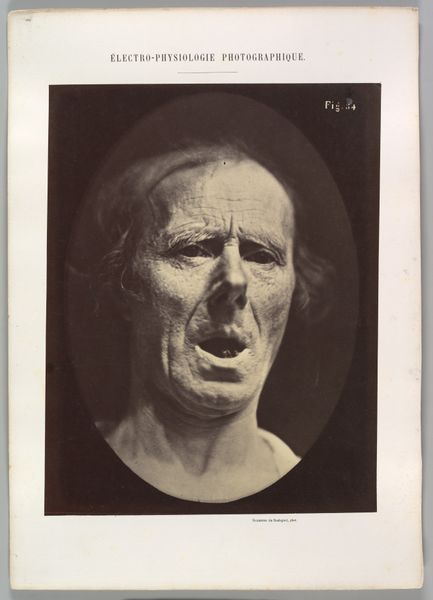
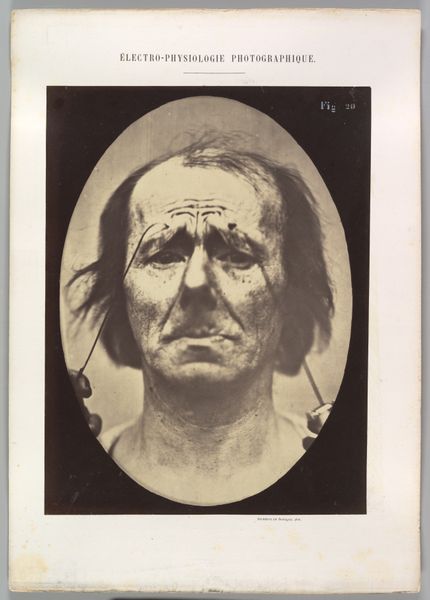
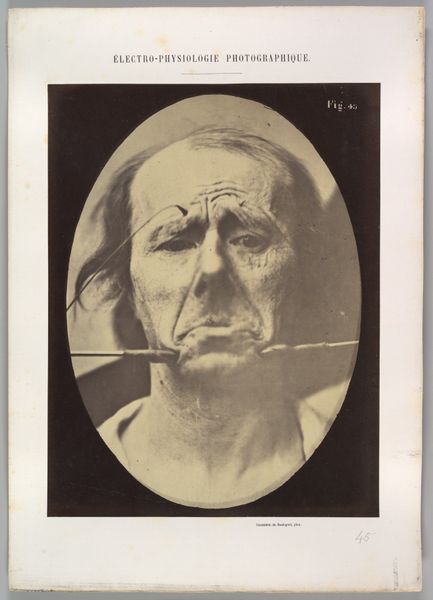
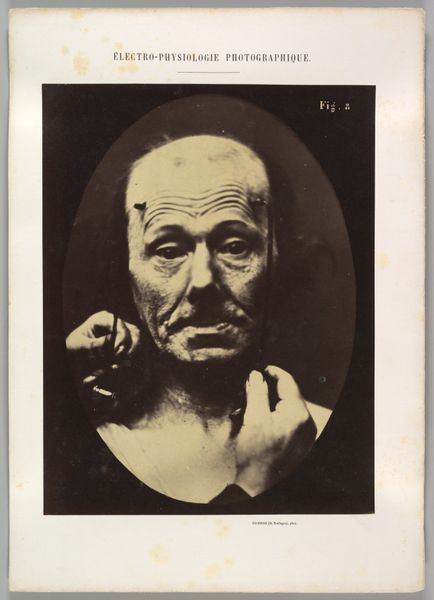
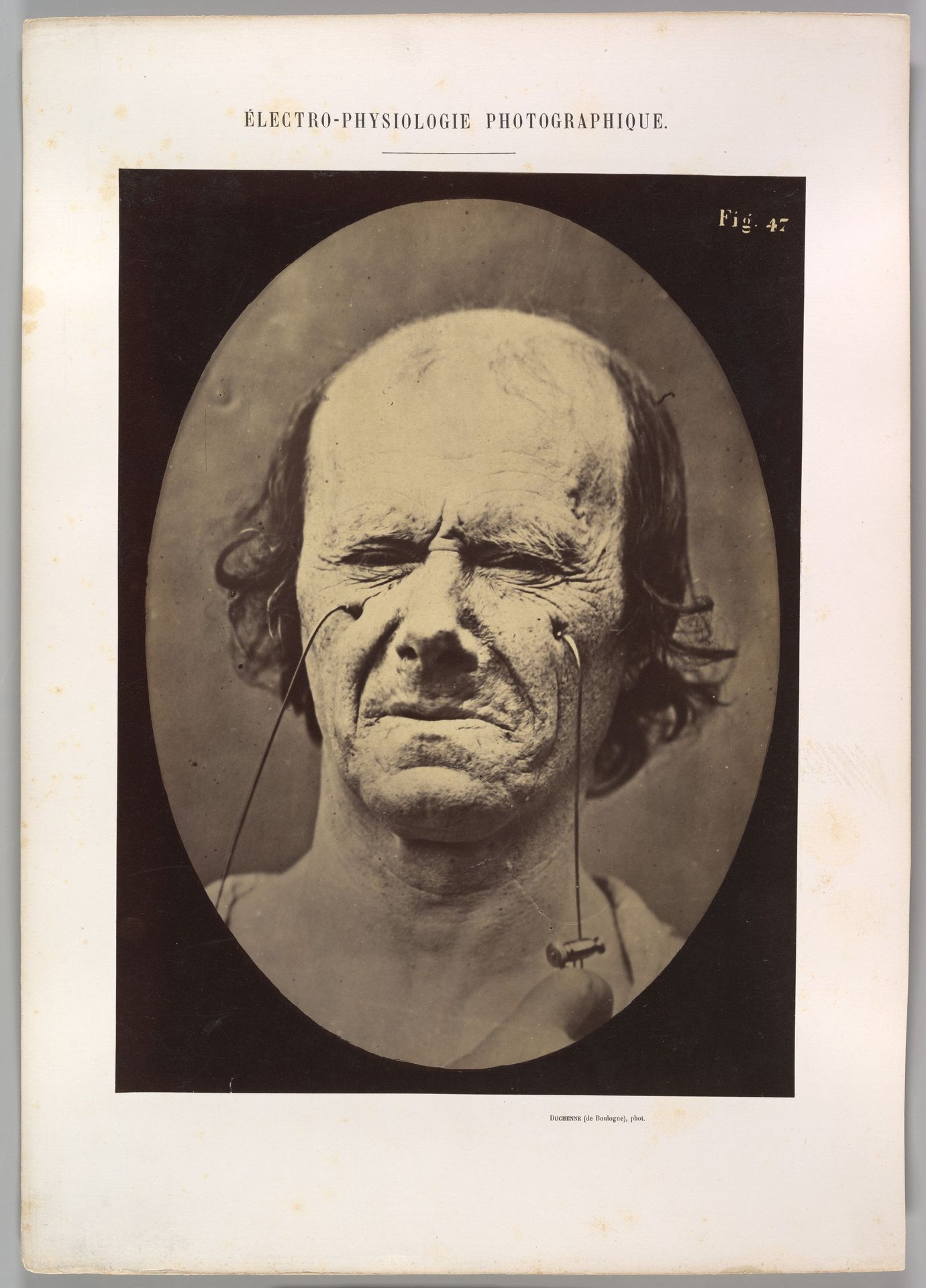
This photograph, titled "Figure 47: A suggestion of this same weeping," was made by Guillaume Benjamin Amand Duchenne. It is a striking example of early photographic techniques, using light-sensitive materials to capture a very specific, manipulated expression. Duchenne wasn’t just interested in capturing an image; he was exploring the very mechanics of human emotion. The subject's expression of sorrow is not spontaneous, but rather induced by electrical probes applied to his face. This process, "électro-physiologie," is integral to understanding the image. The wires and the devices that we see are not just incidental, they are the very means of production of the emotion itself. This image reveals a tension between scientific inquiry and the theater of emotion. Duchenne's work reminds us that even the most seemingly objective processes are imbued with human intention and interpretation. It challenges our understanding of photography, and art, as a purely representational medium, emphasizing its active role in shaping what we see and feel.
Figure 47: A suggestion of this same weeping
1854 - 1856

Guillaume Benjamin Amand Duchenne
1806 - 1875
The Metropolitan Museum of Art
Metropolitan Museum of Art, New York, NYArtwork details
- Medium
- daguerreotype, photography
- Dimensions
- Image (Oval): 27.9 × 20.3 cm (11 × 8 in.) Sheet: 29.6 × 21.8 cm (11 5/8 × 8 9/16 in.) Mount: 40.2 × 28.4 cm (15 13/16 × 11 3/16 in.)
- Location
- Metropolitan Museum of Art, New York, NY
- Copyright
- Public Domain
Tags
Comments
Share your thoughts
About this artwork
This photograph, titled "Figure 47: A suggestion of this same weeping," was made by Guillaume Benjamin Amand Duchenne. It is a striking example of early photographic techniques, using light-sensitive materials to capture a very specific, manipulated expression. Duchenne wasn’t just interested in capturing an image; he was exploring the very mechanics of human emotion. The subject's expression of sorrow is not spontaneous, but rather induced by electrical probes applied to his face. This process, "électro-physiologie," is integral to understanding the image. The wires and the devices that we see are not just incidental, they are the very means of production of the emotion itself. This image reveals a tension between scientific inquiry and the theater of emotion. Duchenne's work reminds us that even the most seemingly objective processes are imbued with human intention and interpretation. It challenges our understanding of photography, and art, as a purely representational medium, emphasizing its active role in shaping what we see and feel.
Comments
Share your thoughts