About this artwork
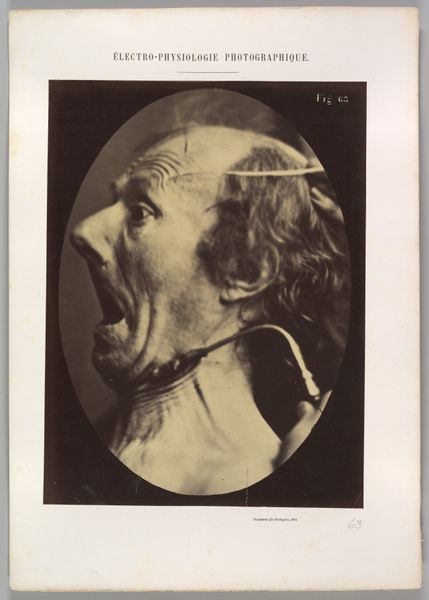
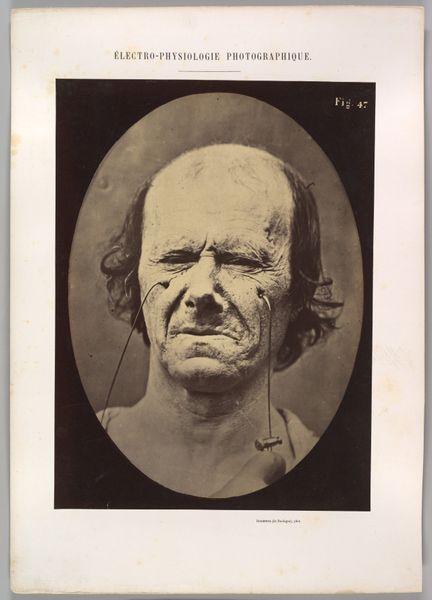
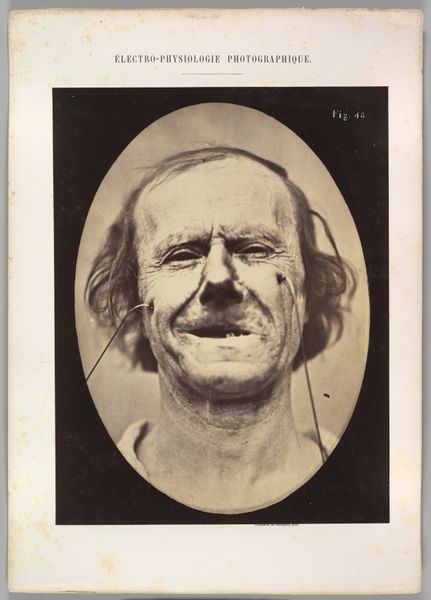
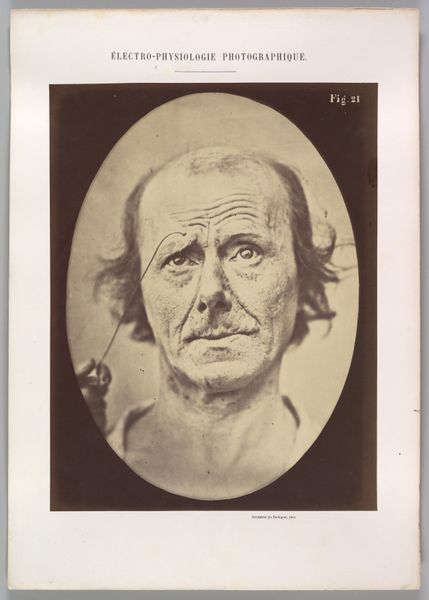
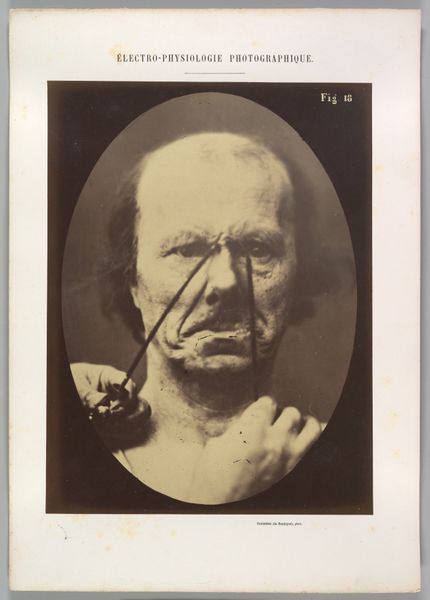
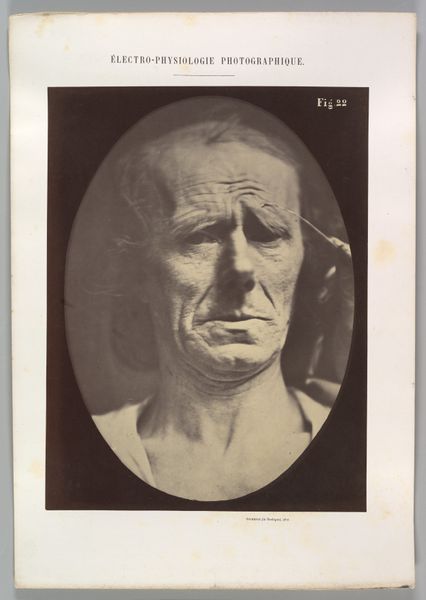
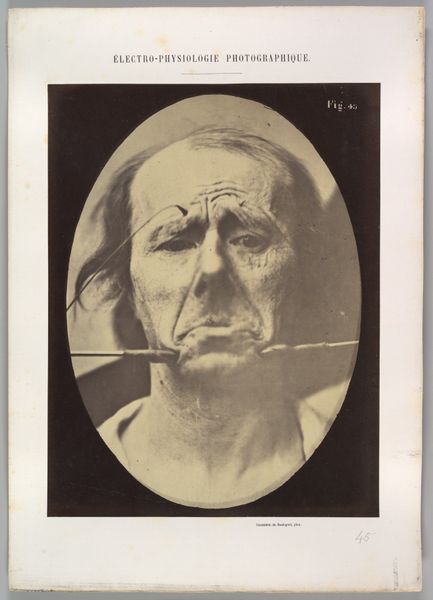
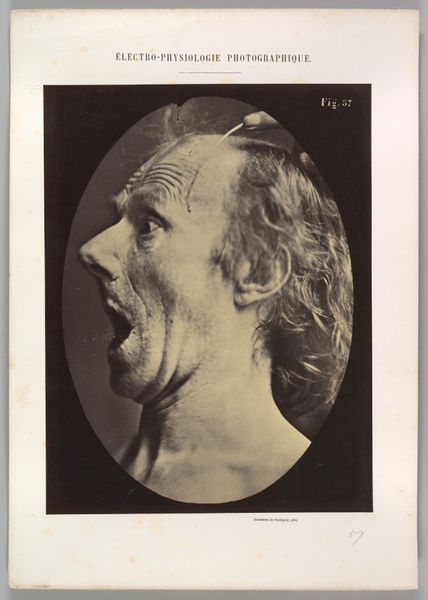
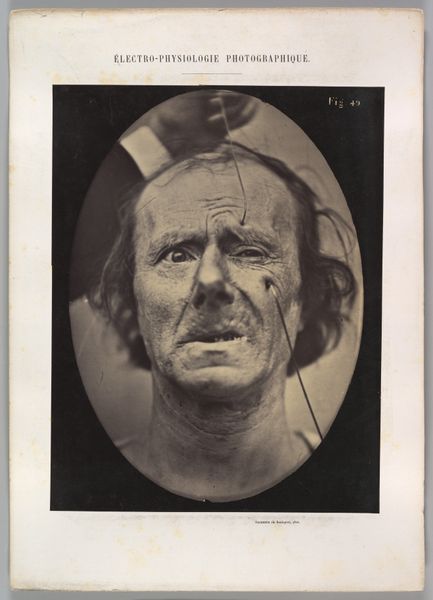
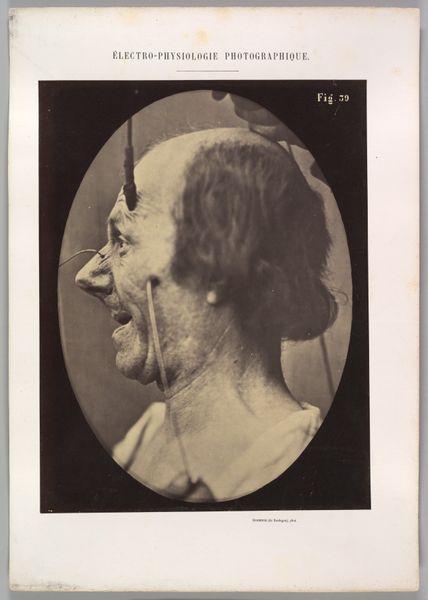
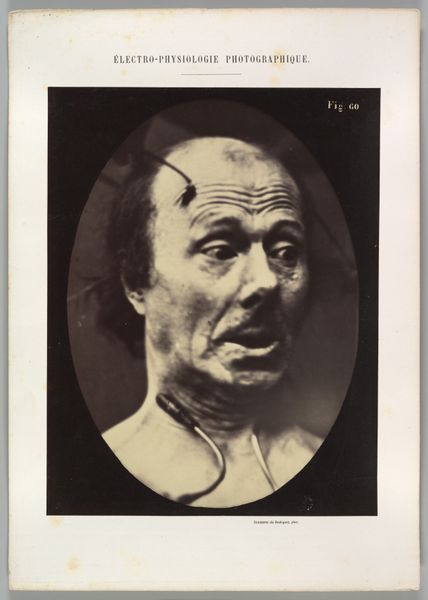
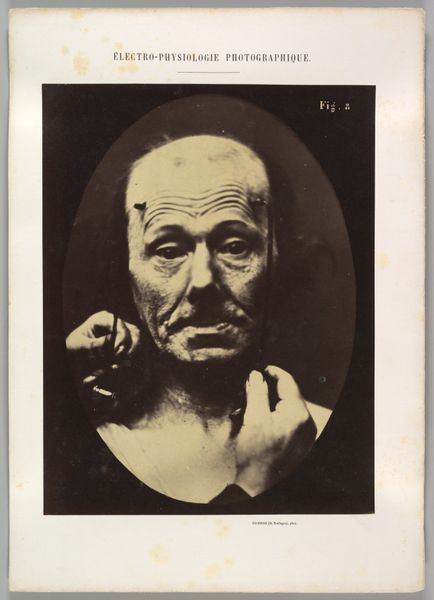
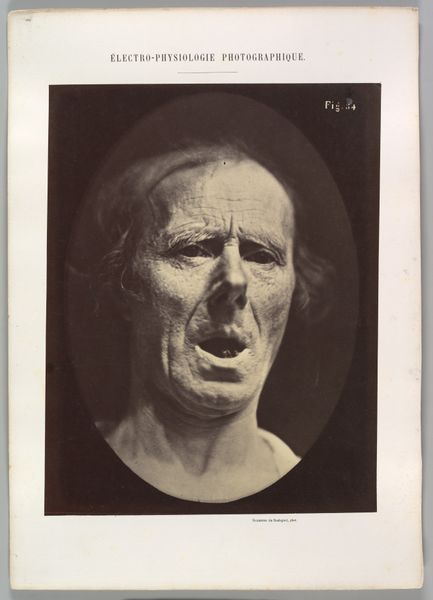
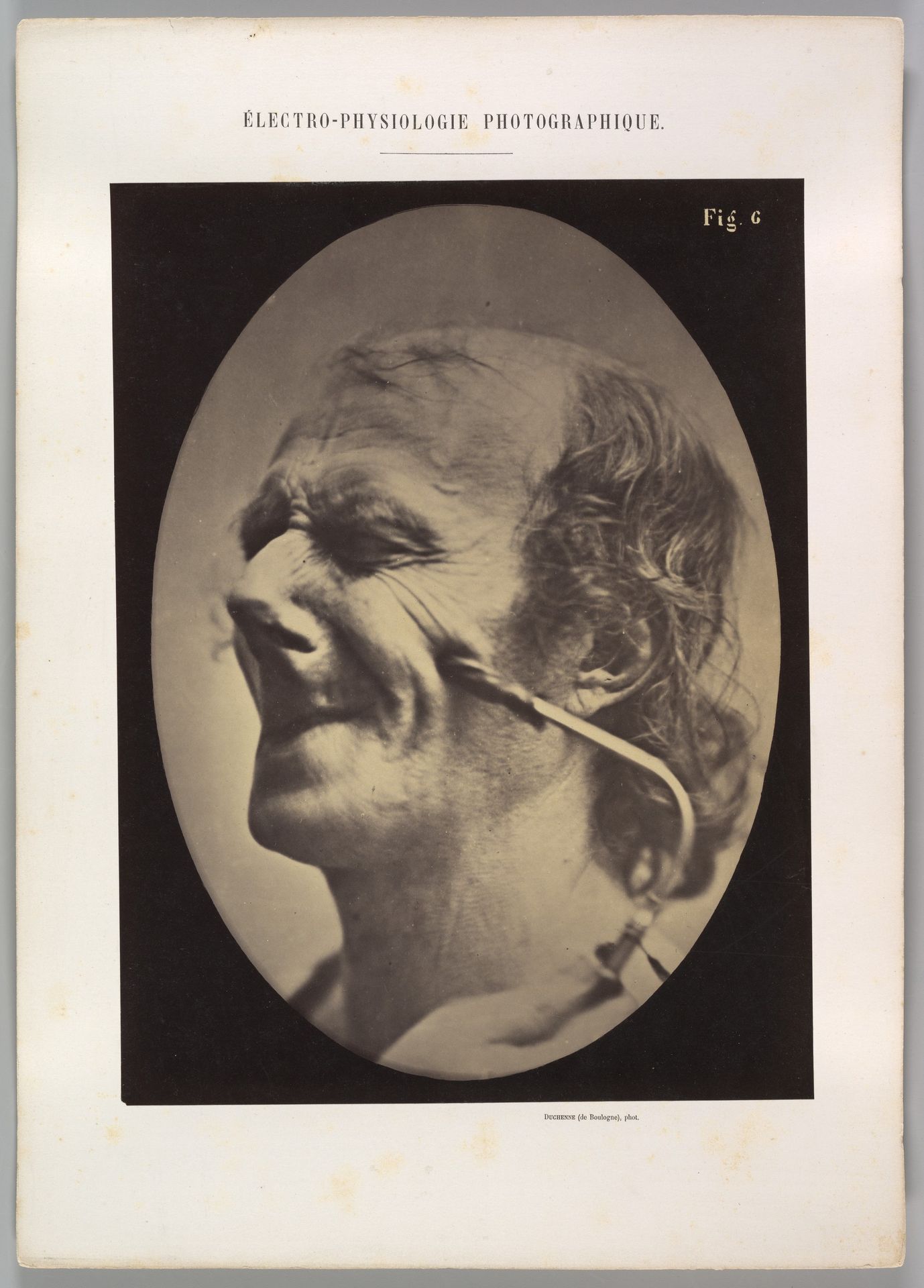
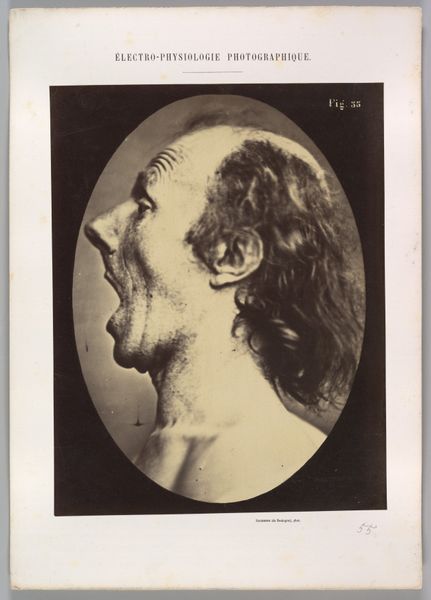
This photograph by Guillaume Benjamin Amand Duchenne captures a subject with a grimace-like tic, using a process called electro-physiology. The image is albumen silver print on paper, a technique popular in the 19th century, which involved coating paper with egg white and silver nitrate. The stark contrast and tonal range of the print emphasizes the wrinkles and contours of the man's face, drawing attention to the artificially-induced expression. The process itself—using electrical stimulation to elicit specific muscle contractions—is central to the image's meaning. It reflects a scientific approach to understanding and documenting human emotion, reducing it to a series of mechanical responses. Duchenne’s method can be seen as a kind of physical manipulation, reflecting broader social issues around labor and control during the industrial era. The photograph challenges traditional notions of artistry, intertwining scientific inquiry with aesthetic representation, and prompting questions about the ethics of manipulating the human form.
Figure 6: The grimice produced is similar to a tic of the face
1854 - 1856
Guillaume Benjamin Amand Duchenne
1806 - 1875The Metropolitan Museum of Art
Metropolitan Museum of Art, New York, NYArtwork details
- Medium
- photography, photomontage
- Dimensions
- Image (Oval): 28.3 × 20.4 cm (11 1/8 × 8 1/16 in.) Sheet: 29.8 × 22.4 cm (11 3/4 × 8 13/16 in.) Mount: 40.1 × 28.6 cm (15 13/16 × 11 1/4 in.)
- Location
- Metropolitan Museum of Art, New York, NY
- Copyright
- Public Domain
Tags
Comments
Share your thoughts
About this artwork
This photograph by Guillaume Benjamin Amand Duchenne captures a subject with a grimace-like tic, using a process called electro-physiology. The image is albumen silver print on paper, a technique popular in the 19th century, which involved coating paper with egg white and silver nitrate. The stark contrast and tonal range of the print emphasizes the wrinkles and contours of the man's face, drawing attention to the artificially-induced expression. The process itself—using electrical stimulation to elicit specific muscle contractions—is central to the image's meaning. It reflects a scientific approach to understanding and documenting human emotion, reducing it to a series of mechanical responses. Duchenne’s method can be seen as a kind of physical manipulation, reflecting broader social issues around labor and control during the industrial era. The photograph challenges traditional notions of artistry, intertwining scientific inquiry with aesthetic representation, and prompting questions about the ethics of manipulating the human form.
Comments
Share your thoughts