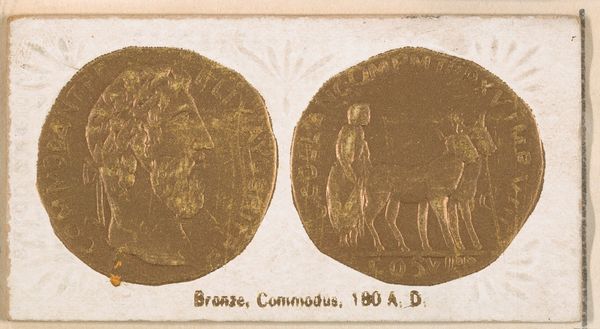
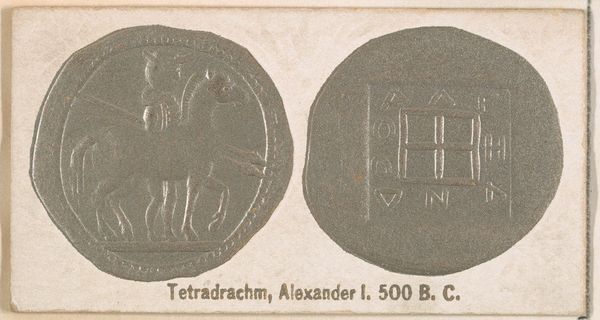
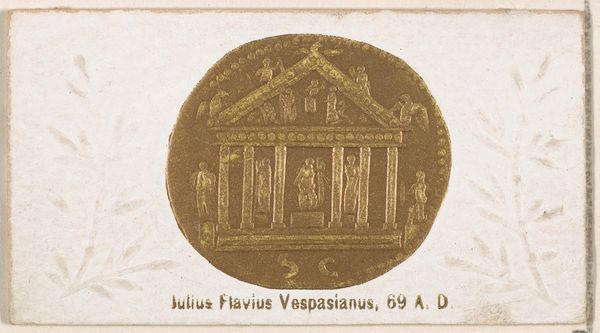
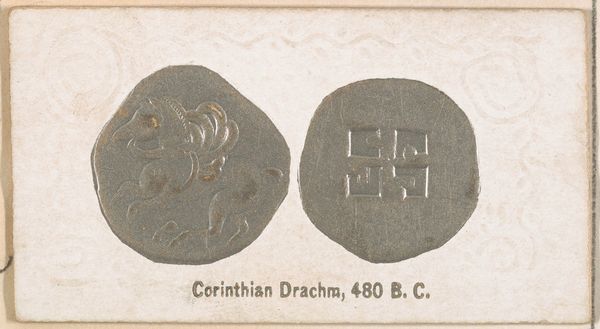
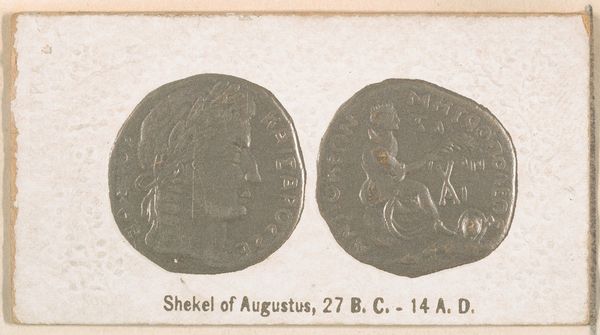
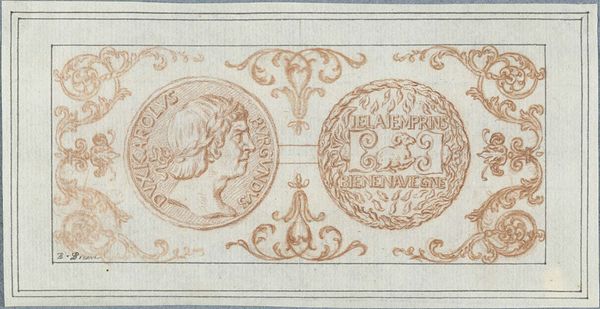
Herod Philip II, 38 A.D., from the Ancient Coins series (N180) issued by Wm. S. Kimball & Co. 1888
0:00
0:00


drawing, print
#
portrait
#
drawing
#
water colours
# print
#
coloured pencil
#
ancient-mediterranean
#
history-painting
#
coin
Dimensions: Sheet: 1 1/2 × 2 5/8 in. (3.8 × 6.7 cm)
Copyright: Public Domain
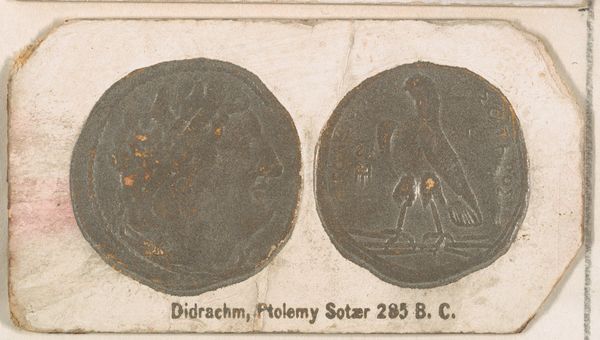
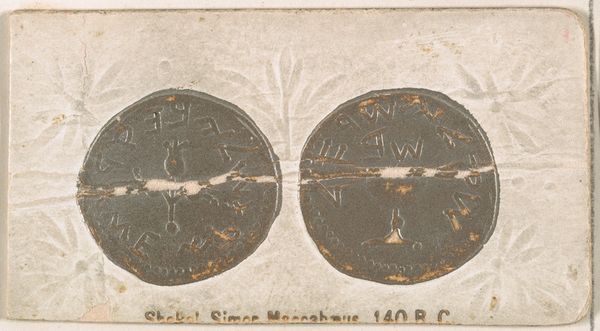
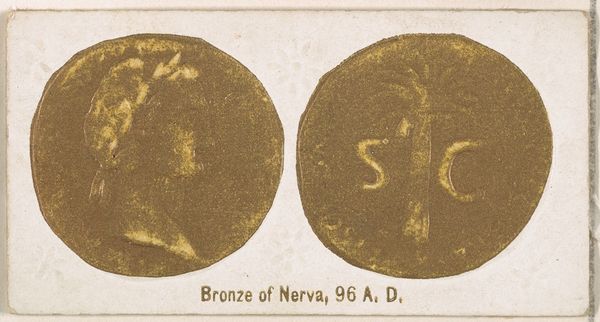
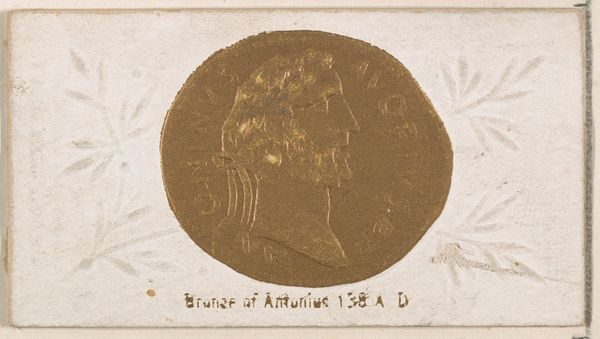
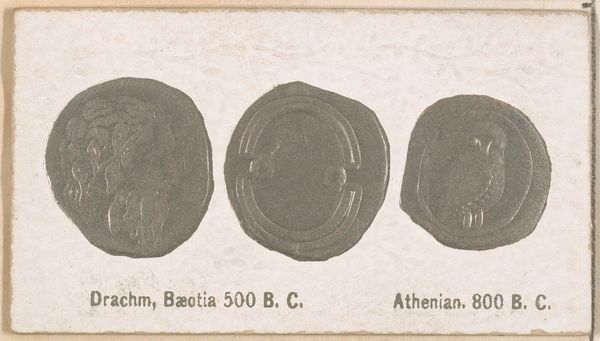
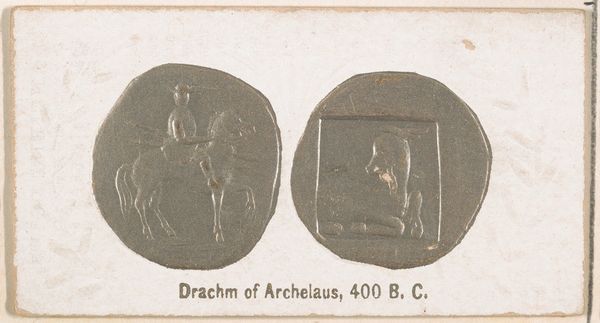
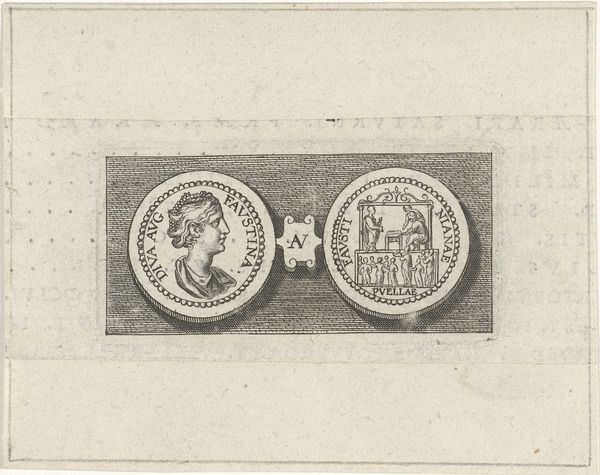
This lithograph of Herod Philip II's coin from 38 A.D. was part of a series produced by the William S. Kimball & Co. This was a time when collecting and cataloging ancient artifacts became a popular trend, reflecting a desire to classify and understand history through material culture. Kimball's image captures the coin's dual symbolism. On one side, we see the bust of Herod Philip II, a ruler under Roman authority, while the reverse displays a classical temple, emblematic of the region's complex cultural interactions between Roman, Greek and local traditions. The practice of circulating such images served to educate and inform the public, framing perceptions of historical figures and ancient societies within a specific cultural context. This image reflects the institutional structures that shaped knowledge and cultural values. Historical research, including numismatic studies and period documents, helps us understand how these images were used to construct narratives about the past, and how those narratives reflect the values and interests of the societies that created and consumed them.
Comments
No comments
Be the first to comment and join the conversation on the ultimate creative platform.
 Collect
 React
React Comment
More like this