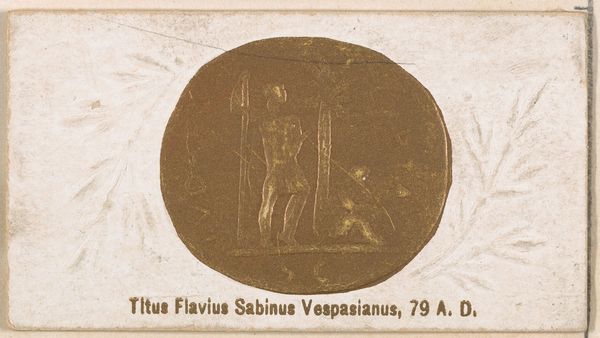
Julius Flavius Vespasianus, 69 A.D., from the Ancient Coins series (N180) issued by Wm. S. Kimball & Co. 1888
0:00
0:00


graphic-art, print
#
portrait
#
graphic-art
# print
#
ancient-mediterranean
#
realism
Dimensions: Sheet: 1 1/2 × 2 5/8 in. (3.8 × 6.7 cm)
Copyright: Public Domain
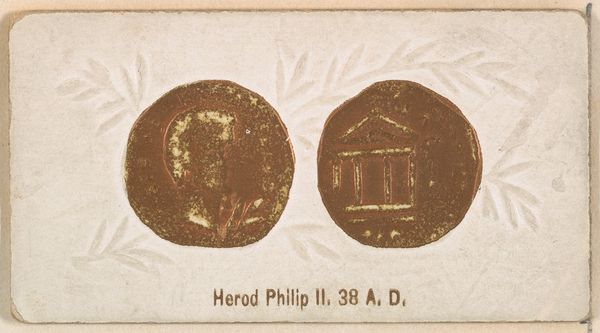
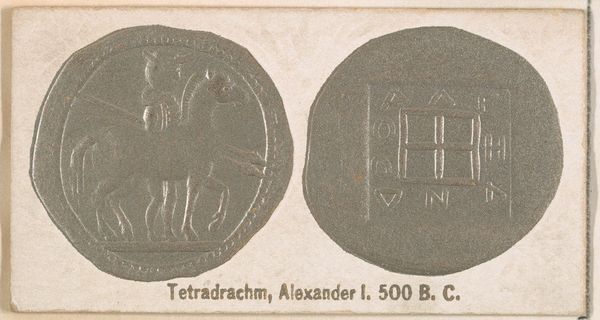
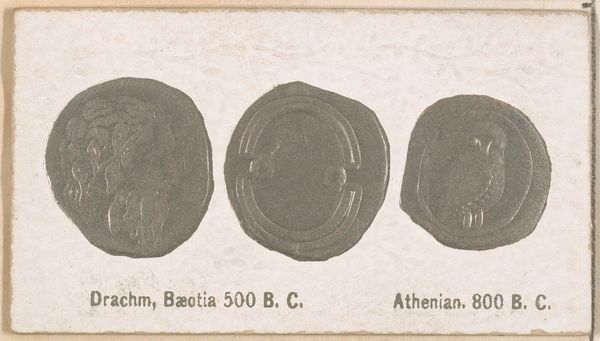
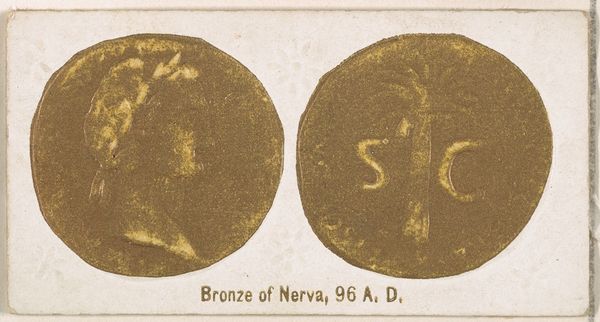
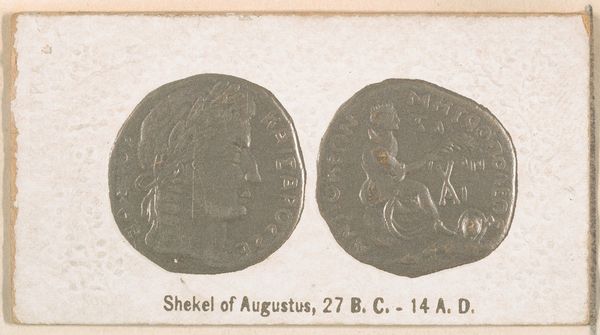
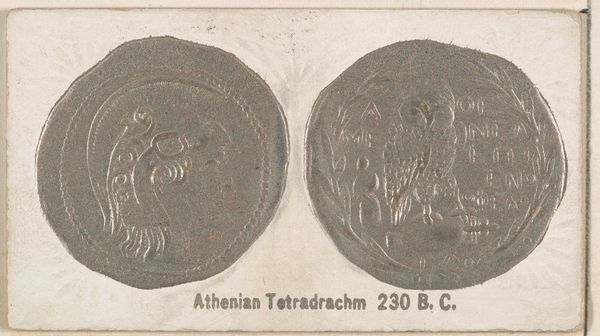
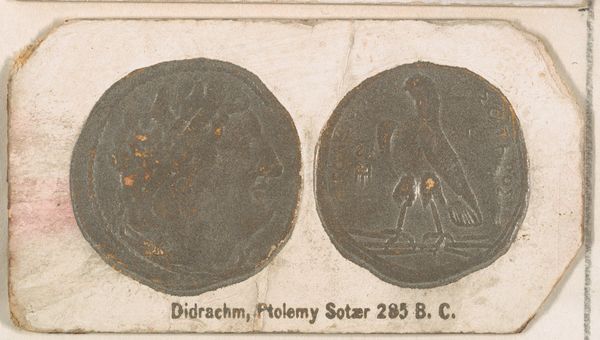
This small card showing Julius Flavius Vespasianus, dating to 69 A.D., comes from a series of ancient coins produced by the Wm. S. Kimball & Co. The card is a chromolithograph, which is a color printing technique. It's essentially a series of layers of ink applied to paper. It's a process that was developed in the 19th century to cheaply reproduce artworks for the mass market. The coin itself is a relic of the Roman Empire, but this card is a product of industrial capitalism. It was made to be included in packs of Kimball Champion Cigarettes, as a promotional item. So, we have an ancient artifact being reproduced through modern means. The chromolithograph flattens the coin’s three-dimensionality into a crisp, reproducible image, ready for mass consumption. The levels of the card’s production from design to printing, and distribution involved many factory workers. Looking at this card, it is important to consider the changing value of the material depicted, and the means of production behind the card. The history of art is inseparable from labor, politics, and consumption.
Comments
No comments
Be the first to comment and join the conversation on the ultimate creative platform.
 Collect
 React
React Comment
More like this