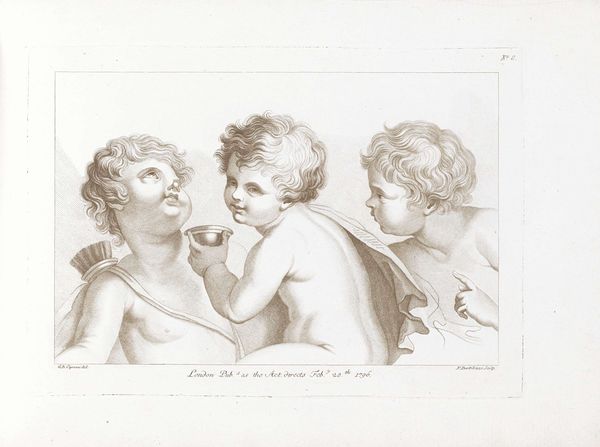
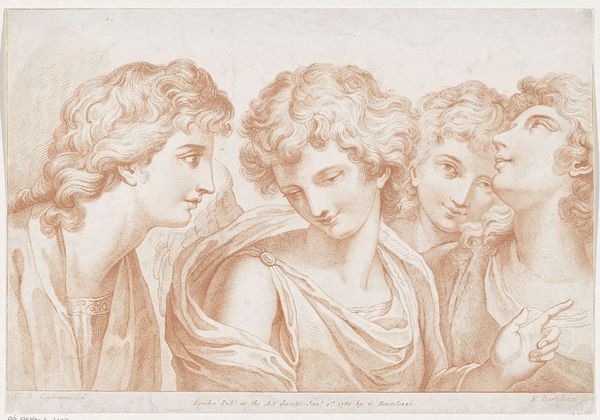
Dimensions: height 199 mm, width 283 mm
Copyright: Rijks Museum: Open Domain
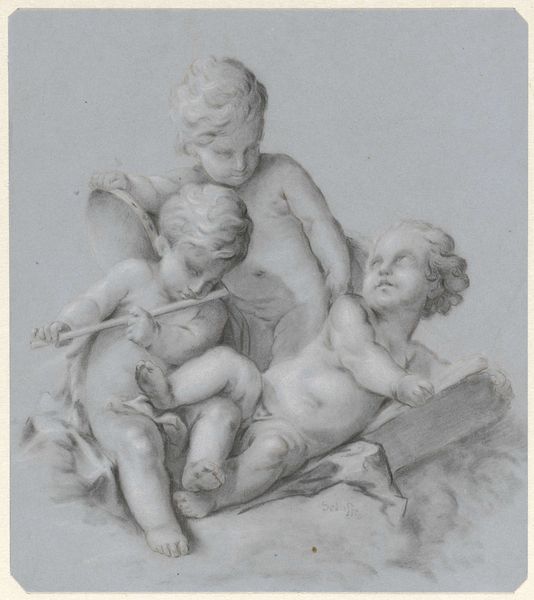
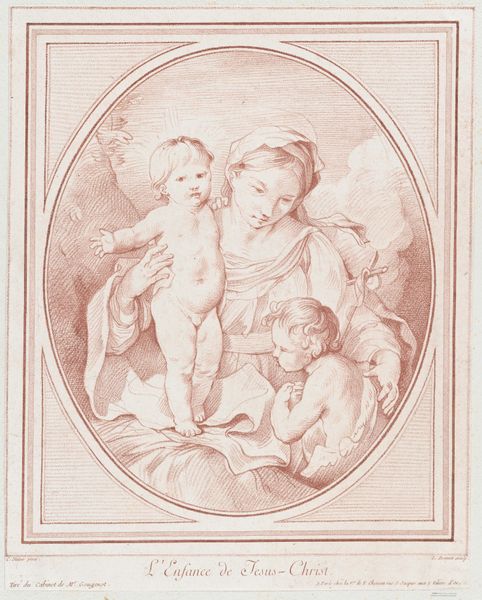
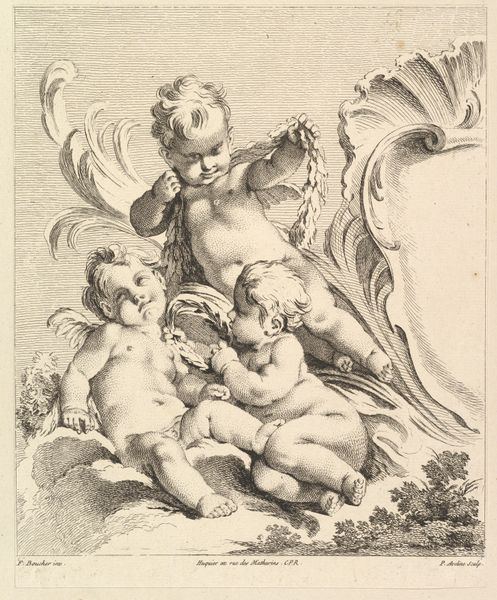
Curator: Here we have "Drie Putti," which translates to Three Putti, an etching and engraving possibly from 1786, made after a drawing by G. B. Cipriani, by Francesco Bartolozzi. It features three cherubic figures rendered in delicate lines of a reddish brown hue. Editor: The effect of that monochrome palette is initially quite striking, and lends a sculptural feel, almost as though we're viewing a terracotta relief. It's simple, but I find it compelling. Curator: The artistic process is definitely at the heart of this image, it seems to speak to an entire industry devoted to prints reproducing paintings. These weren't fine art as we understand it, but objects that democratized access to it by making it consumable to broader audience. Note the precise line work Bartolozzi uses to replicate Cipriani's design for a large print market. Editor: Agreed. It is worth also to notice, too, how Cipriani and then Bartolozzi deployed classical symbols in such accessible ways here, using chubby child-like figures, referencing Cupid, as instruments of beauty and pleasure, recalling traditions in classical art while appealing to the Rococo taste for sentiment. Curator: Absolutely, the choice of line engraving for replicating these drawings allows for multiple identical images that speak of artistic value translated to the consumer. What is the social life of such image? The paper stock, the inks employed for printing these objects had profound influence in printmaking workshops. It’s critical to look into it. Editor: Indeed, these cupids also signal continuity. Across cultures and eras, such figures are often stand-ins for primal emotions, innocence, playfulness, which makes this particular rendition – and the broader print production you mention – all the more engaging. Looking carefully at how symbols transmute across time tells us a great deal about ourselves, after all. Curator: That’s so true and yet it begs me to think of it as industrial piece designed with calculated processes, the work reflects that and offers the possibility of a social encounter with art-making that goes beyond a symbolic read. Editor: In that meeting, the two definitely are not exclusive; but instead they feed into each other’s narrative making this experience richer and more dynamic.
Comments
No comments
Be the first to comment and join the conversation on the ultimate creative platform.
 Collect
 React
React Comment
More like this