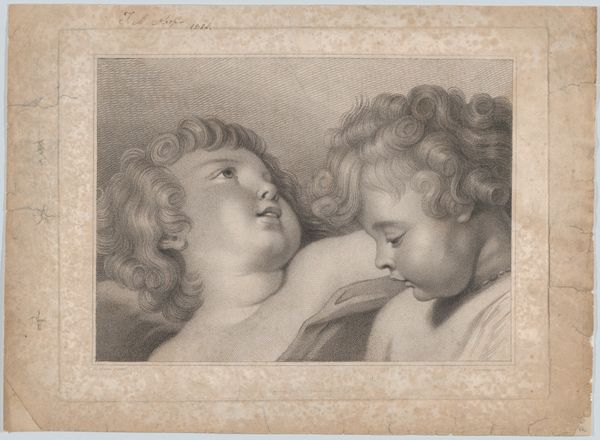
Dimensions: height 218 mm, width 308 mm
Copyright: Rijks Museum: Open Domain
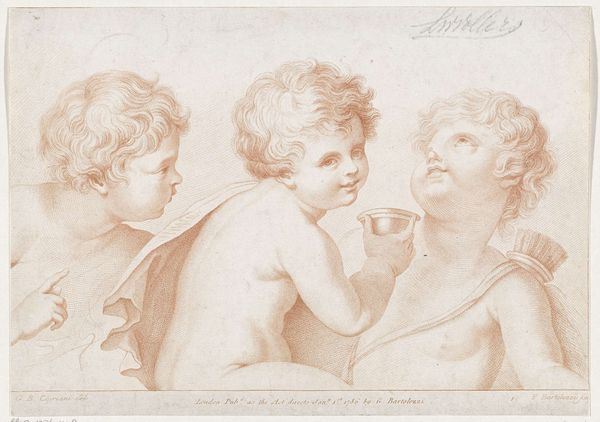
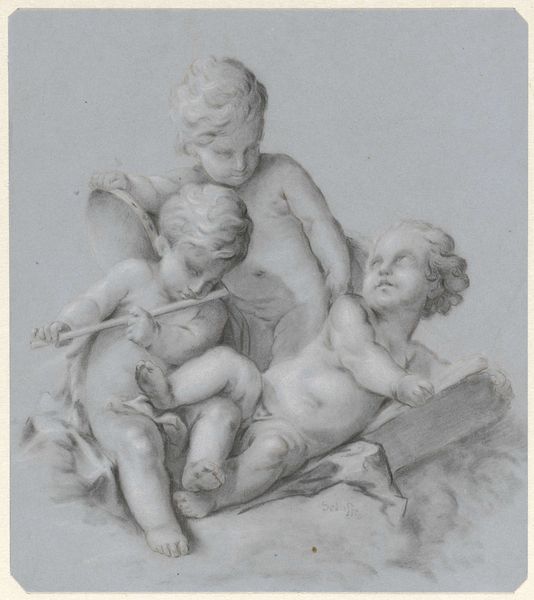
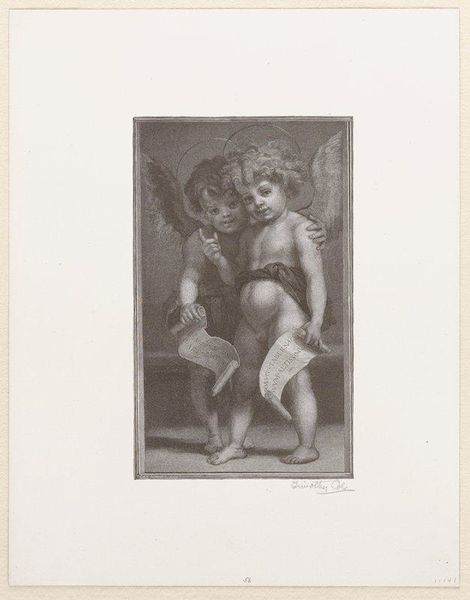
Editor: Here we have Francesco Bartolozzi's "Drie putti," possibly from 1796. It's a print, using etching and engraving, and rendered mostly in lines. The subject matter and the title would seem to point at an allegory. I’m immediately drawn to the softness of the figures, almost like chalk. How would you interpret this work? Curator: Consider how Bartolozzi used engraving. It’s a *reproductive* process, mediating between the original artwork and its consumption. He wasn’t inventing ex nihilo; he was translating, disseminating images, ideas, styles – to a wider audience. Editor: So, you’re focusing on how the print functions as a product? Curator: Precisely. And what does this say about the relationship between art and craft at the time? Engraving was often seen as a lesser art form because of its reproductive nature. But look at the detail, the labor involved! This print blurs those hierarchical distinctions. Also, what class of people would own and collect these engravings and why? Editor: I suppose wealthy consumers decorating their homes? Curator: Exactly! How might that context change the way we view these cherubic figures? Editor: It shifts the focus from pure artistic expression to broader questions about production, consumption, and social class. Curator: And ultimately, about the complex networks of labor, materials, and exchange that sustained artistic creation and consumption.
Comments
No comments
Be the first to comment and join the conversation on the ultimate creative platform.
 Collect
 React
React Comment
More like this