drawing, paper, chalk
#
portrait
#
drawing
#
baroque
#
paper
#
chalk
Copyright: Public Domain
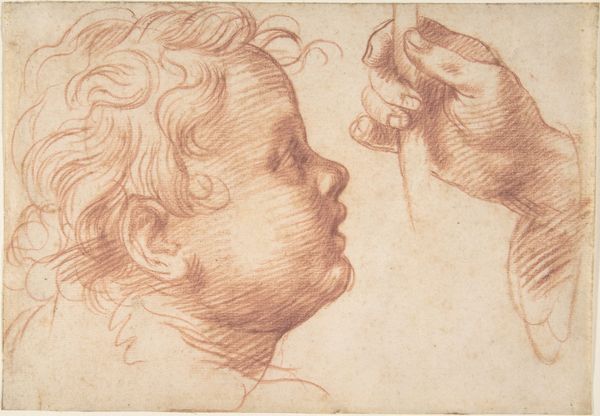
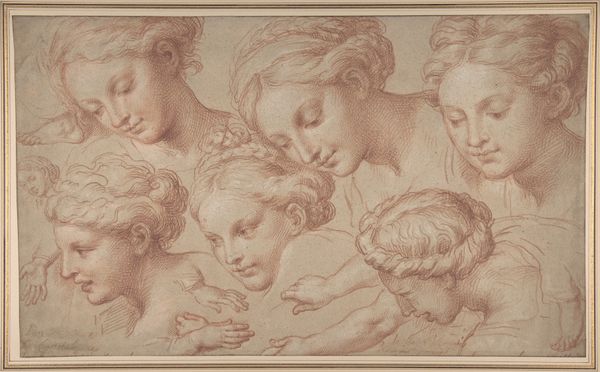
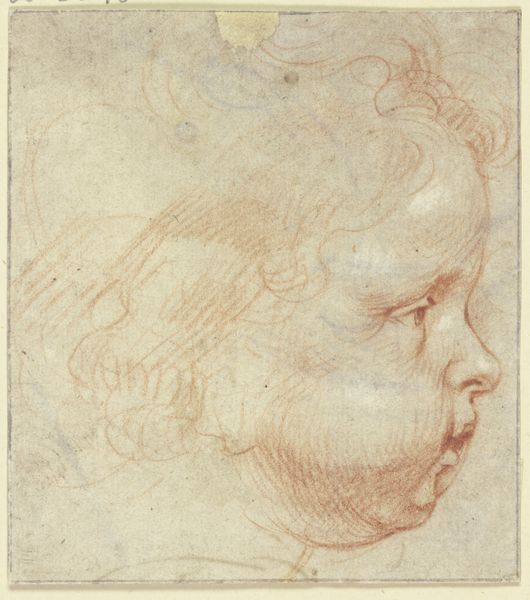
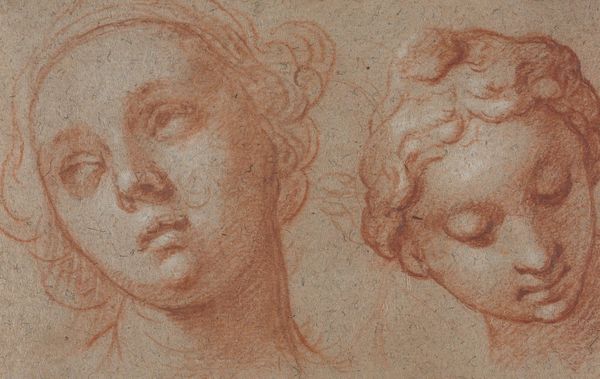
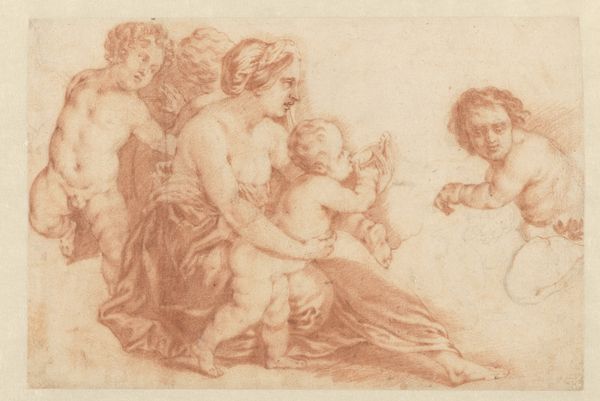
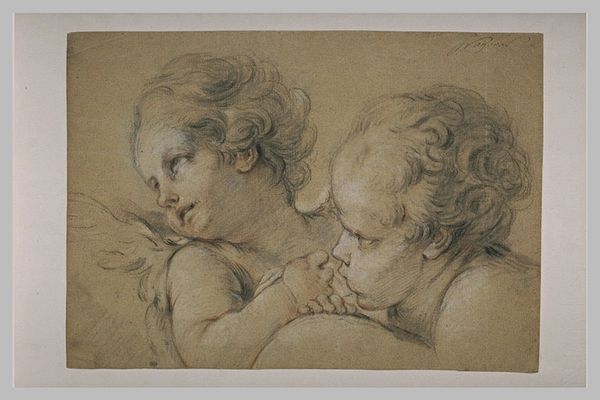
Editor: Here we have Pietro da Cortona's red chalk drawing, "Study Sheet: Two Angel Heads and a Hand," housed in the Städel Museum. There's a certain tenderness to the cherubic faces, rendered so delicately with soft lines, isn't there? How do you interpret the use of these classical motifs in his work? Curator: It’s precisely that tenderness, that cherubic imagery, that connects us to a long lineage of spiritual and artistic traditions. Think about how angel heads, especially in the Baroque period, were powerful symbols – simultaneously representing innocence, divinity, and the promise of salvation. Cortona isn't just drawing pretty faces; he's invoking a complex system of belief. Editor: So, are these then meant to function less as individual portraits and more as representations of ideals? Curator: Precisely. Consider the specific hand gesture as well. What might that imply in the context of divine representation? Editor: I hadn't thought about the hand. It looks as if they might be in prayer or benediction perhaps? That certainly deepens the meaning for me. The angels aren’t just decorative; they’re active participants in this implied sacred narrative. Curator: And what about the use of red chalk itself? Does the color contribute anything to your understanding of the piece? Editor: I suppose it gives it a warmth, an earthly quality that makes the divine feel more accessible. I never really considered how much these familiar symbols can convey. Thanks for drawing my attention to all of these important aspects of the image. Curator: Indeed. And thinking critically about symbols and the evolution of the meanings helps unlock layers of meaning in art across centuries and cultures.
Comments
No comments
Be the first to comment and join the conversation on the ultimate creative platform.
 Collect
 React
React Comment
More like this