About this artwork
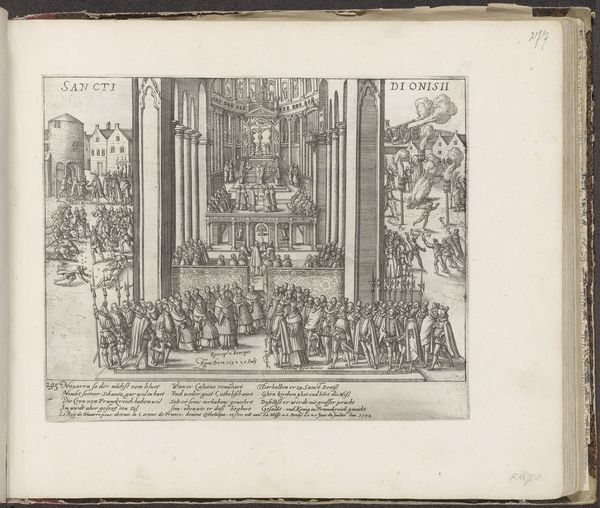
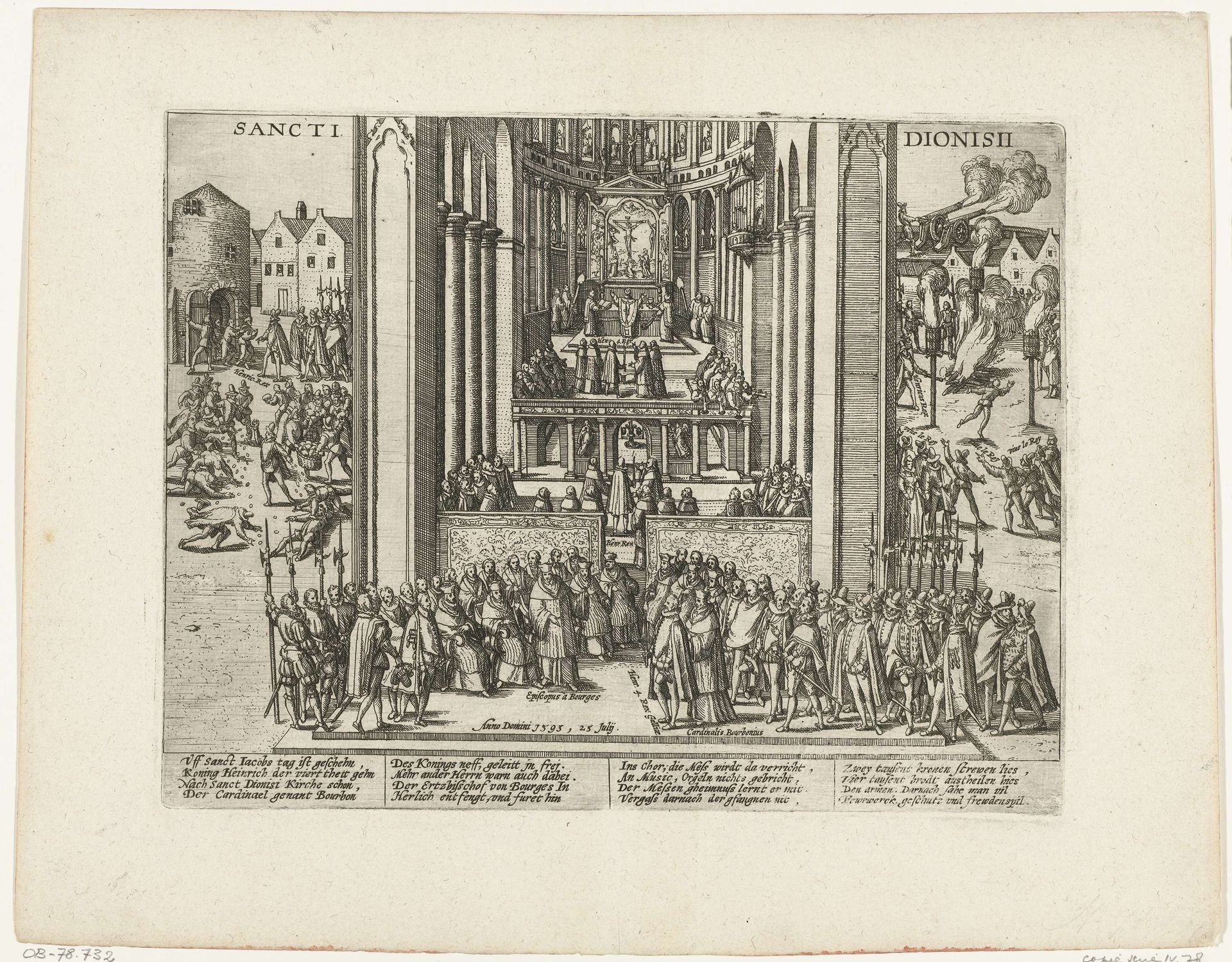
"Hendrik IV gaat ter kerk in Saint-Denis, 1593," by Frans Hogenberg, captures a pivotal moment in French history with an engraving. It illustrates King Henry IV's visit to the Basilica of Saint-Denis, a symbolic act of embracing Catholicism to secure his reign after years of religious conflict. The print reflects the complex interplay between religious identity, political power, and social stability in the 16th century. Henry IV, originally a Huguenot, made a pragmatic decision to convert, famously stating "Paris is worth a mass." This conversion was not just a personal choice, but a political strategy to unite a divided nation and end the Wars of Religion. Hogenberg's detailed depiction of the event emphasizes the solemnity and pageantry, reinforcing the idea of a king submitting to religious authority for the greater good. Ultimately, the print serves as a historical document and a visual representation of the tensions inherent in navigating religious and political divides. It underscores the personal and public dimensions of decisions that shape national identity and collective memory.
Hendrik IV gaat ter kerk in Saint-Denis, 1593
1593 - 1595

Frans Hogenberg
1540 - 1590Location
RijksmuseumArtwork details
- Medium
- print, engraving
- Dimensions
- height 210 mm, width 273 mm
- Location
- Rijksmuseum
- Copyright
- Rijks Museum: Open Domain
Tags
Comments
Share your thoughts
About this artwork
"Hendrik IV gaat ter kerk in Saint-Denis, 1593," by Frans Hogenberg, captures a pivotal moment in French history with an engraving. It illustrates King Henry IV's visit to the Basilica of Saint-Denis, a symbolic act of embracing Catholicism to secure his reign after years of religious conflict. The print reflects the complex interplay between religious identity, political power, and social stability in the 16th century. Henry IV, originally a Huguenot, made a pragmatic decision to convert, famously stating "Paris is worth a mass." This conversion was not just a personal choice, but a political strategy to unite a divided nation and end the Wars of Religion. Hogenberg's detailed depiction of the event emphasizes the solemnity and pageantry, reinforcing the idea of a king submitting to religious authority for the greater good. Ultimately, the print serves as a historical document and a visual representation of the tensions inherent in navigating religious and political divides. It underscores the personal and public dimensions of decisions that shape national identity and collective memory.
Comments
Share your thoughts