About this artwork
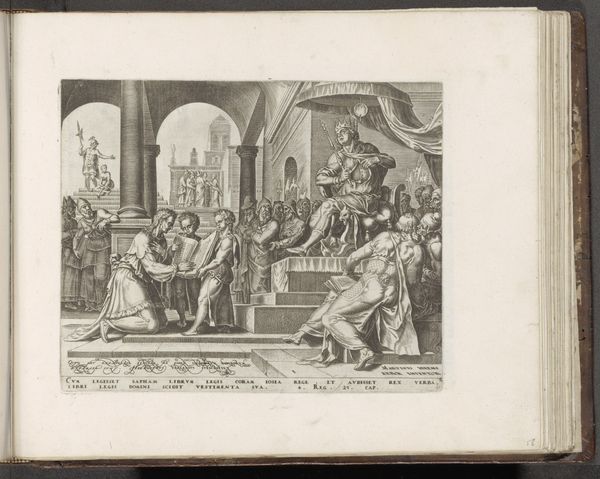
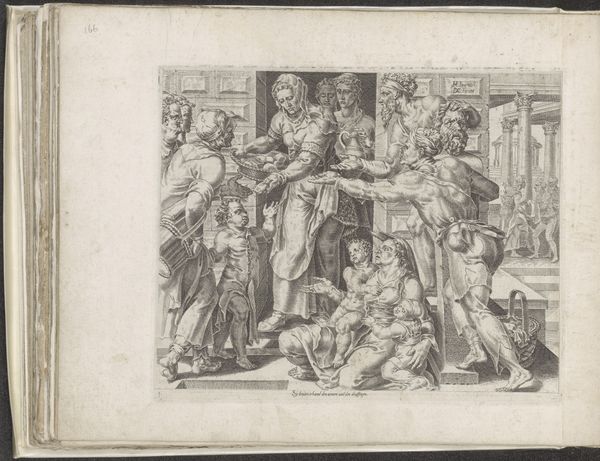
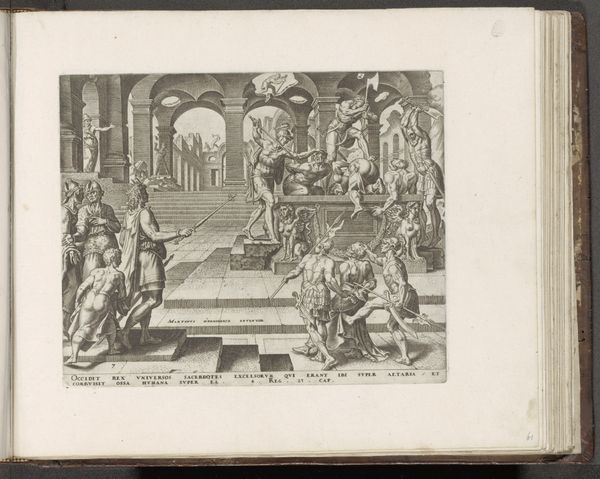
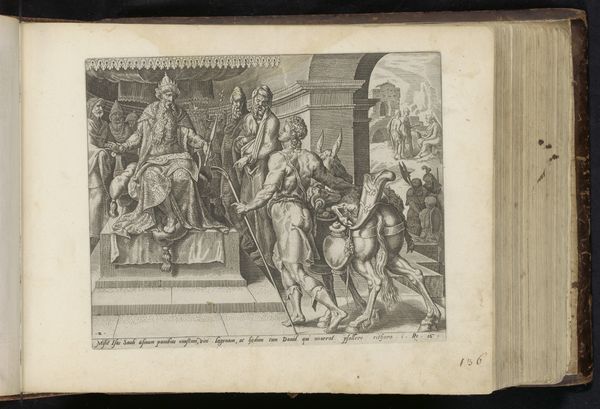
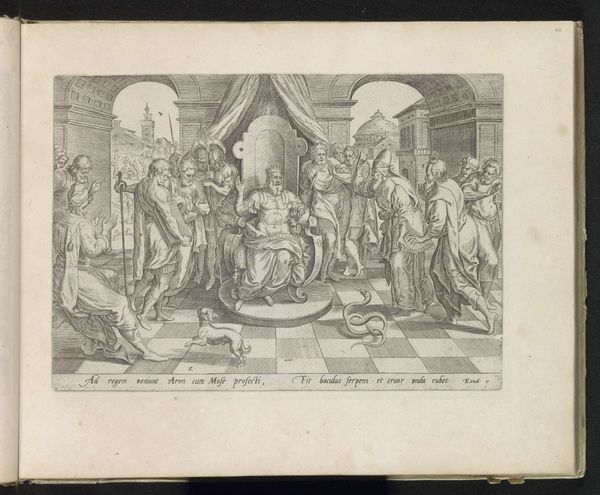
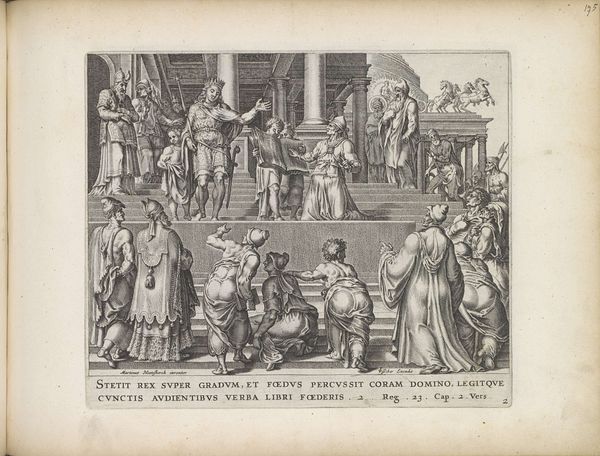
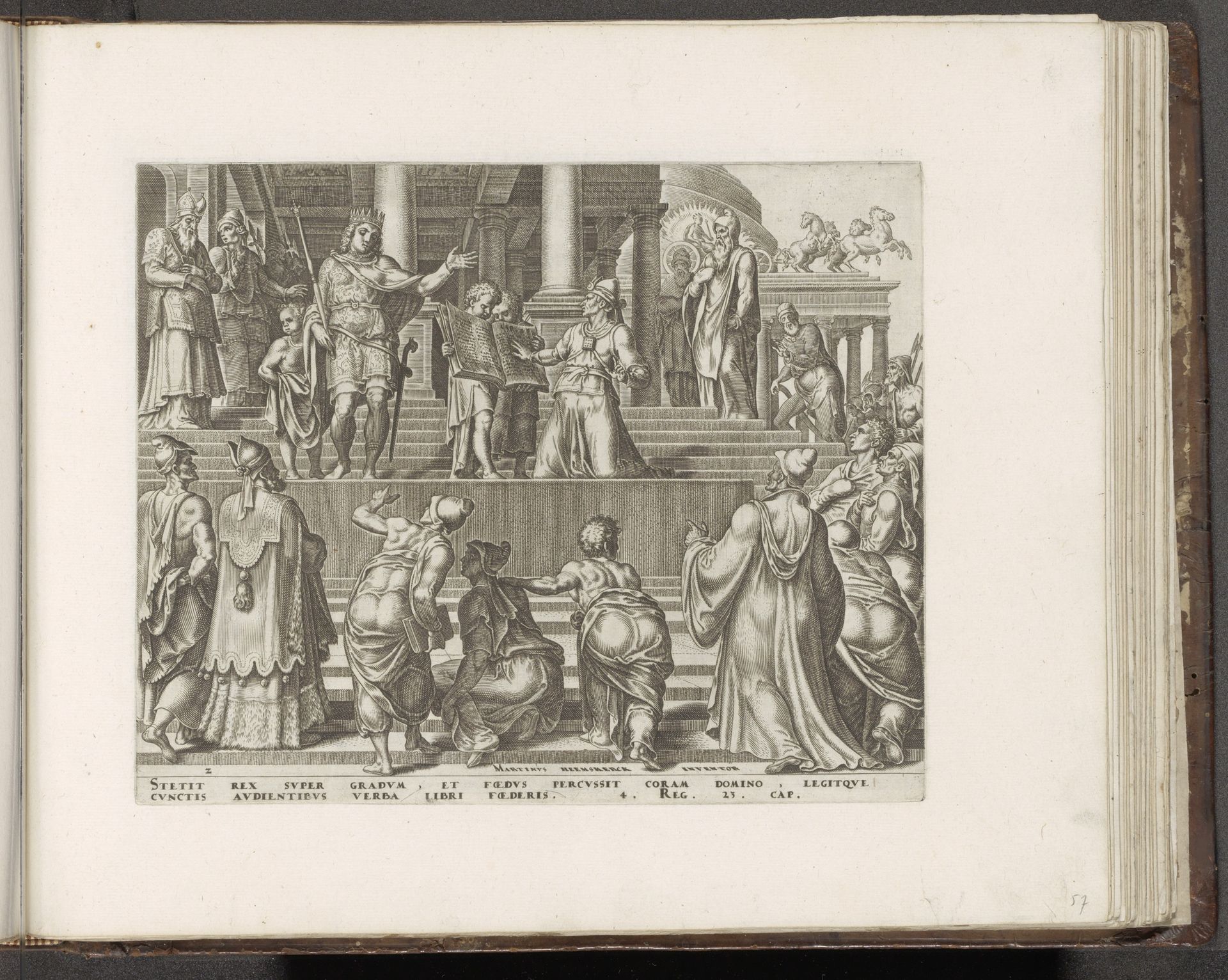
Philips Galle created this print, Koning Josia laat het wetboek aan het volk voorlezen, which translates to King Josiah reads the Book of Law to the People, sometime between 1537 and 1612. It's now housed in the Rijksmuseum. This print depicts a scene from the Bible. King Josiah stands on a platform with his entourage to present the Book of Law to the common people. The print offers a glimpse into the visual culture of the 16th century, a time of religious and political upheaval in Europe. Galle, working in the Netherlands, was part of a thriving printmaking industry that disseminated images and ideas widely. Looking at the architecture and clothing, we see a mix of classical and contemporary elements, reflecting the Renaissance interest in antiquity, although the focus is the contemporary meaning of the Bible. Prints like this played a crucial role in shaping public opinion and religious identity during the Reformation. To understand the print more fully, we might consult contemporary religious texts, political pamphlets, and art historical studies of print culture in the Netherlands. The meaning of this work is shaped by its historical and institutional context.
Koning Josia laat het wetboek aan het volk voorlezen 1567 - 1579

Philips Galle
1537 - 1612Location
RijksmuseumArtwork details
- Medium
- print, paper, engraving
- Dimensions
- height 205 mm, width 252 mm
- Location
- Rijksmuseum
- Copyright
- Rijks Museum: Open Domain
Tags
mannerism
figuration
paper
line
history-painting
engraving
Comments
No comments
About this artwork
Philips Galle created this print, Koning Josia laat het wetboek aan het volk voorlezen, which translates to King Josiah reads the Book of Law to the People, sometime between 1537 and 1612. It's now housed in the Rijksmuseum. This print depicts a scene from the Bible. King Josiah stands on a platform with his entourage to present the Book of Law to the common people. The print offers a glimpse into the visual culture of the 16th century, a time of religious and political upheaval in Europe. Galle, working in the Netherlands, was part of a thriving printmaking industry that disseminated images and ideas widely. Looking at the architecture and clothing, we see a mix of classical and contemporary elements, reflecting the Renaissance interest in antiquity, although the focus is the contemporary meaning of the Bible. Prints like this played a crucial role in shaping public opinion and religious identity during the Reformation. To understand the print more fully, we might consult contemporary religious texts, political pamphlets, and art historical studies of print culture in the Netherlands. The meaning of this work is shaped by its historical and institutional context.
Comments
No comments