About this artwork
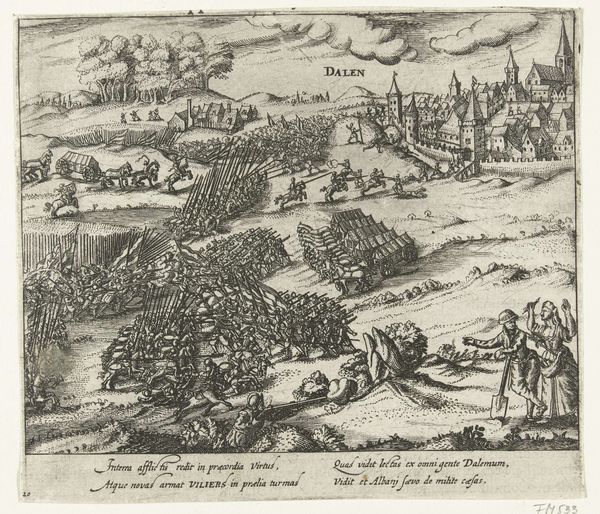
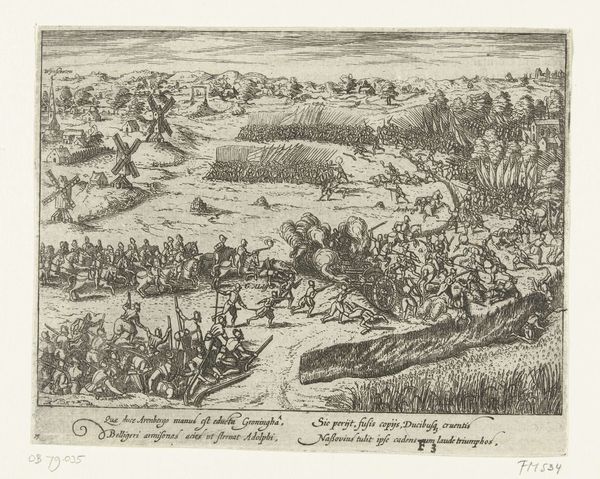
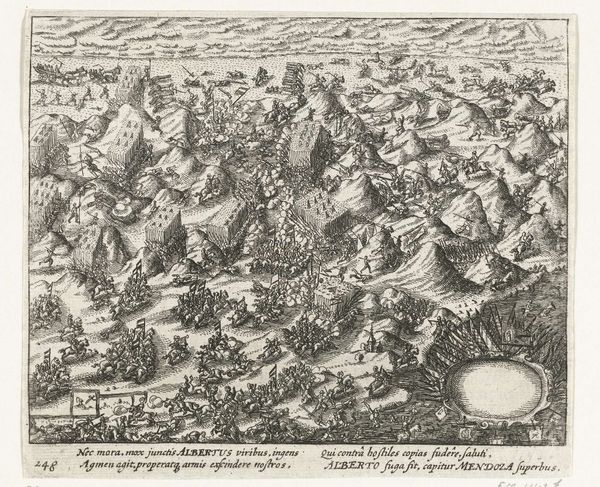
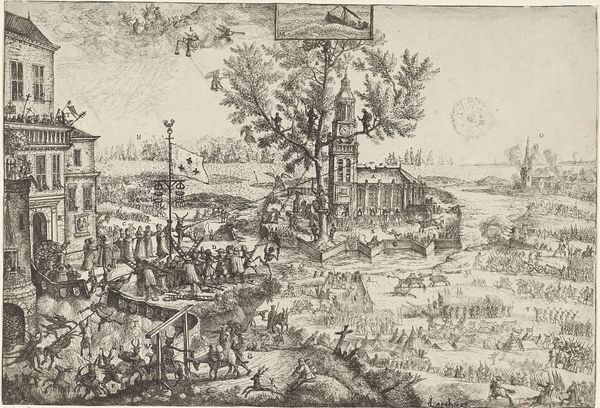
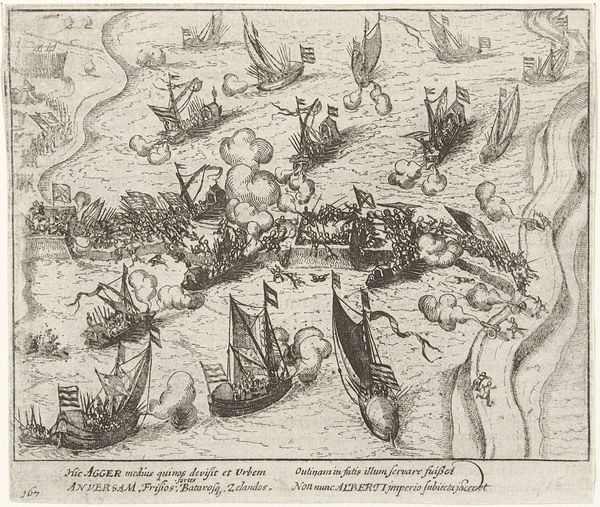
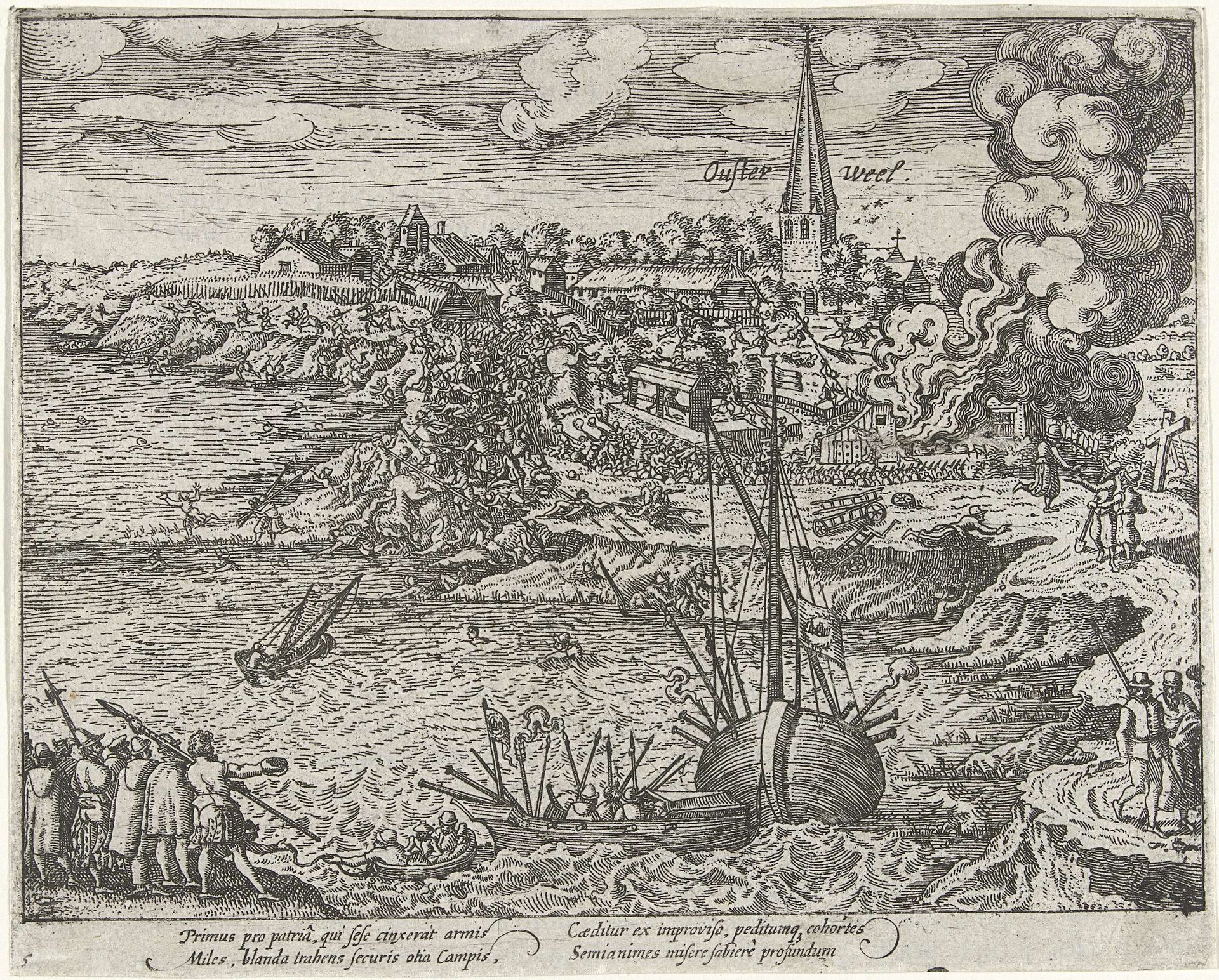
This anonymous engraving depicts the Battle of Oosterweel in 1567, capturing the chaos and violence of the Dutch Revolt. At the heart of the image is a struggle between land and water, civilization, and nature. A motif echoed throughout history in scenes of conflict. Note the recurring imagery: the raging fire consuming buildings contrasts with the billowing clouds, mirroring each other in a dance of destruction. This interplay between fire and smoke has ancient roots, symbolizing both purification and devastation. Observe how these themes resonate in works like Delacroix's "Liberty Leading the People," where smoke from battle merges with revolutionary fervor. Or Turner's seascapes, where the sublime power of nature engulfs human endeavors. Consider how such imagery taps into our collective memory. The subconscious understanding of chaos and renewal through destruction. It’s a cycle of violence and rebirth that echoes through the ages. The battle depicted here is not just a moment in history, but a recurring motif. A symbol of humanity’s eternal struggle, a force of destruction, and the hope for a new beginning.

Artwork details
- Medium
- print, engraving
- Dimensions
- height 138 mm, width 172 mm
- Location
- Rijksmuseum
- Copyright
- Rijks Museum: Open Domain
Tags
pen drawing
landscape
11_renaissance
history-painting
engraving
Comments
No comments
About this artwork
This anonymous engraving depicts the Battle of Oosterweel in 1567, capturing the chaos and violence of the Dutch Revolt. At the heart of the image is a struggle between land and water, civilization, and nature. A motif echoed throughout history in scenes of conflict. Note the recurring imagery: the raging fire consuming buildings contrasts with the billowing clouds, mirroring each other in a dance of destruction. This interplay between fire and smoke has ancient roots, symbolizing both purification and devastation. Observe how these themes resonate in works like Delacroix's "Liberty Leading the People," where smoke from battle merges with revolutionary fervor. Or Turner's seascapes, where the sublime power of nature engulfs human endeavors. Consider how such imagery taps into our collective memory. The subconscious understanding of chaos and renewal through destruction. It’s a cycle of violence and rebirth that echoes through the ages. The battle depicted here is not just a moment in history, but a recurring motif. A symbol of humanity’s eternal struggle, a force of destruction, and the hope for a new beginning.
Comments
No comments