About this artwork
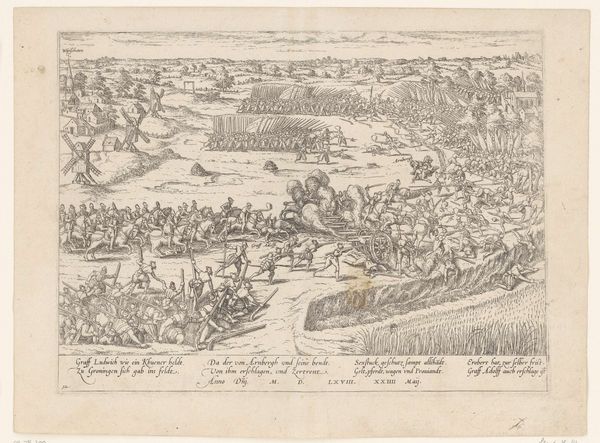
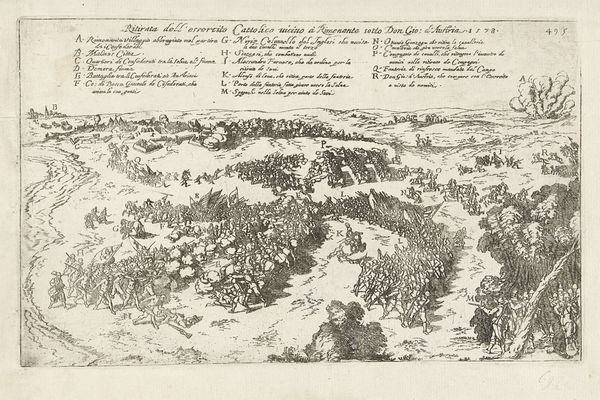
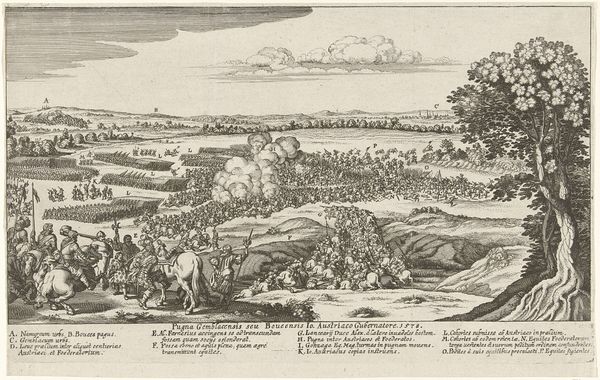
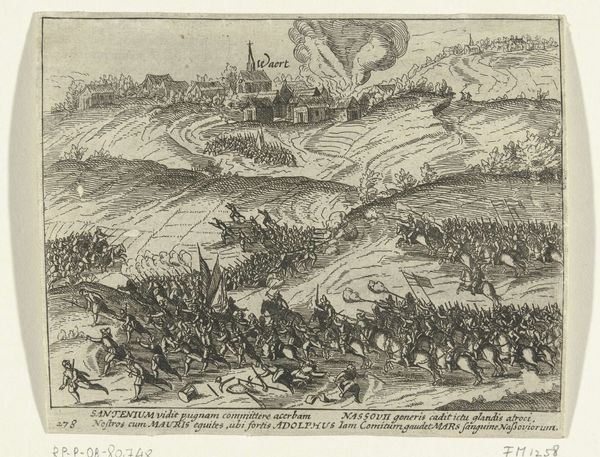
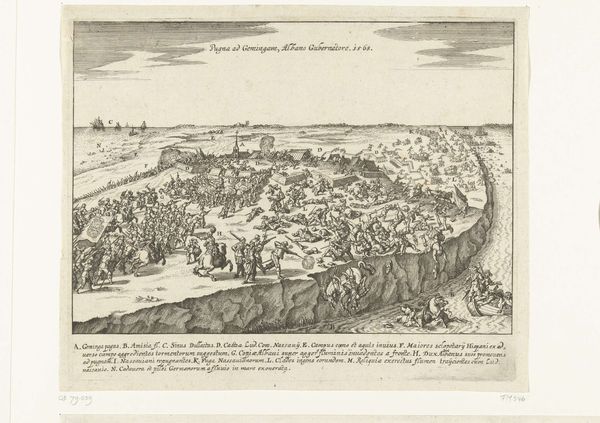
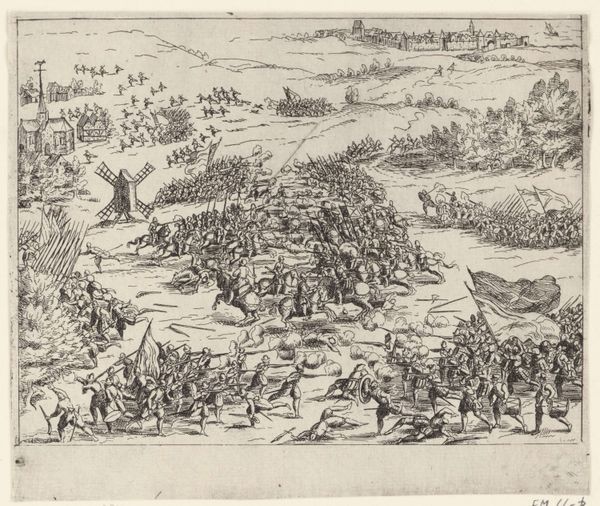
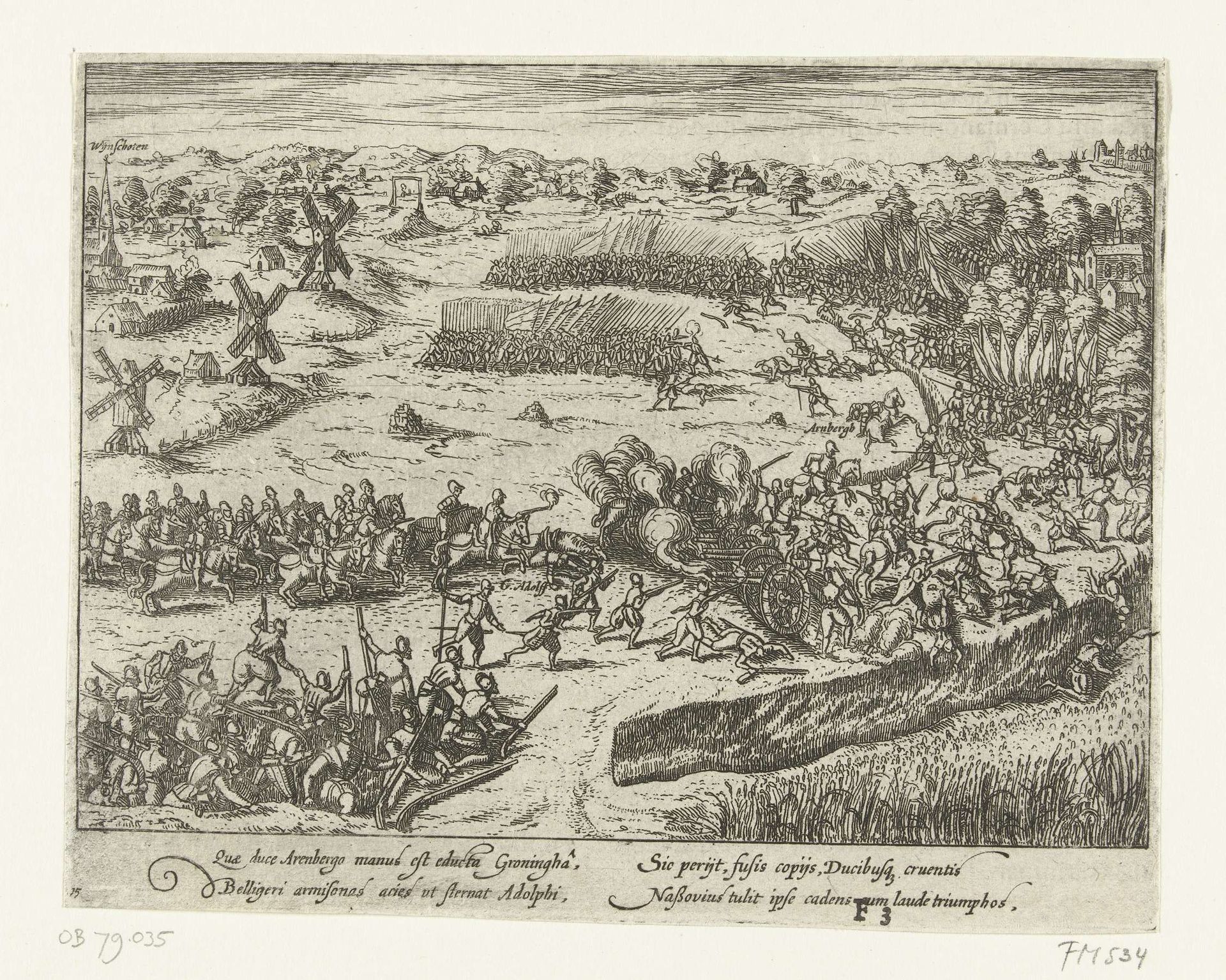
This print depicts the Battle of Heiligerlee in 1568, capturing the clash of armies amidst a landscape dotted with windmills. These windmills, more than mere background, are symbols deeply rooted in Dutch identity. Consider these ubiquitous structures, not just as tools for milling grain, but as emblems of a nation's struggle for independence. Like the Fasces in ancient Rome, they represented collective strength. Windmills appear across Dutch Golden Age paintings, embodying the nation's industriousness and resilience. The sight of these mills evokes a sense of place and cultural pride. In witnessing this battle scene, one cannot help but feel the emotional weight of the conflict, the clash of ideologies, and the human cost of war, all framed by these iconic structures. This image is a potent reminder of how cultural symbols become intertwined with our collective memory, shaping our understanding of history.

Artwork details
- Medium
- print, etching, engraving
- Dimensions
- height 138 mm, width 174 mm
- Location
- Rijksmuseum
- Copyright
- Rijks Museum: Open Domain
Tags
Comments
Share your thoughts
About this artwork
This print depicts the Battle of Heiligerlee in 1568, capturing the clash of armies amidst a landscape dotted with windmills. These windmills, more than mere background, are symbols deeply rooted in Dutch identity. Consider these ubiquitous structures, not just as tools for milling grain, but as emblems of a nation's struggle for independence. Like the Fasces in ancient Rome, they represented collective strength. Windmills appear across Dutch Golden Age paintings, embodying the nation's industriousness and resilience. The sight of these mills evokes a sense of place and cultural pride. In witnessing this battle scene, one cannot help but feel the emotional weight of the conflict, the clash of ideologies, and the human cost of war, all framed by these iconic structures. This image is a potent reminder of how cultural symbols become intertwined with our collective memory, shaping our understanding of history.
Comments
Share your thoughts