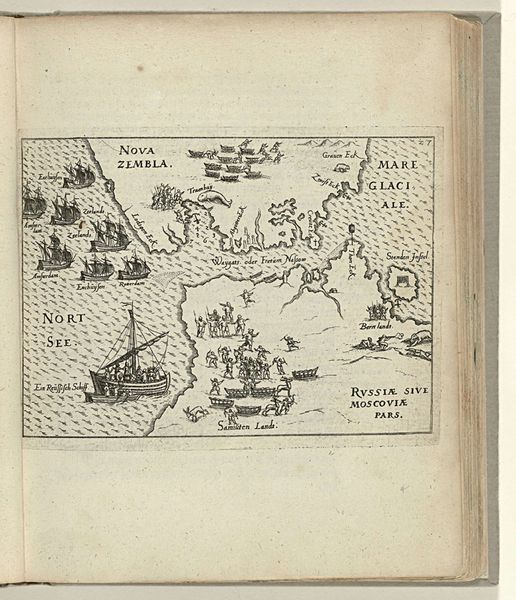
print, engraving
#
dutch-golden-age
# print
#
landscape
#
geometric
#
engraving
Dimensions: height 406 mm, width 297 mm
Copyright: Rijks Museum: Open Domain
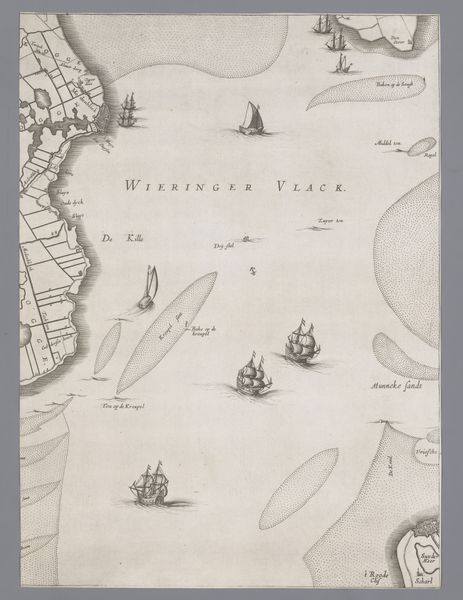
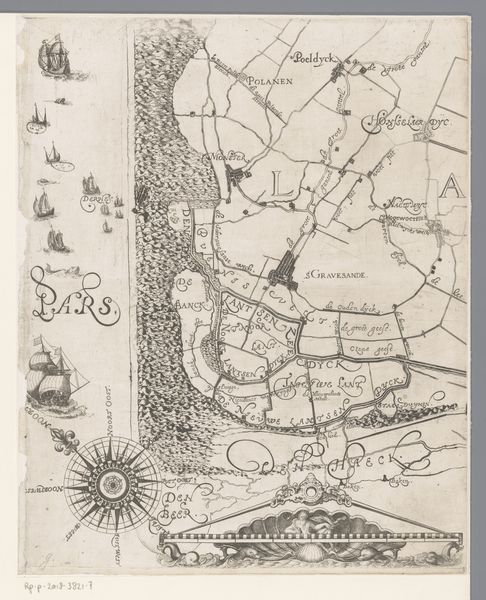
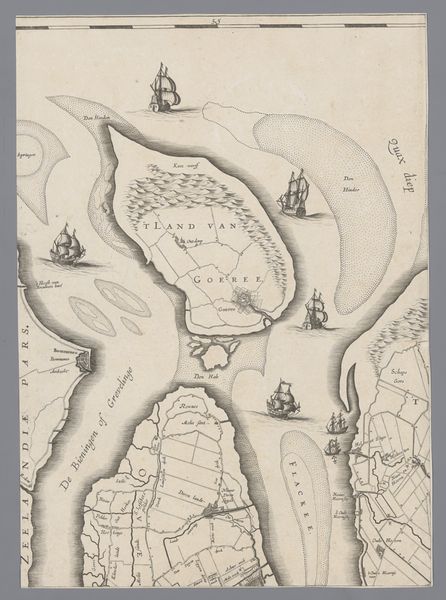
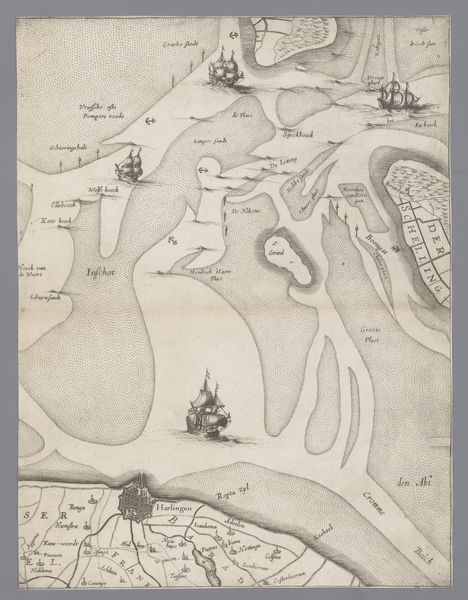
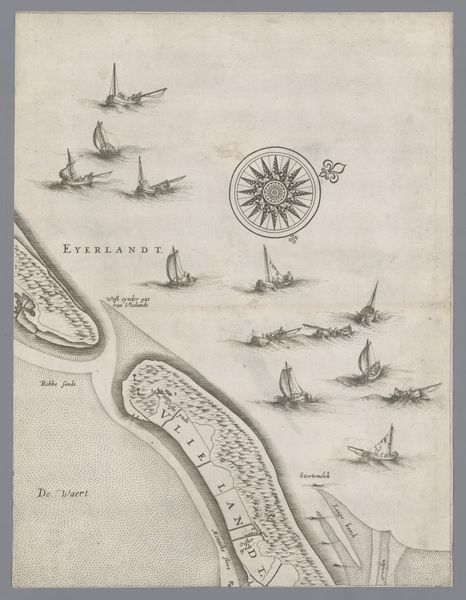
Curator: Welcome. Here we have an engraved map titled "Kaart van het Graafschap Holland en Utrecht (plaat 38)", which translates to "Map of the County of Holland and Utrecht (plate 38)." Jacob Aertsz. Colom created this in 1639. Editor: The vast emptiness of the sea depicted here is striking, almost intimidating. The solitary ship braving that space. It gives me a sense of the smallness of humanity against the backdrop of nature. Curator: Notice the detail in the coastline, a clear representation of Dutch Golden Age cartography. The geometric precision, a testament to burgeoning scientific mapping techniques, focuses not on subjective representation but the measurable world. Editor: While the geometry and precision certainly highlight the empirical drive of the time, it’s also about power. Maps were, and continue to be, instruments for claiming territories and establishing trade routes. This representation would solidify claims, visually codifying the relationship between land and authority. Curator: The sparse yet informative use of lettering emphasizes structure. Observe how “ZEE” dominates the composition, acting as a central visual anchor. There is a definite formal beauty in the interplay of these simple shapes and forms. Editor: But even the seeming simplicity points towards class divisions and economic ambitions of the time. Who got to own ships? Who got to travel? It presents an exclusionary snapshot of Dutch society in that period. And, it obscures any evidence of indigenous knowledge of the same region that was surely unacknowledged. Curator: True, the act of seeing and recording always entails choices of what to include or exclude, which influences perception. Looking at it formally, it is hard not to recognize how carefully organized space operates within a representational order. Editor: Seeing the visual order you describe while recognizing whose stories remain unheard – that tension is why interrogating historical pieces is so rewarding. Curator: Indeed, reflecting on historical context provides critical lenses through which we recognize present-day systems of meaning. Editor: By bringing varied approaches we allow others to observe through lenses capable of both seeing beauty and the historical burdens art carries.
Comments
No comments
Be the first to comment and join the conversation on the ultimate creative platform.
 Collect
 React
React Comment
More like this