About this artwork
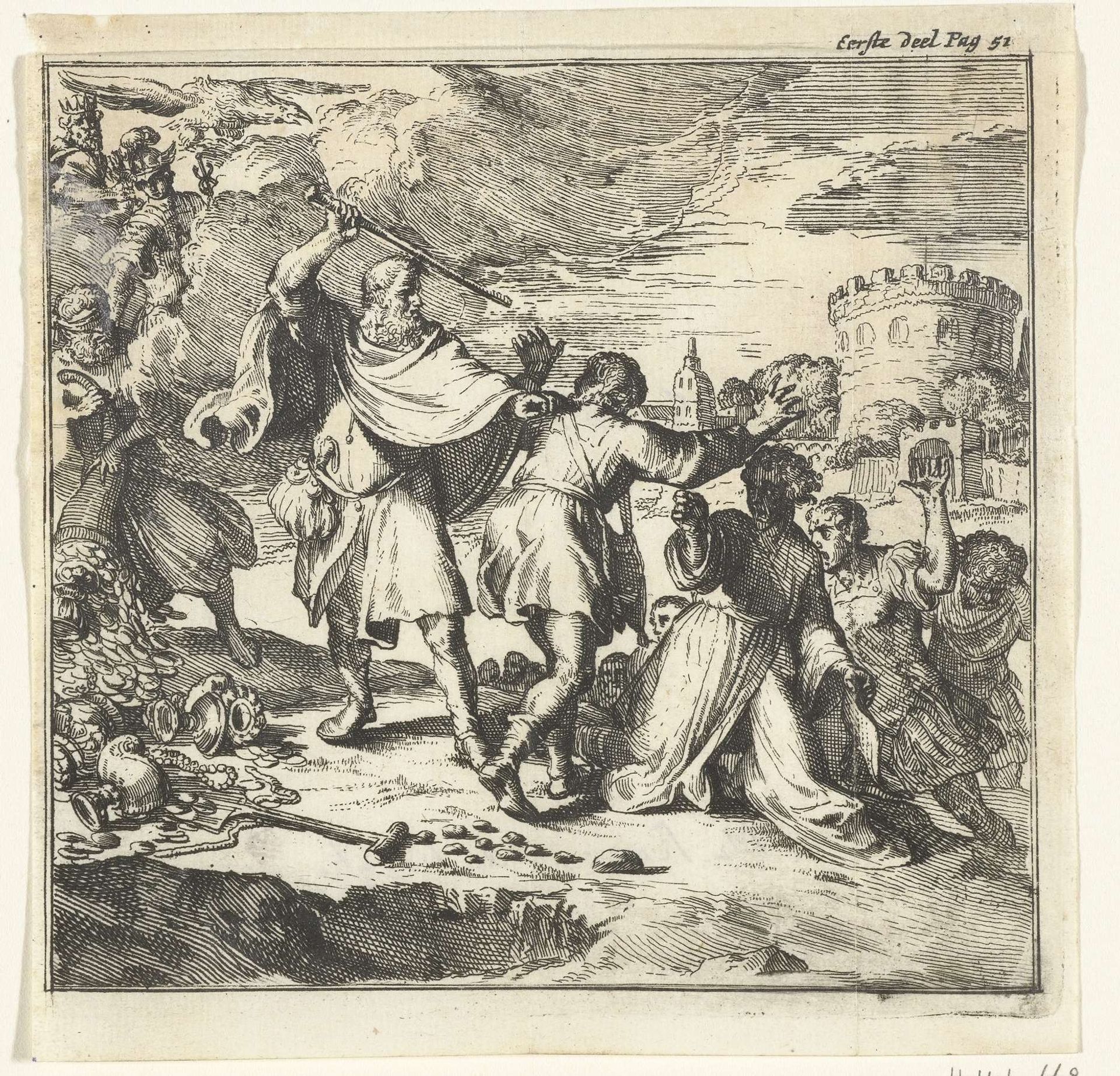
This illustration by Romeyn de Hooghe visualizes a scene from Lucian’s works, rich with symbols that echo across time. Here, a stern figure brandishes a rod, driving away figures from a treasure hoard. This motif of expulsion resonates deeply with the expulsion from Paradise. One can find related scenes in numerous iterations throughout art history, often signifying a loss of innocence and a fall into the harsh realities of the world. Note how the rod itself mirrors the staff of Moses, or a scepter, a symbol of power and command. Its meaning has been transmuted over centuries, reappearing in various guises, each time imbued with the context of its era. Consider how these symbols engage our collective memory, stirring subconscious associations. The fear and desperation of those fleeing speaks to primal anxieties of loss. This symbol doesn't progress linearly; instead, it resurfaces, evolving and taking on new meanings in different historical contexts.
Illustratie voor 'Alle de werken' van Lucianus
1679

Romeyn de Hooghe
1645 - 1708Location
RijksmuseumArtwork details
- Medium
- print, ink, engraving
- Dimensions
- height 128 mm, width 128 mm
- Location
- Rijksmuseum
- Copyright
- Rijks Museum: Open Domain
Tags
Comments
Share your thoughts
About this artwork
This illustration by Romeyn de Hooghe visualizes a scene from Lucian’s works, rich with symbols that echo across time. Here, a stern figure brandishes a rod, driving away figures from a treasure hoard. This motif of expulsion resonates deeply with the expulsion from Paradise. One can find related scenes in numerous iterations throughout art history, often signifying a loss of innocence and a fall into the harsh realities of the world. Note how the rod itself mirrors the staff of Moses, or a scepter, a symbol of power and command. Its meaning has been transmuted over centuries, reappearing in various guises, each time imbued with the context of its era. Consider how these symbols engage our collective memory, stirring subconscious associations. The fear and desperation of those fleeing speaks to primal anxieties of loss. This symbol doesn't progress linearly; instead, it resurfaces, evolving and taking on new meanings in different historical contexts.
Comments
Share your thoughts