1582
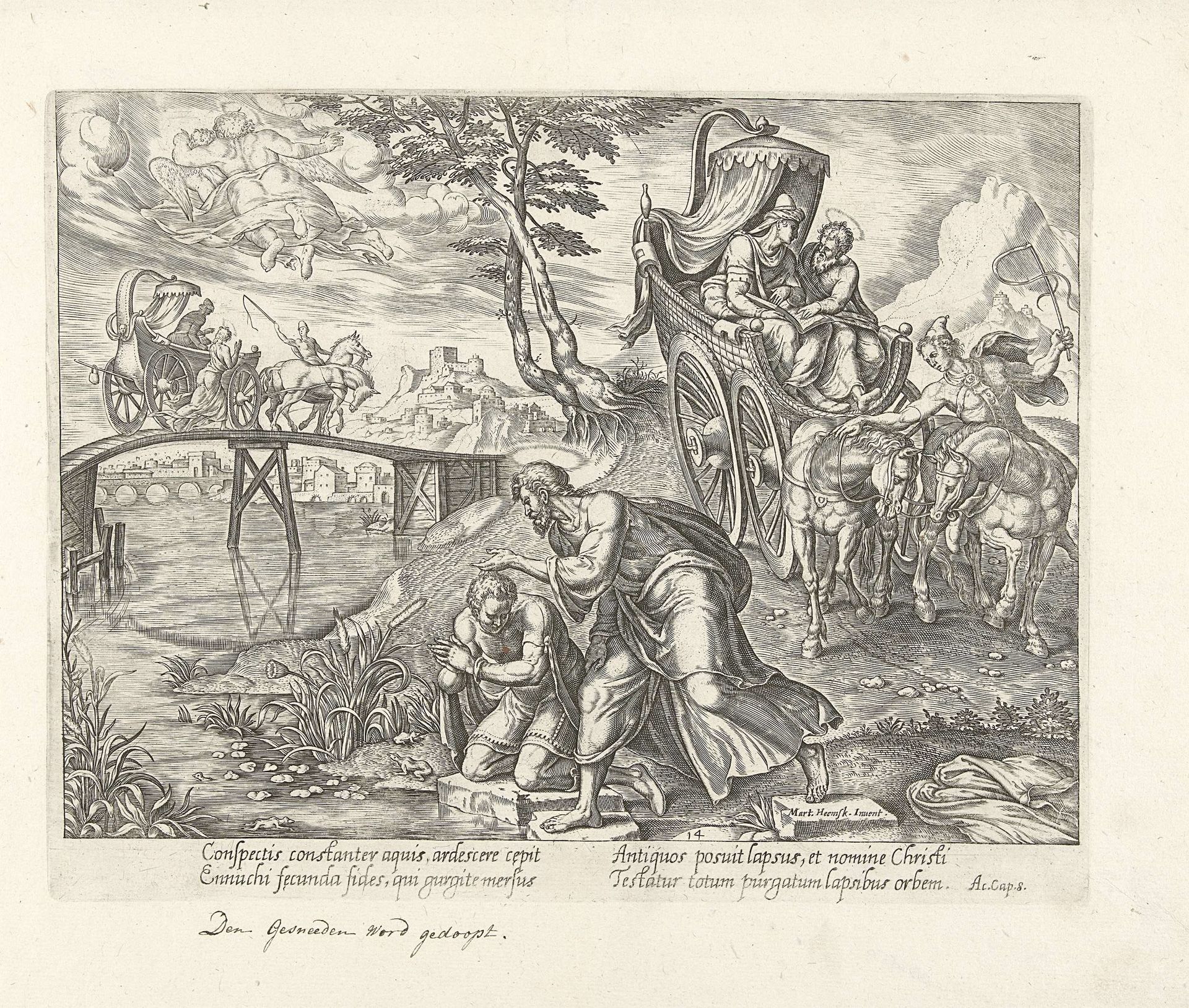
Filippus en de eunuch

Philips Galle
1537 - 1612Location
RijksmuseumListen to curator's interpretation
Curatorial notes
Philips Galle created this engraving, "Filippus en de eunuch," in the Netherlands sometime between 1537 and 1612. It illustrates a biblical scene, Philip baptizing an Ethiopian eunuch. The image is rich with visual codes. The eunuch's dark skin and exotic attire signal his foreign origins. The act of baptism, performed in a natural landscape, symbolizes the universal reach of Christianity, extending beyond established institutions. Galle was deeply embedded in the artistic and intellectual circles of Antwerp, a major center of printing and trade, and produced this print amid the religious and political upheavals of the Reformation. As such, the print may also be seen as taking a progressive stance. To fully understand this print, a historian might consult period texts, theological treatises, and social histories of the Netherlands to contextualize its meaning within the religious and political landscape of the time.