silver, metal
#
silver
#
metal
#
united-states
#
decorative-art
Dimensions: 2 1/2 x 1 3/4 in. (6.35 x 4.45 cm)
Copyright: Public Domain
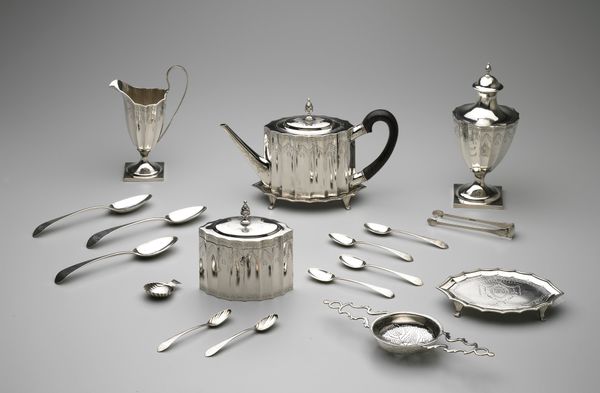
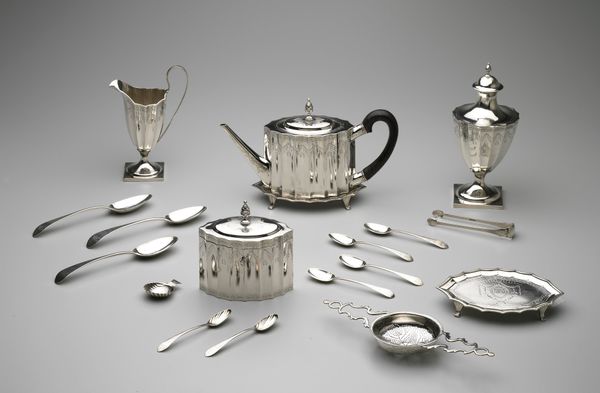
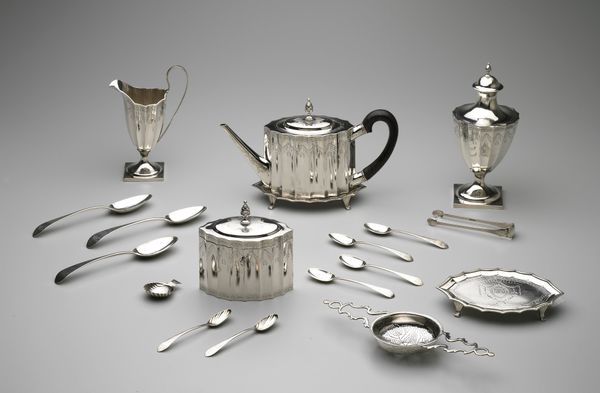
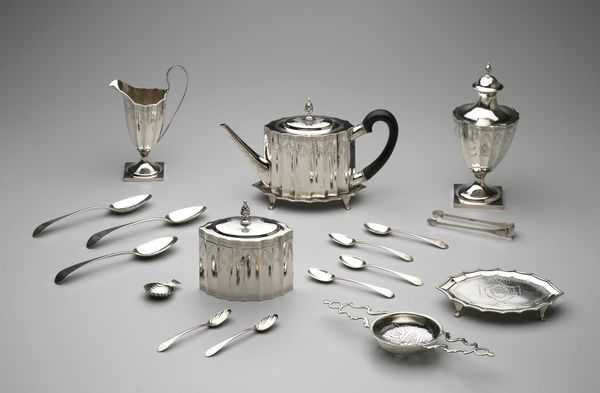
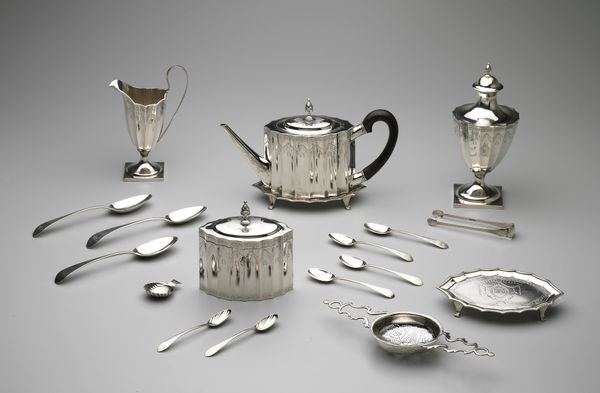
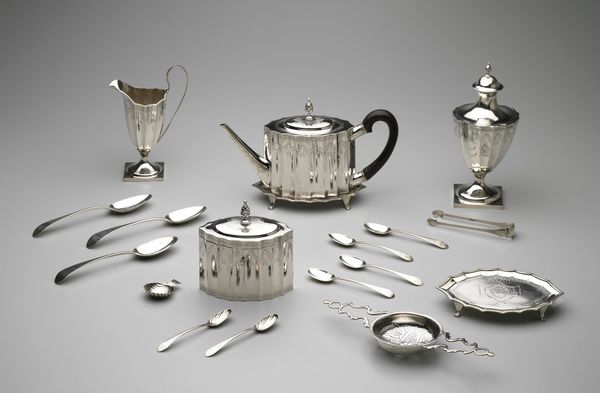
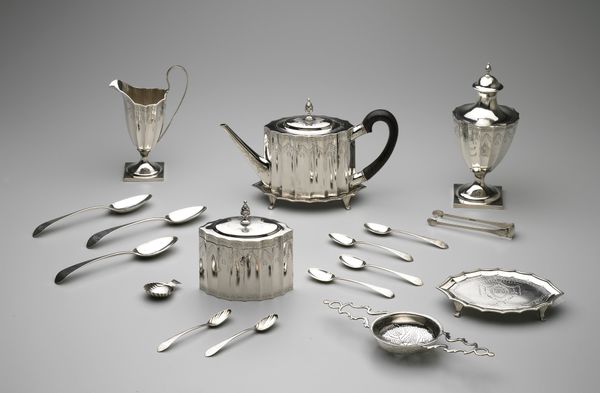
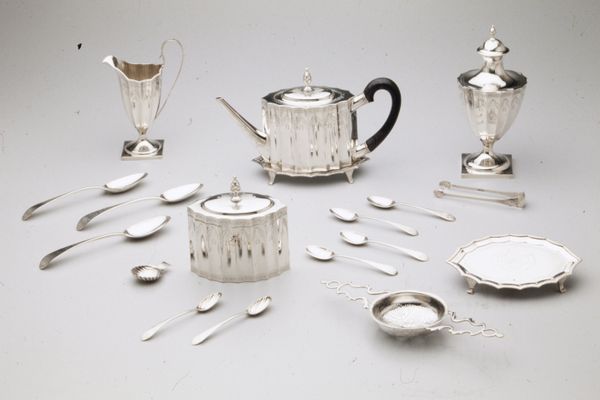
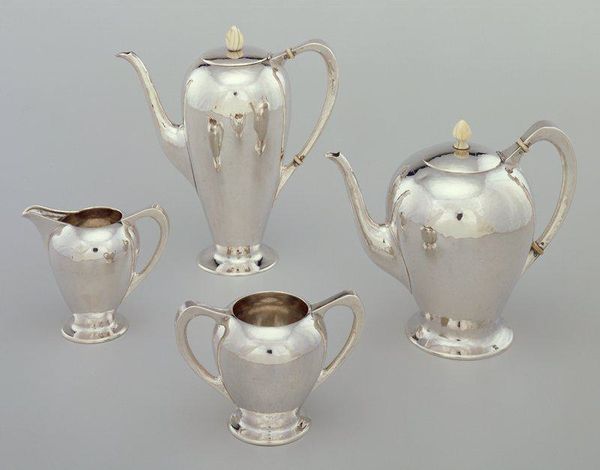
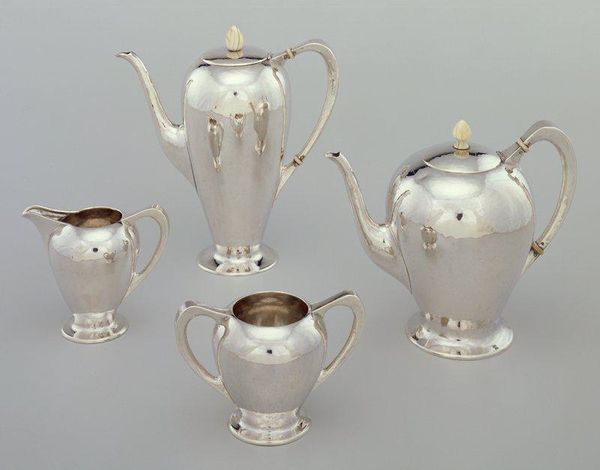
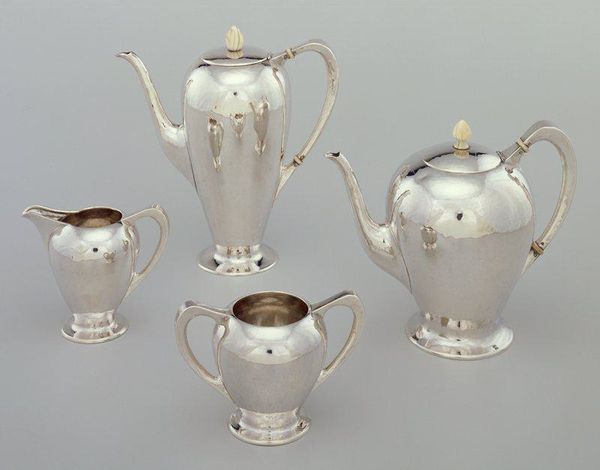
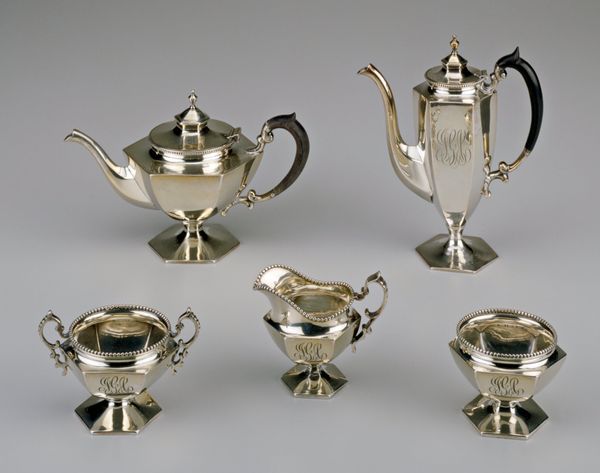
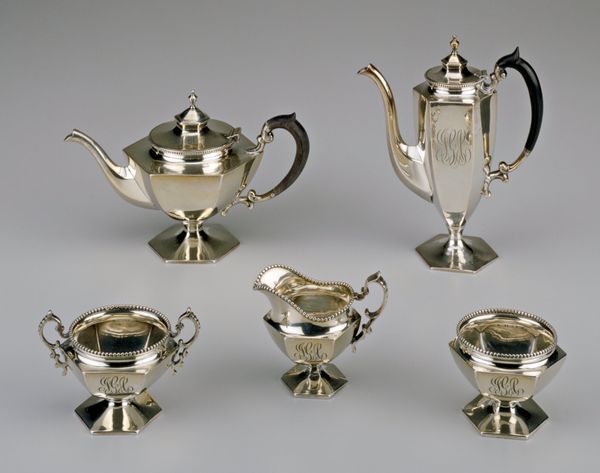
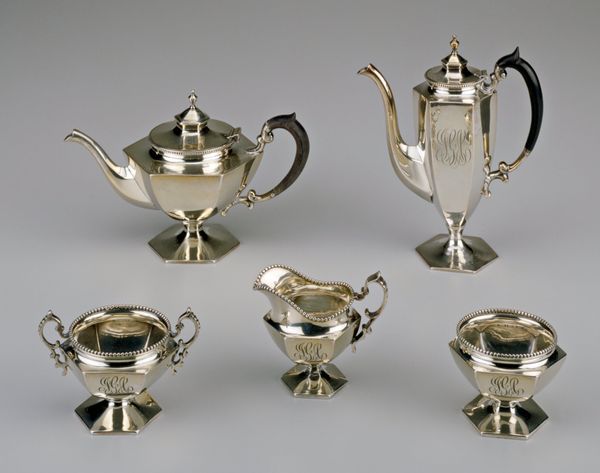
Curator: My word, look at this collection of silver! Everything seems to shimmer under the museum lights, like a gathering of starlight fallen to earth. It whispers of elegance, doesn’t it? Editor: Indeed. What strikes me immediately is its almost aggressive formality. All this gleam feels a bit like wealth performing for the viewer. Could you introduce us? Curator: Of course. We are looking at a silver tea service, including, most notably, the delicate tea scoops designed by Paul Revere in 1792. This beautiful piece calls the Minneapolis Institute of Art its home today. It gives one a delightful sense of an almost perfectly preserved moment, wouldn’t you say? Editor: I do. Revere, yes, famed silversmith and revolutionary. Crafting elegant tea services amidst the storm of revolution... there’s a potent symbolism there. A dedication to civility, perhaps, even as society threatened to tear itself apart? Curator: Absolutely. He seemed determined to create and, well, beautify even amid what must have been an age of total uncertainty! Imagine scooping tea with something so meticulously crafted. One scoop can make the difference between comfort and unease, can't it? Editor: Or perhaps Revere sought to solidify class distinctions through objects. Tea became a marker of sophistication, of British refinement. Revere’s silver production not only enabled rituals of gentility but perhaps inadvertently reinforced colonial social structures, even post-revolution. Curator: A possibility, and a valid one. But couldn’t it also be a defiant act of creation, a way to express, to manifest something permanent, of inherent, undeniable value amid impermanence and turmoil? It speaks to me of quiet rebellion, that these objects still live here to bear witness. Editor: Witness to what? The skill of the craftsman, undeniably, but also the system that afforded such craft, and such leisure to partake in elaborate rituals like tea. These scoops, beautiful as they are, invite critical inquiry. Curator: Fair point. So the question, ultimately, becomes not simply whether or not these tools offer grace but whose lives they touched. Maybe these objects, in their shining perfection, serve as quiet interrogations, prompting us to wonder not just about Revere but those absent hands, those stories yet untold. Editor: Exactly! Thank you for allowing my slightly less romantic but necessary provocation. That we can grapple with its contradictions makes Revere's tea service a richer artifact for reflection. Curator: Absolutely. Art always requires that, don’t you agree? In fact, I might now raise my teacup and reflect on exactly this tension.
Comments

minneapolisinstituteofart almost 2 years ago
⋮
The most complete Revere service known, this set was made for a Boston merchant and his wife, John and Mehitable Templeman. It includes one of only two tea caddies made by Revere. The locked boxes held loose tea, an expensive and fashionable commodity. The shell-shaped spoon was used for measuring tea and the sieve was used for straining punch, a beverage often served along with tea. The second stand may have been used as a tray for spoons no longer in use. The accompanying teaspoons and tablespoons have only recently been reunited with this service.


Join the conversation
Join millions of artists and users on Artera today and experience the ultimate creative platform.
 Collect
More like this