silver, metal, wood
#
silver
#
metal
#
united-states
#
wood
#
decorative-art
Dimensions: 5 3/4 x 5 1/2 in. (14.61 x 13.97 cm) (tea caddy and stand)
Copyright: Public Domain
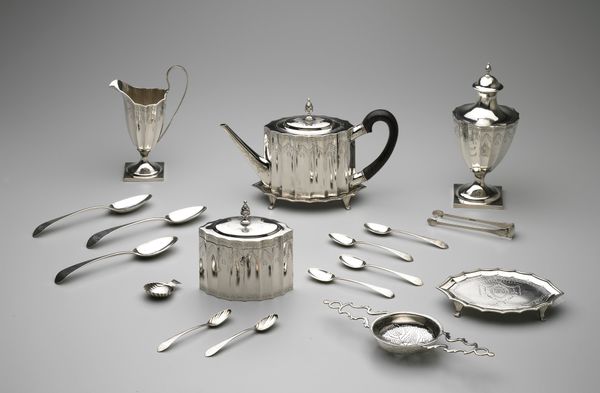
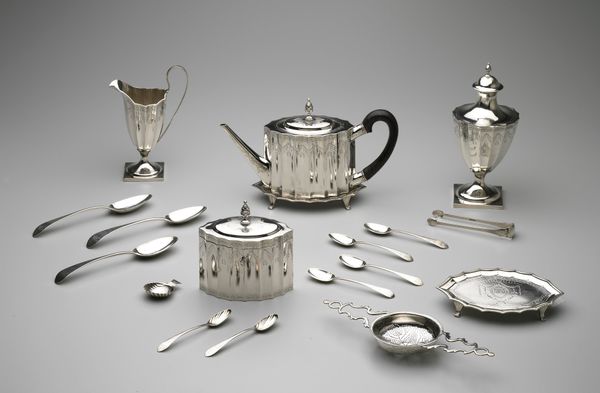
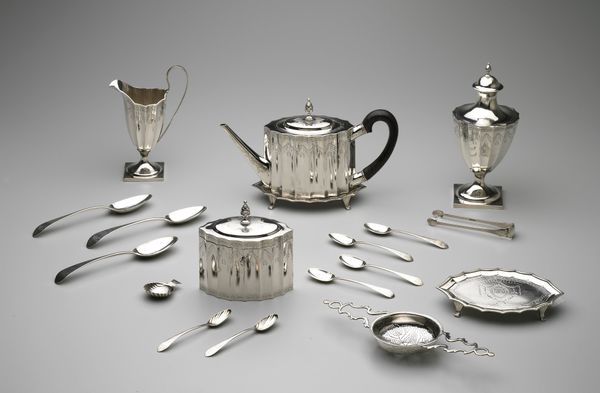
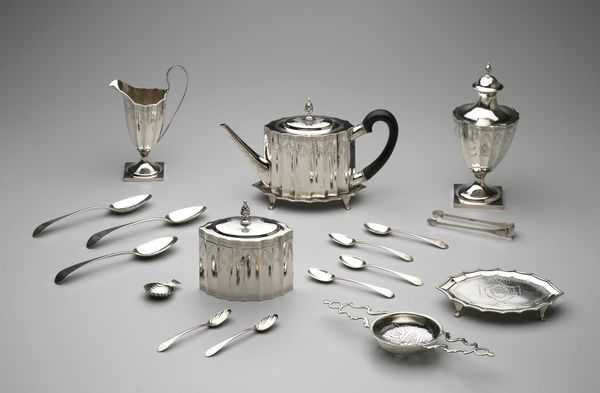
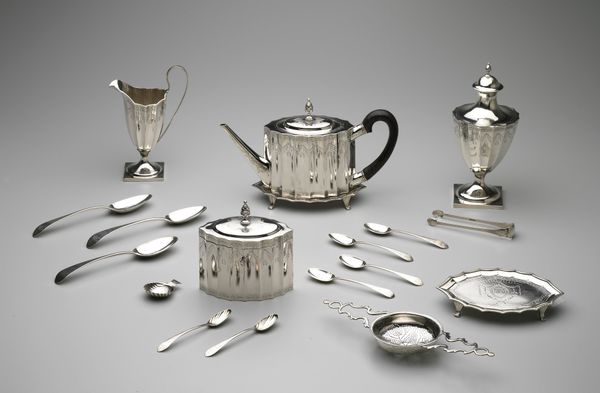
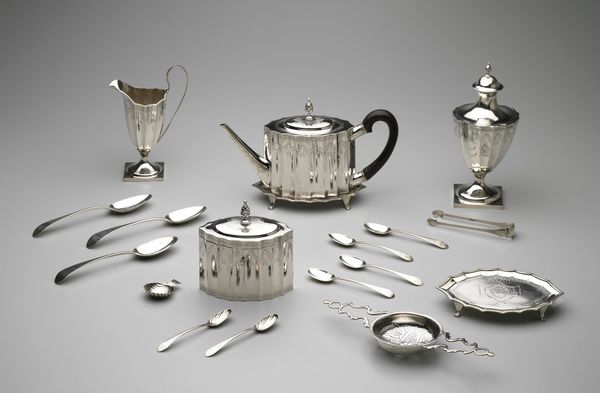
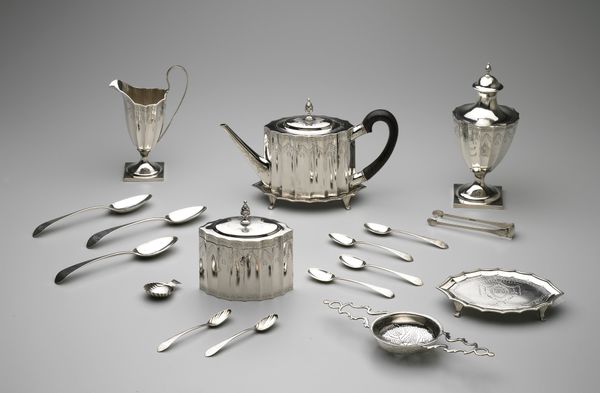
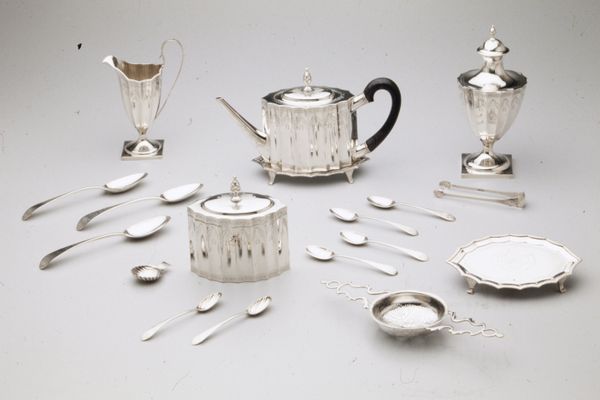
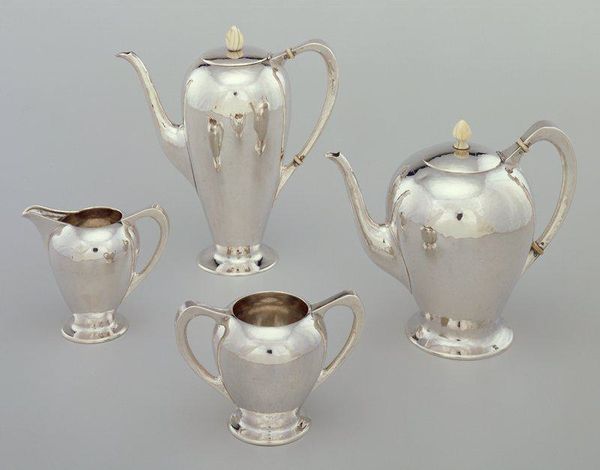
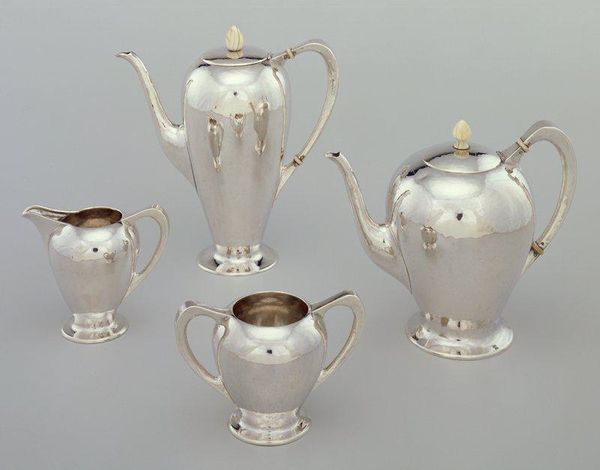
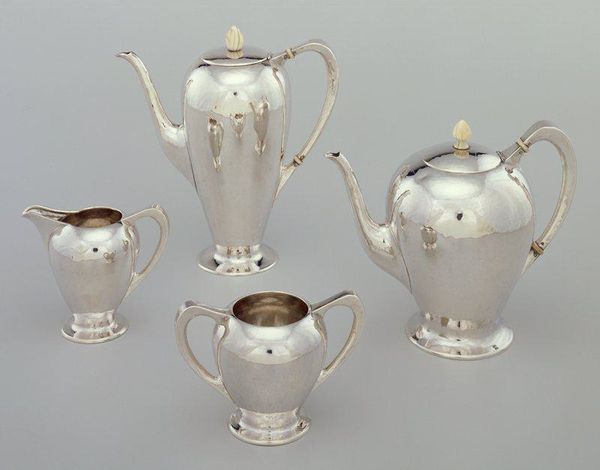
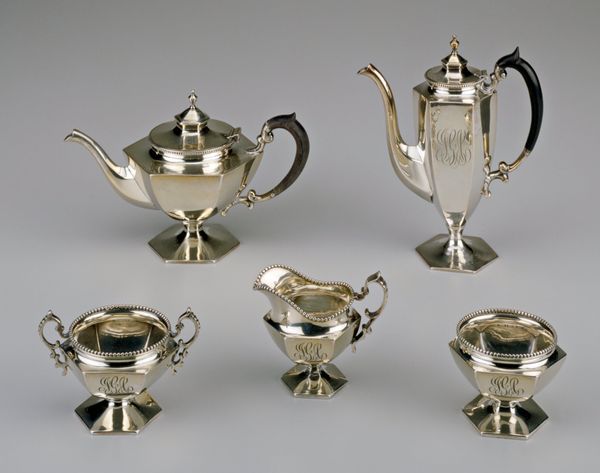
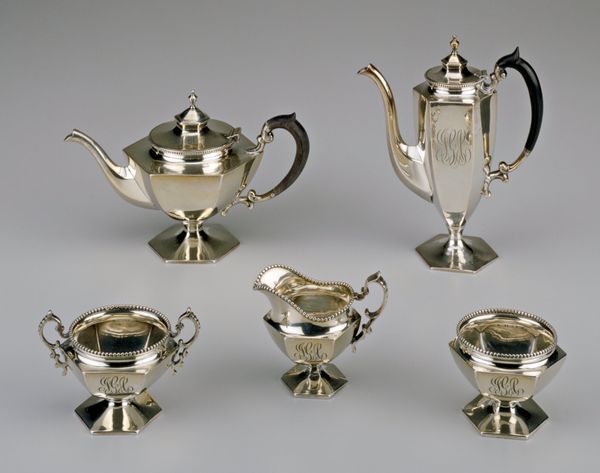
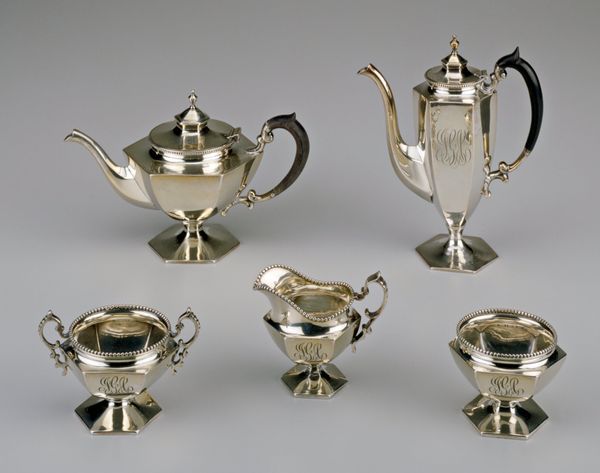
This exquisite tea caddy stand was crafted in the late 18th century by Paul Revere, a man renowned for his silversmithing. Observe the fluted designs adorning each piece, a motif echoing classical architectural forms, suggesting refinement and order. The neoclassical aesthetic connects to a broader yearning for a return to the perceived purity and rationality of the ancient world. These vertical lines can also be found in ancient Greek columns, symbolically upholding civilization. Think of these flutes as vestigial columns, resonating with the psychological comfort of permanence and stability. But consider too, the emotional undercurrent: the reflective surfaces, the ritual of tea. It speaks to a desire for tranquility amidst societal turbulence. These objects are not just tools, they are vessels of memory and emotion, each curve and line carrying the weight of cultural inheritance. The tea set mirrors a reflection of an era in transition.
Comments

minneapolisinstituteofart almost 2 years ago
⋮
The most complete Revere service known, this set was made for a Boston merchant and his wife, John and Mehitable Templeman. It includes one of only two tea caddies made by Revere. The locked boxes held loose tea, an expensive and fashionable commodity. The shell-shaped spoon was used for measuring tea and the sieve was used for straining punch, a beverage often served along with tea. The second stand may have been used as a tray for spoons no longer in use. The accompanying teaspoons and tablespoons have only recently been reunited with this service.


Join the conversation
Join millions of artists and users on Artera today and experience the ultimate creative platform.
 Collect
More like this