About this artwork
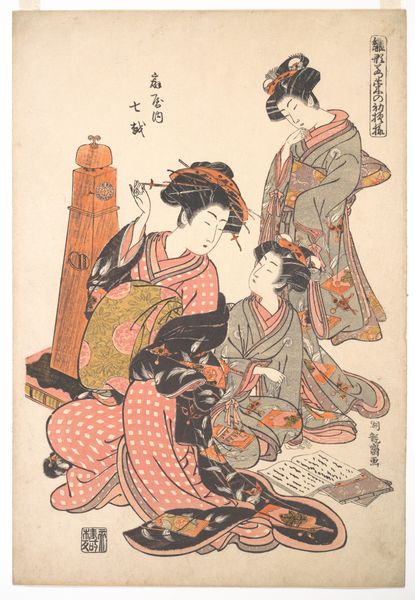
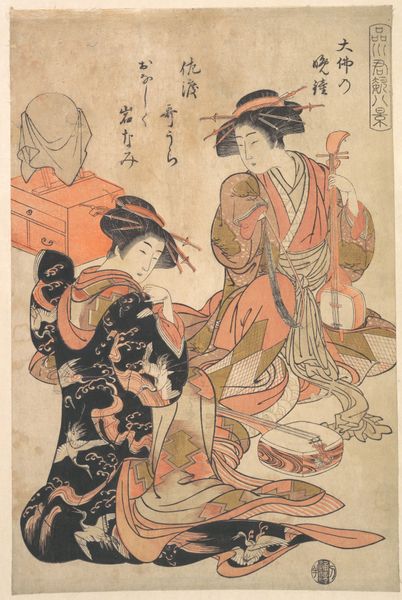
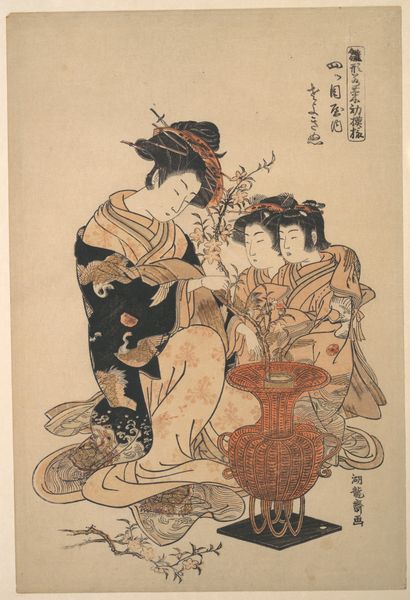
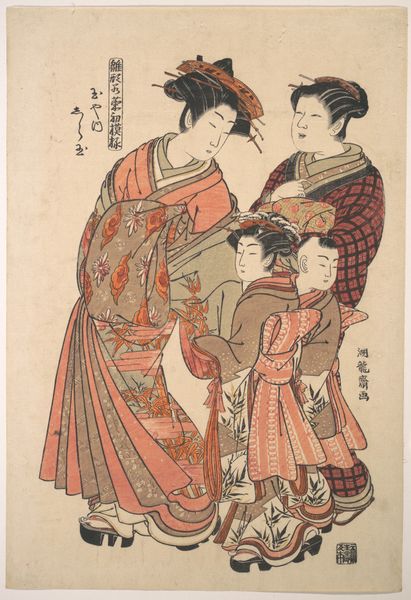
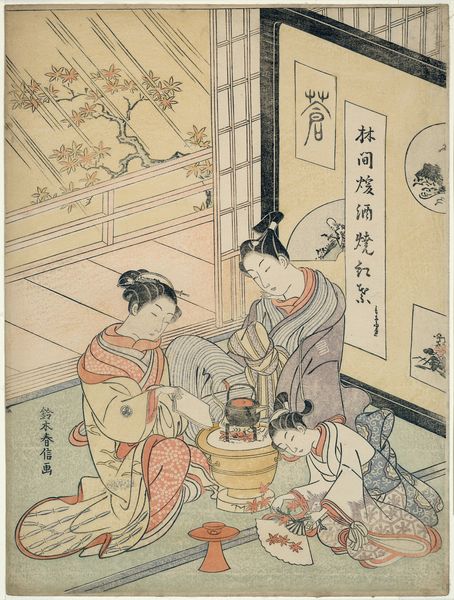
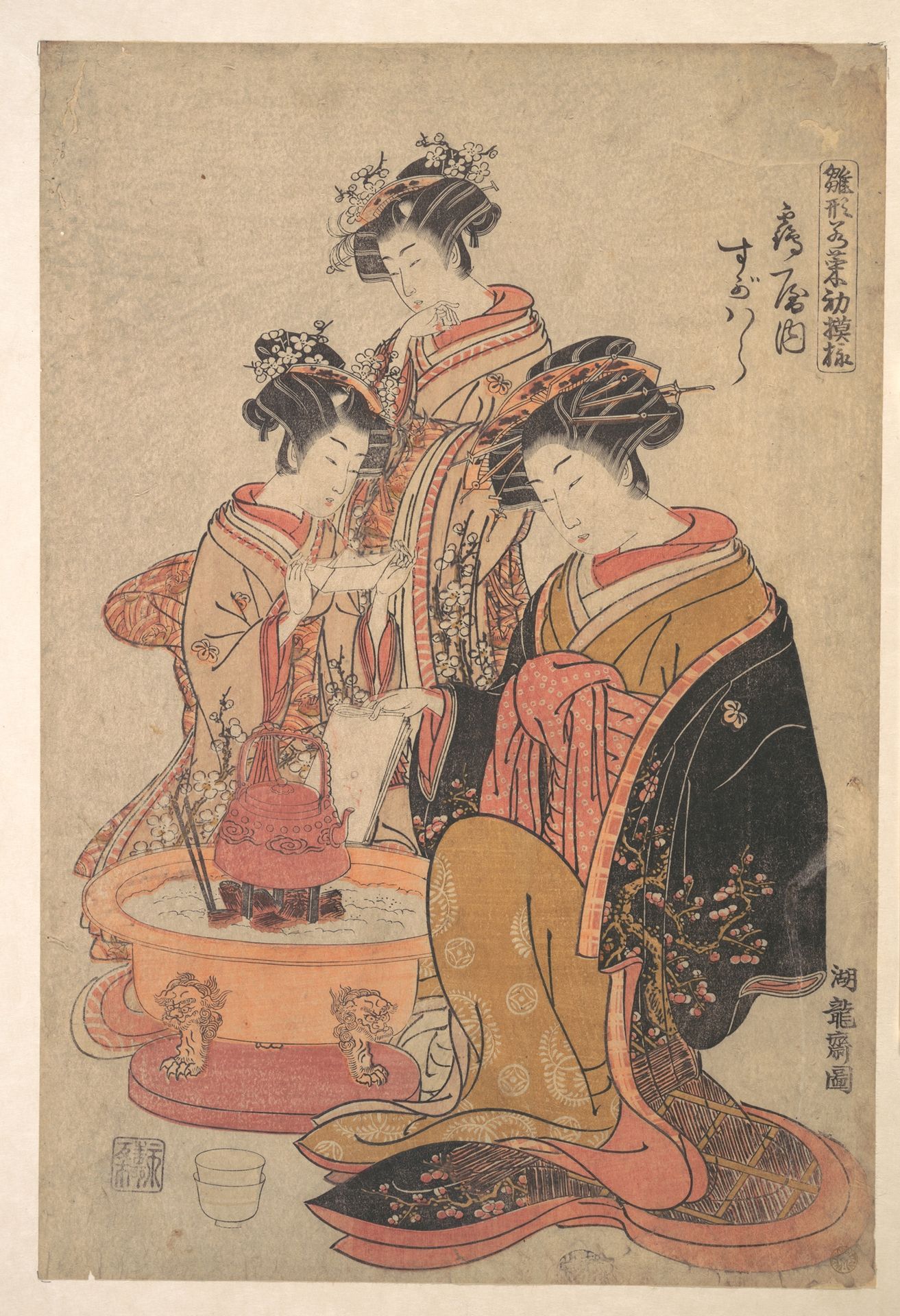
Isoda Koryūsai created this woodblock print depicting the Oiran Sugawara of Tsuru-ya around the 1770s, a time when such prints gained popularity among the merchant classes in Japan. The print offers us a glimpse into the licensed pleasure quarters of the Edo period. Sugawara, the highest rank of courtesan, is shown with two attendants beside a hibachi, a traditional Japanese heating device. These women, who entertained wealthy clients with conversation, music, and companionship, occupied a unique position in society. They were both admired and marginalized. Note how Koryūsai captures the sumptuousness of their garments and the serenity of their poses, while also hinting at the complex social dynamics at play. The artist invites us to consider the intersections of gender, class, and desire within this carefully constructed world, and perhaps reflect on our own expectations when viewing this image. Ultimately, Koryūsai's print prompts us to consider the emotional and economic realities of the women depicted, moving beyond romanticized notions of their lives to engage with their lived experiences.
The Oiran Sugawara of Tsuru-ya seated beside a hibachi (fire box)
1765 - 1785


Artwork details
- Medium
- print, woodblock-print
- Dimensions
- 14 3/5 x 9 7/8 in. (37.1 x 25.1 cm)
- Location
- Metropolitan Museum of Art, New York, NY
- Copyright
- Public Domain
Tags
Comments
Share your thoughts
About this artwork
Isoda Koryūsai created this woodblock print depicting the Oiran Sugawara of Tsuru-ya around the 1770s, a time when such prints gained popularity among the merchant classes in Japan. The print offers us a glimpse into the licensed pleasure quarters of the Edo period. Sugawara, the highest rank of courtesan, is shown with two attendants beside a hibachi, a traditional Japanese heating device. These women, who entertained wealthy clients with conversation, music, and companionship, occupied a unique position in society. They were both admired and marginalized. Note how Koryūsai captures the sumptuousness of their garments and the serenity of their poses, while also hinting at the complex social dynamics at play. The artist invites us to consider the intersections of gender, class, and desire within this carefully constructed world, and perhaps reflect on our own expectations when viewing this image. Ultimately, Koryūsai's print prompts us to consider the emotional and economic realities of the women depicted, moving beyond romanticized notions of their lives to engage with their lived experiences.
Comments
Share your thoughts