About this artwork
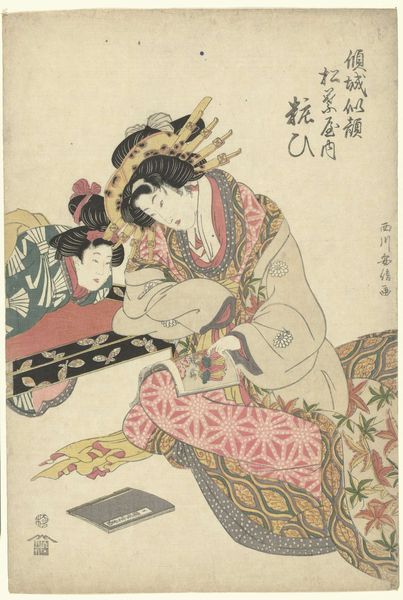
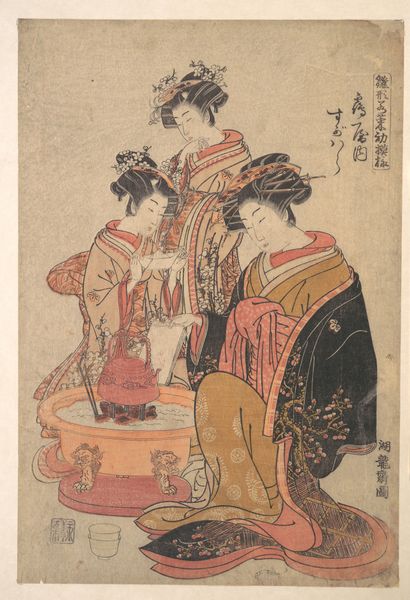
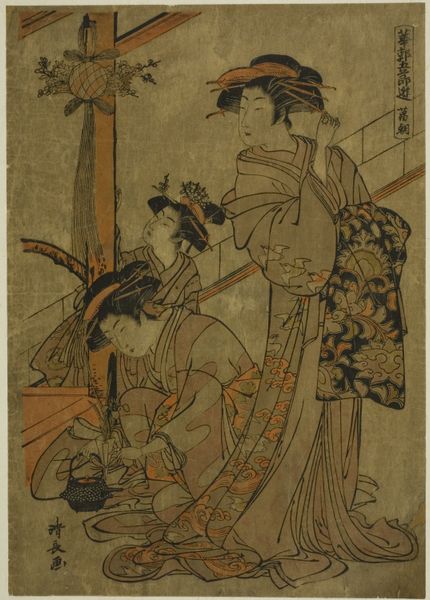
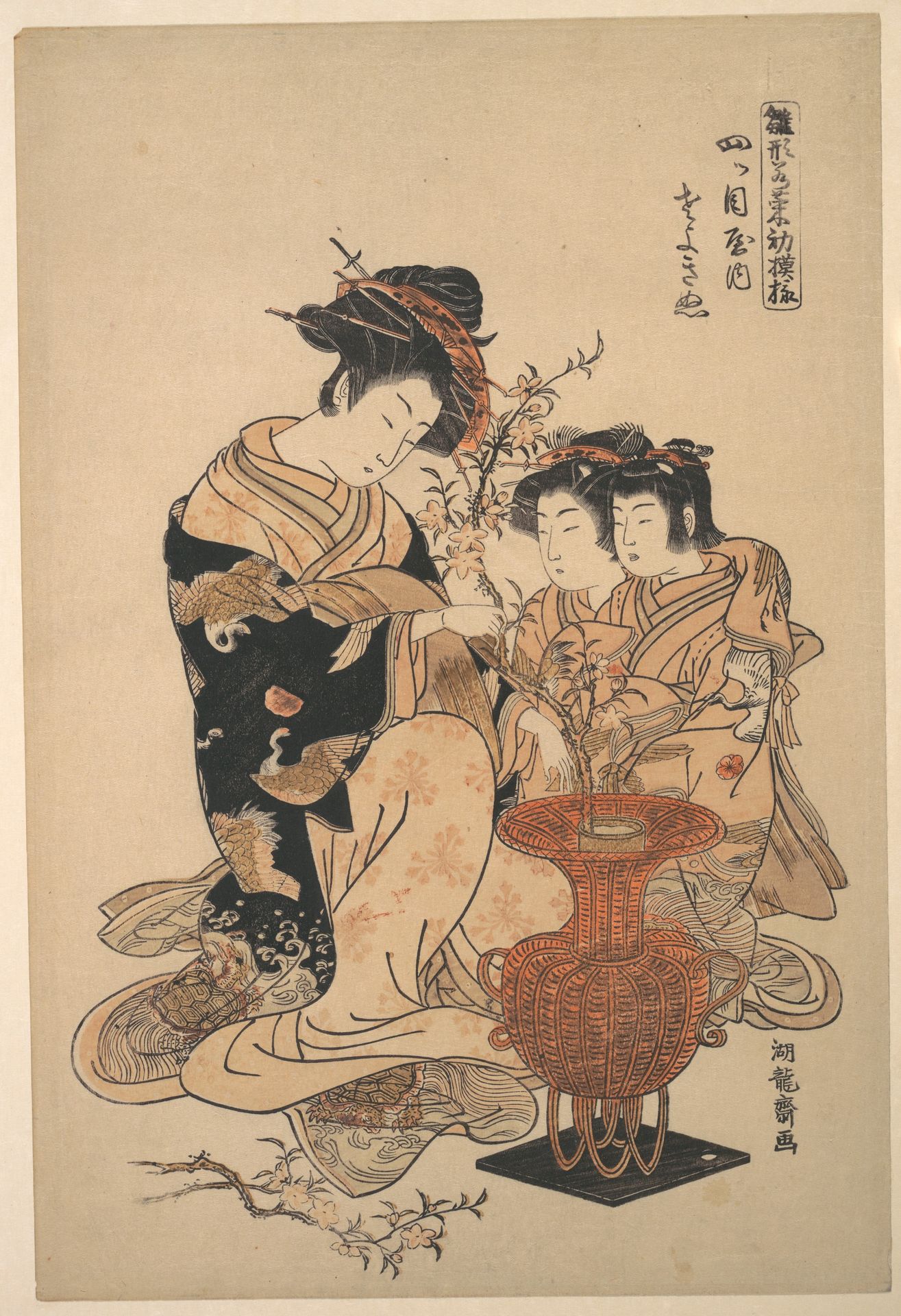
Isoda Koryūsai created this woodblock print of the Courtesan Sayoginu of the Yotsumeya Brothel around 1770, as part of a series showcasing the latest fashions. Here, we see a woman, probably a high-ranking courtesan, arranging plum blossoms in a vase, assisted by two younger attendants. It's a scene of refined beauty and leisure, but it also hints at the complex social dynamics of the pleasure quarters in Edo-period Japan. This print wasn't just art; it was also a fashion magazine, connecting the licensed brothels, which were legal institutions, to the world of publishing. The courtesans' elaborate hairstyles, makeup, and clothing were heavily stylized, which, along with the latest trends, were carefully policed and regulated, thus acting as markers of status within that world. But Koryūsai also worked for individual clients, and this print blurs the line between the commercial and the personal. Understanding this image requires researching the floating world of Edo Japan, the history of woodblock printing, and the complex role of courtesans in Japanese society.
The Courtesan Sayoginu of the Yotsumeya Brothel, from the series “A Pattern Book of the Year’s First Designs, Fresh as Spring Herbs” (Hinagata wakana hatsu moyō)
1776


Artwork details
- Medium
- drawing, print, paper, ink
- Dimensions
- 15 1/4 x 10 3/8 in. (38.7 x 26.4 cm)
- Location
- Metropolitan Museum of Art, New York, NY
- Copyright
- Public Domain
Tags
Comments
Share your thoughts
About this artwork
Isoda Koryūsai created this woodblock print of the Courtesan Sayoginu of the Yotsumeya Brothel around 1770, as part of a series showcasing the latest fashions. Here, we see a woman, probably a high-ranking courtesan, arranging plum blossoms in a vase, assisted by two younger attendants. It's a scene of refined beauty and leisure, but it also hints at the complex social dynamics of the pleasure quarters in Edo-period Japan. This print wasn't just art; it was also a fashion magazine, connecting the licensed brothels, which were legal institutions, to the world of publishing. The courtesans' elaborate hairstyles, makeup, and clothing were heavily stylized, which, along with the latest trends, were carefully policed and regulated, thus acting as markers of status within that world. But Koryūsai also worked for individual clients, and this print blurs the line between the commercial and the personal. Understanding this image requires researching the floating world of Edo Japan, the history of woodblock printing, and the complex role of courtesans in Japanese society.
Comments
Share your thoughts