1831
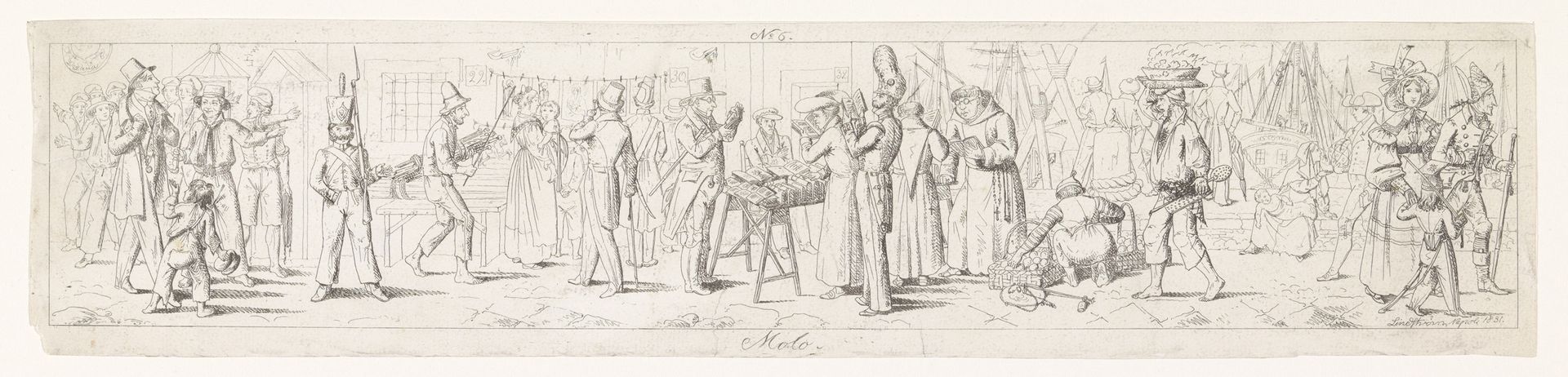
Menigte op een pier in Napels

Listen to curator's interpretation
Curatorial notes
Editor: This is "Menigte op een pier in Napels," a pen and ink drawing from 1831 by Karl Johan Lindström. It has a bustling quality, like a snapshot of a lively marketplace. What strikes you most about this piece? Curator: What I see is a recording of labor and class. This isn’t just a pretty cityscape; it’s a document of the Neapolitan working class engaging in commerce and navigating their social roles. Look at the contrast in clothing and the variety of activities being depicted - the act of drawing captures not just their likeness but also the socio-economic dynamics inherent in their everyday lives. Editor: I see that. The figures are so carefully delineated. The line work makes each individual stand out. Were drawings like these common ways to depict everyday life at that time? Curator: Exactly. Pen and ink, as a relatively accessible medium, allowed artists to circulate images more easily. This accessibility meant that the material limitations also influenced subject matter; the mundane aspects of life become worthy of depiction. The artwork, therefore, moves between "high art" and "documentary." The speed of producing a sketch reflects the frenetic energy of the market itself. Editor: So, the choice of medium and the speed of execution actually reflect the scene itself? Curator: Precisely. The physical process, the rapid capturing of the scene, is central to understanding what Lindström intended to convey. It highlights the means of production behind representing these individuals and their activities. Editor: I never considered how much the artistic process could influence the final message like that. I'll definitely look at art with a more material lens from now on. Curator: Excellent. Paying attention to such elements will always provide fresh interpretations.