1818
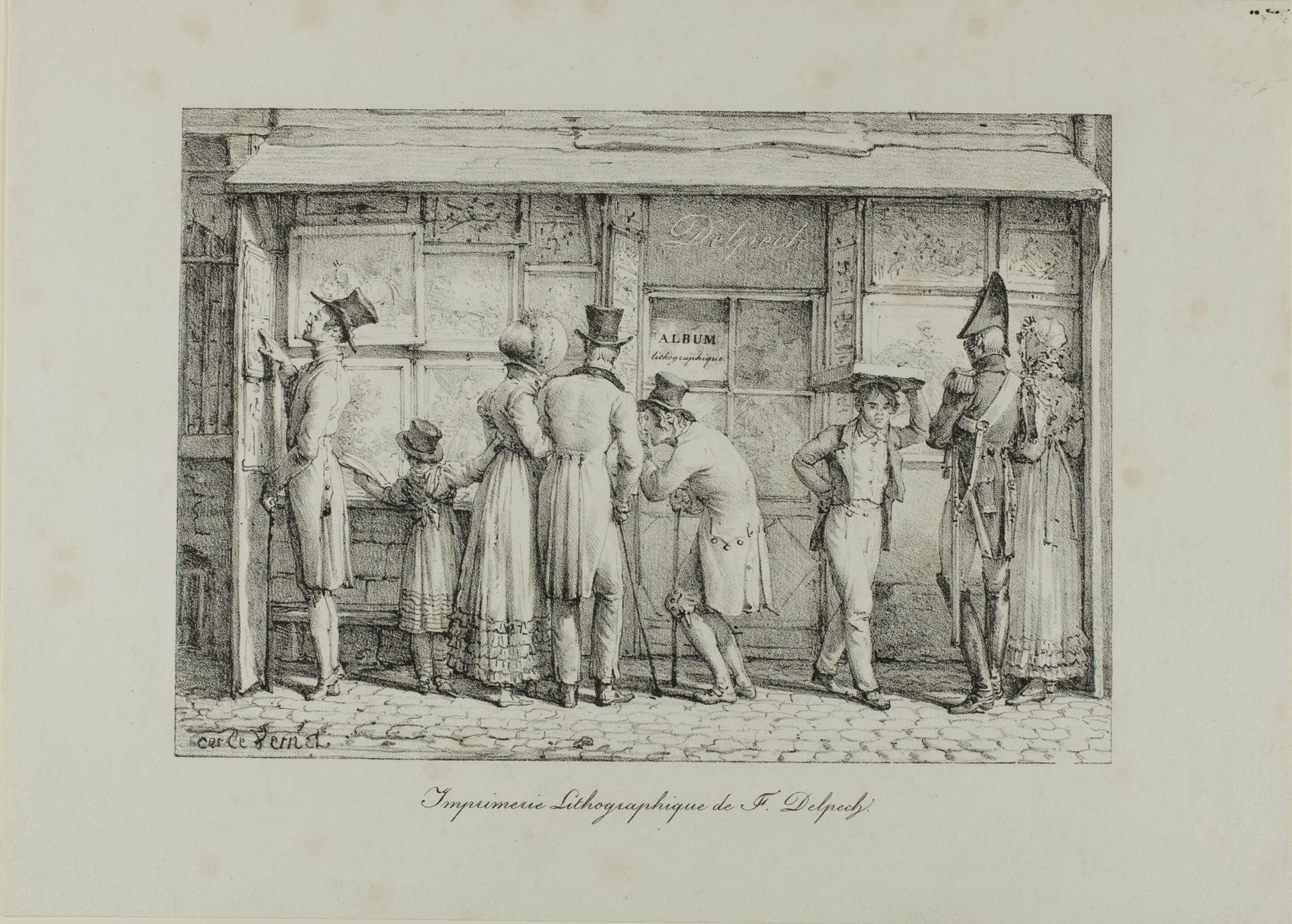
Delpech's Print Shop


Listen to curator's interpretation
Curatorial notes
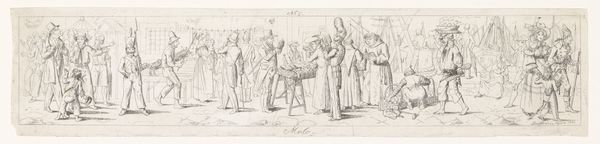
Editor: So this is Carle Vernet's "Delpech's Print Shop" from 1818, a lithograph drawing on paper. It gives such a vivid glimpse into a Parisian street scene. I'm struck by how many figures are intensely focused on the prints in the shop window. What does this image say to you? Curator: I immediately consider the means of production. Vernet depicts Delpech's shop right as lithography was taking off. It’s no longer just about royal commissions or religious iconography; printmaking democratizes art. Editor: Democratizes? Curator: Absolutely. Consider the context: this isn't painting or sculpture for the elite. Lithography allowed for relatively mass production of images. Look at the people in the print—a range of social classes, all potentially consumers. Vernet, in depicting this shop, is actually participating in this broadening of the art market. The material and the process become intertwined with accessibility and class. What do you notice about the clothing of the figures depicted here? Editor: I see that people wear fine garments, maybe indicating upper or middle class, with hats and canes, gathered together, looking at the lithographs. So, by showing a variety of people engaging with prints, Vernet's not just documenting, he’s also highlighting a shift in who gets to participate in art, both as creators and consumers? Curator: Exactly. He acknowledges the role of production in the understanding of art. Vernet shows us art not as a precious object but as a commodity, accessible to more people than ever before. Editor: I had never considered the social implications of lithography and prints before; seeing it as a method to deliver art and not as a departure. Thanks! Curator: Precisely, it really showcases the revolution in how art was conceived and consumed.