1580 - 1634
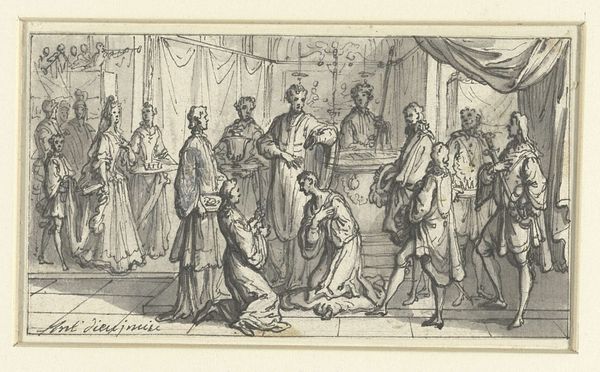
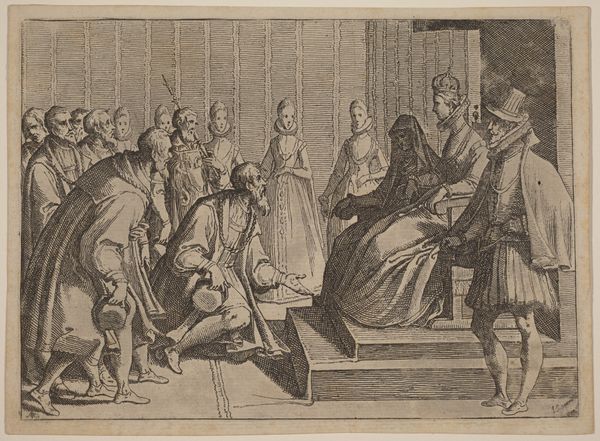
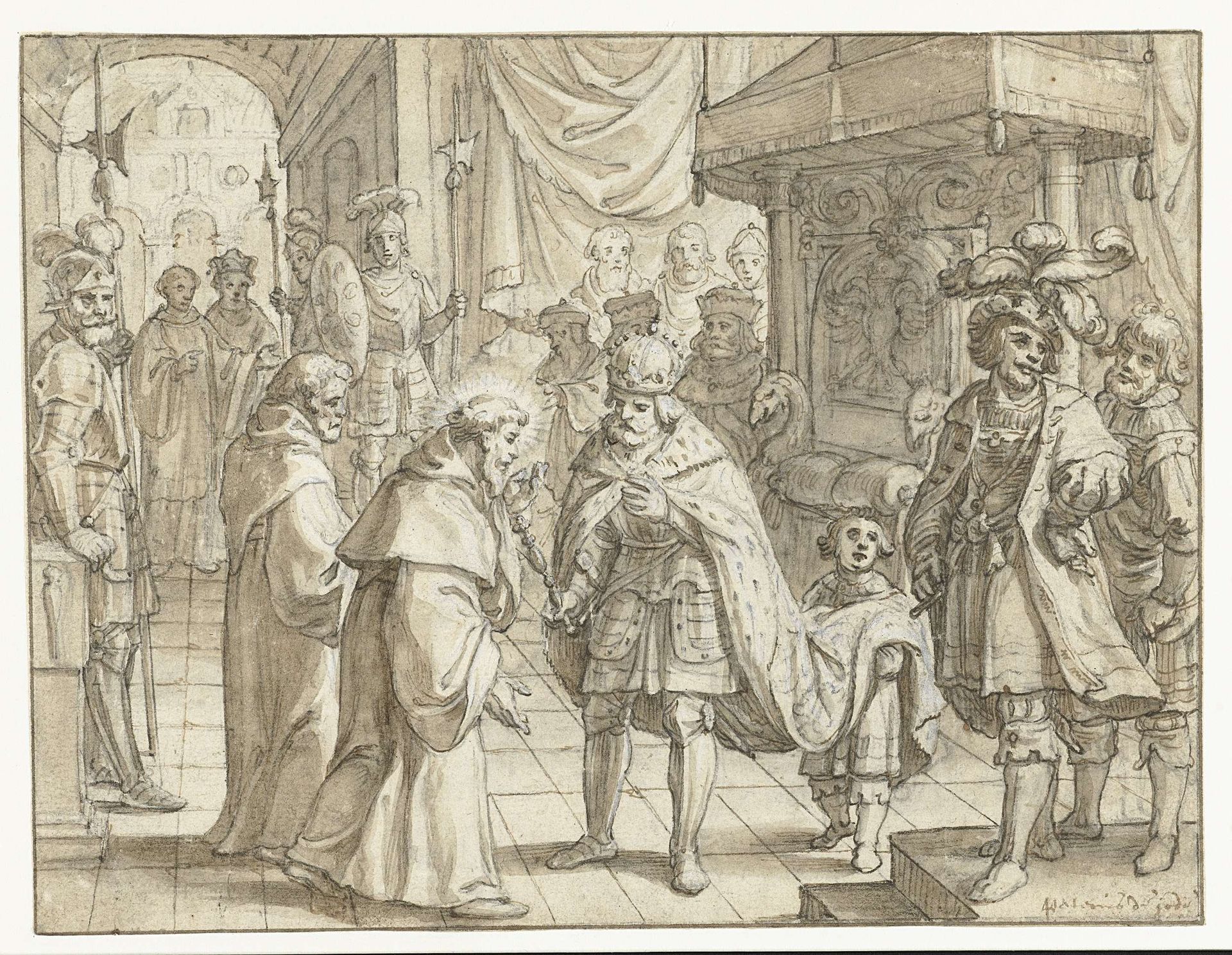
Heilige monnik op audiëntie bij een Duitse keizer

Pieter de Jode I
1572 - 1634Location
RijksmuseumListen to curator's interpretation
Curatorial notes
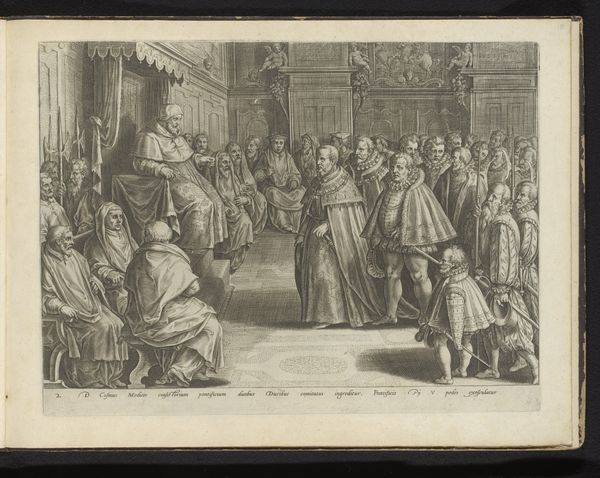
Pieter de Jode I created this artwork, "Holy Monk in Audience with a German Emperor," around the turn of the 17th century, rendered with pen and brown ink. Note the halo that radiates from the monk’s head, a symbol of divine grace, setting him apart from the more earthly figures that surround him. Observe how, throughout history, the halo first appeared in Hellenistic art, signifying status, before the Christians adopted it. It is fascinating to witness its passage through time, adapting to new contexts while retaining its fundamental meaning. The figures' gestures and expressions convey a complex interplay of power, reverence, and perhaps even tension. The monk's humble posture before the emperor—a tableau of earthly and divine authority—creates an emotional push and pull, engaging viewers on a deep, subconscious level. Just as symbols evolve, so too do the emotions they evoke. This cyclical progression underscores how symbols resurface across time, acquiring new layers of meaning.