1547
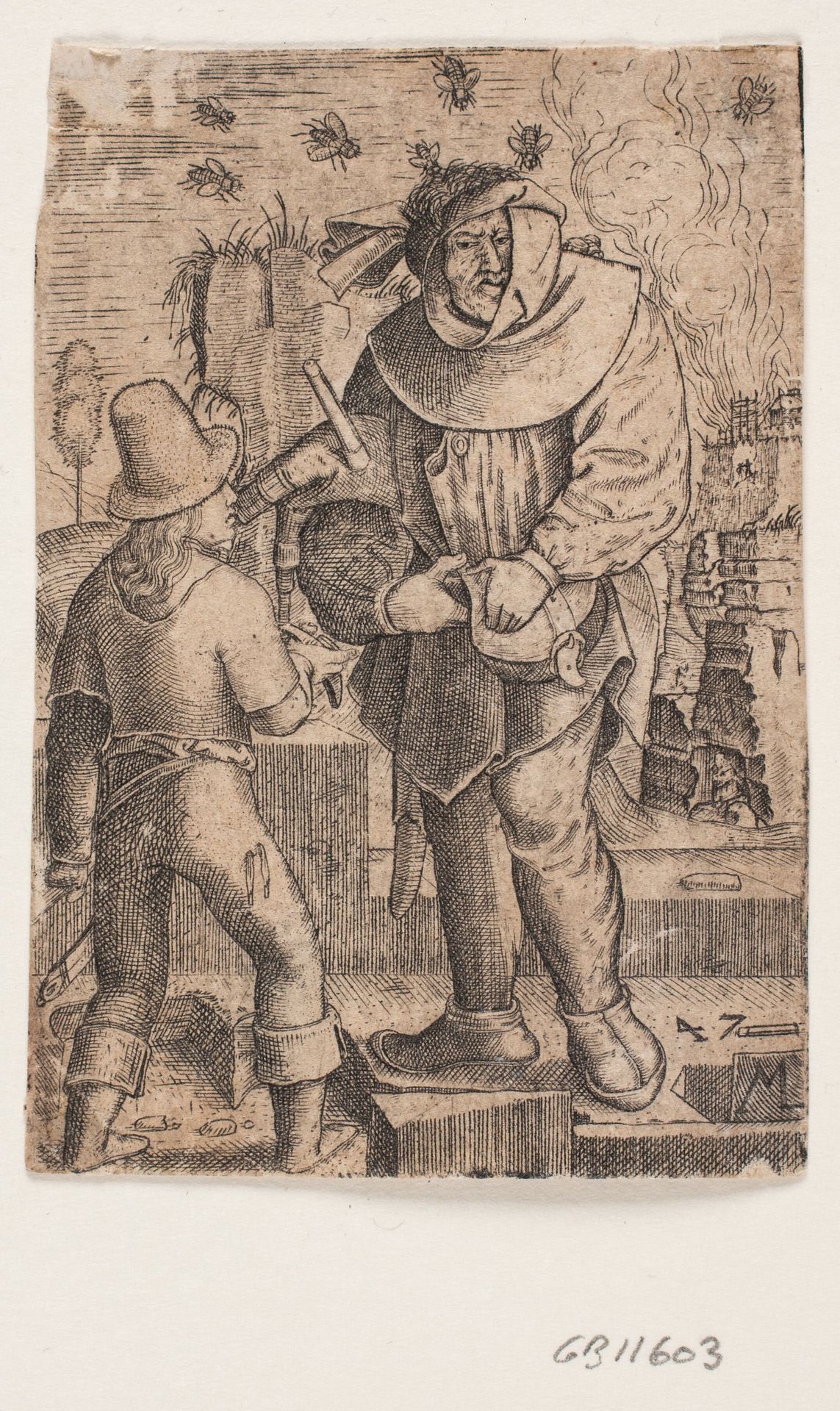
Man with the bagpipe


Listen to curator's interpretation
Curatorial notes
Melchior Lorck created this tiny engraving, "Man with the bagpipe," in the 16th century. At first glance, it depicts a musician and a boy against a backdrop of implied violence, but the scene resonates with the broader social context of its time. Lorck, a Danish artist working in the orbit of the German Renaissance, was acutely aware of the social disruptions caused by the Reformation and the Peasants' War. The bagpiper, often a symbol of itinerant and marginalized communities, stands before a burning village, an allusion to the widespread conflict that marked the era. His presence could be seen as a commentary on the role of art and artists during times of upheaval. Does it offer solace, or does it merely reflect the chaos? Understanding this work means exploring 16th-century social histories, religious texts, and even musical traditions. Only then can we appreciate how Lorck's image engages with the complex realities of its time.