painting, acrylic-paint
#
cubism
#
abstract expressionism
#
painting
#
acrylic-paint
#
figuration
#
social-realism
#
neo expressionist
#
acrylic on canvas
#
cityscape
#
painting art
#
modernism
Copyright: Vicente Manansala,Fair Use
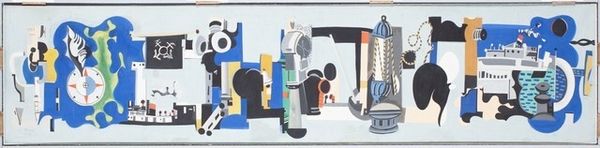
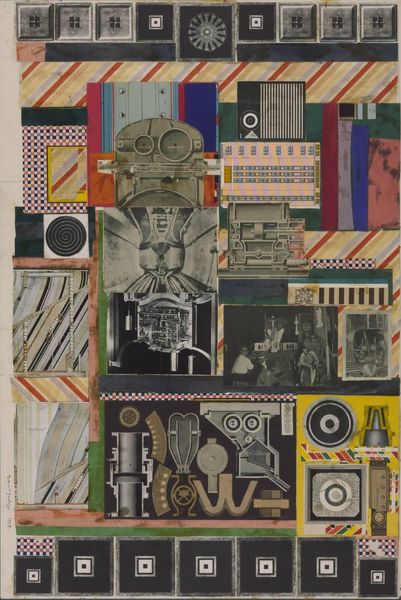
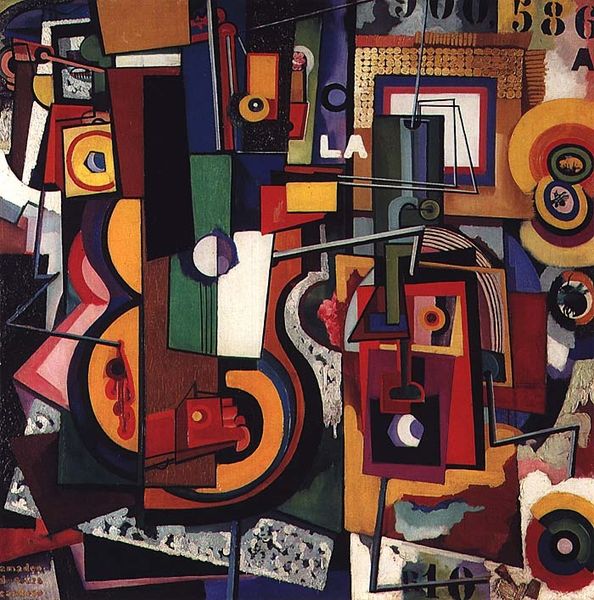
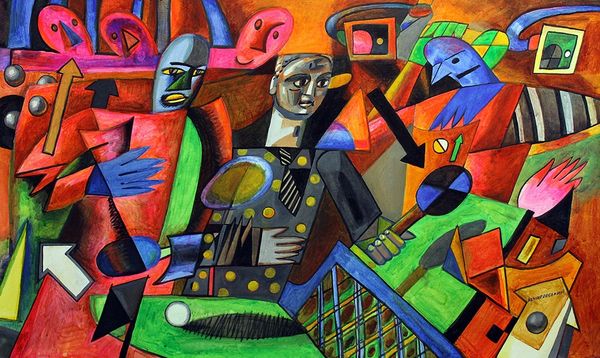
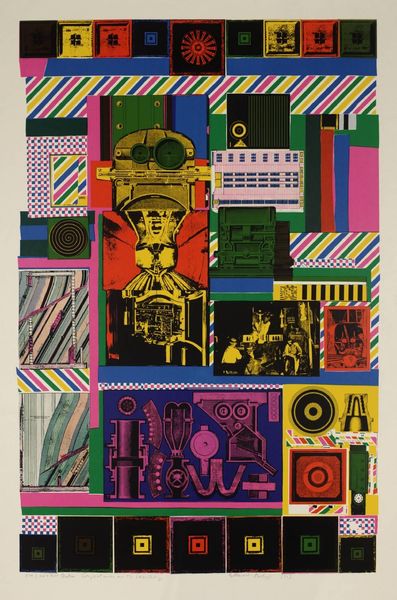
Curator: What immediately strikes me about this work is its oppressive quality, a sense of being overwhelmed. Editor: You've nailed it. This acrylic painting is called "Machinery," by Vicente Manansala. Note how the machinery presses in from all sides, dominating the human figure. Curator: Precisely. The fractured face staring out—it's Cubist, of course—feels trapped within the rigid geometry. The artist has really emphasized the angularity to build that visual tension, a sort of pictorial anxiety. The robotic figures almost look like prison wardens to the man between all of the gears. Editor: Manansala was deeply invested in the social realities of his time, particularly within the Philippines. It's tempting to view this as a commentary on industrialization and its effect on the individual, a person literally caught within the gears of progress. There's a sense of dehumanization at play, reinforced by the muted palette and the relentless repetition of mechanical forms. Also it reflects modernism! Curator: The palette itself contributes to this reading. Notice the limited range of colours: reds, greys, and blues predominantly, reinforcing a sense of coldness. The fractured, cubist technique here deconstructs any singular read; instead, it emphasizes a kind of multifaceted, systemic oppression that speaks in abstraction of specific historical moments. The brushstrokes and material application, it also seems very raw for the time period when looking at Abstract Expressionism which became popular years later. Editor: Certainly. The historical context of the rise of factories and labor conditions globally is inescapable, and the style echoes elements of social realism to display a figurative but accurate image to show real societal trends with laborers being used for automation. Even the title, "Machinery," is pointedly blunt. The fact there isn’t a year attached to it and could’ve been painted many years ago just exemplifies its social realist themes. Curator: It's a painting where form actively communicates its function. A disturbing artwork on how dehumanization and societal issues can take the main stage within abstract figurative modern paintings! Editor: It offers a very crucial perspective into how socio-political commentary is often captured within abstracted forms!
Comments
No comments
Be the first to comment and join the conversation on the ultimate creative platform.
 Collect
 React
React Comment
More like this