About this artwork
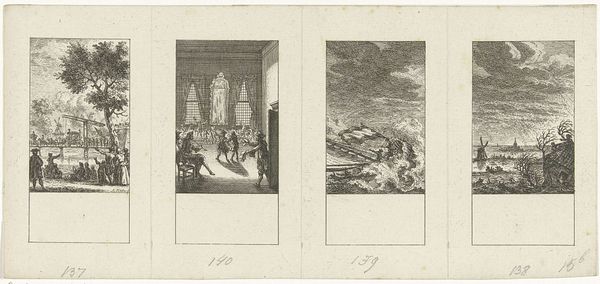
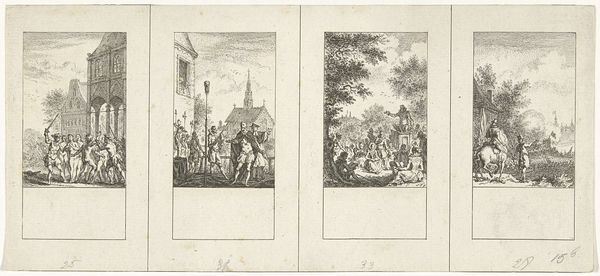
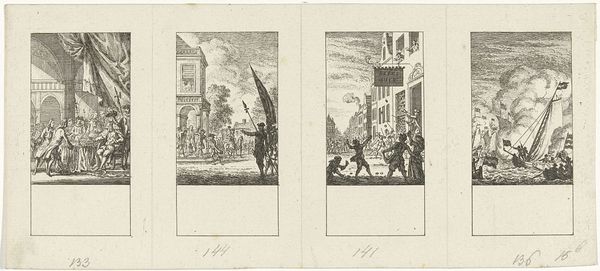
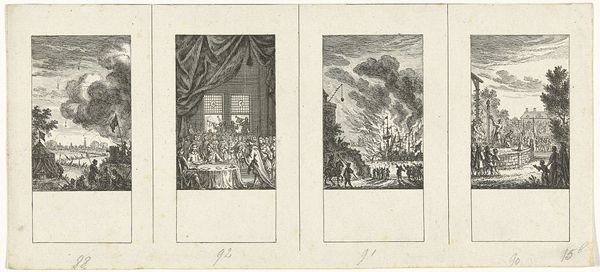
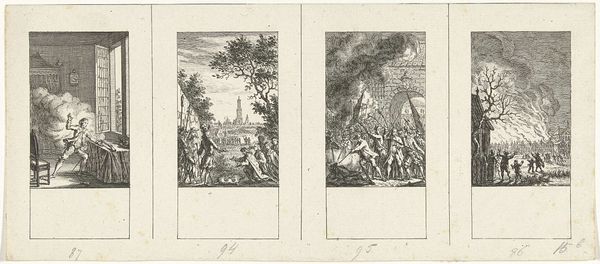
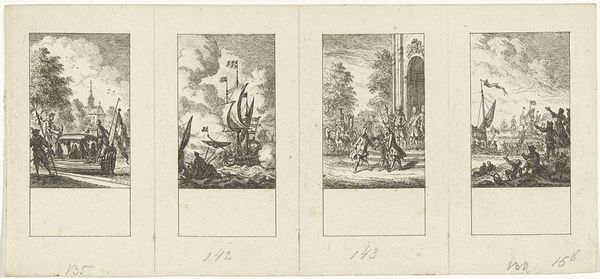
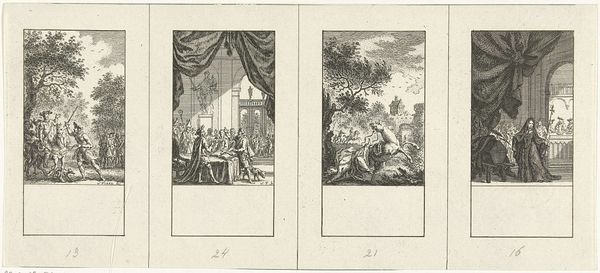
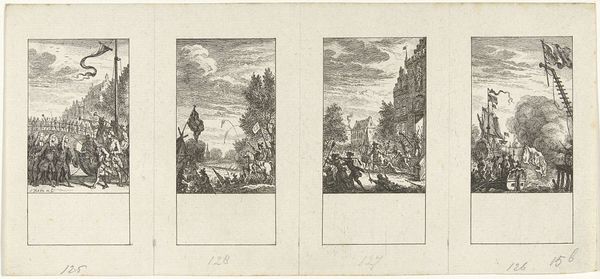
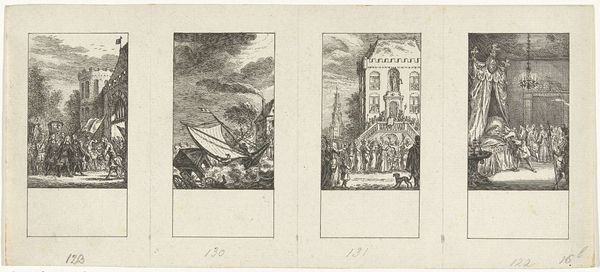
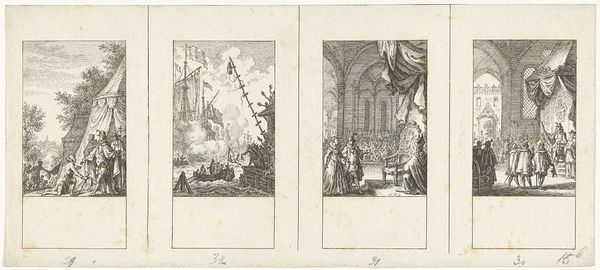
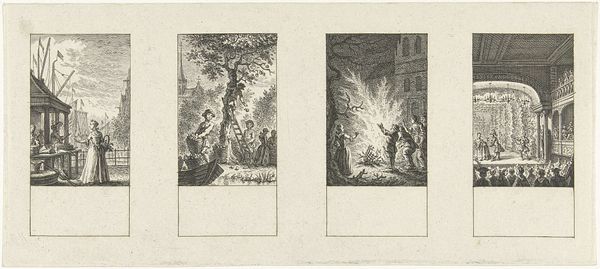
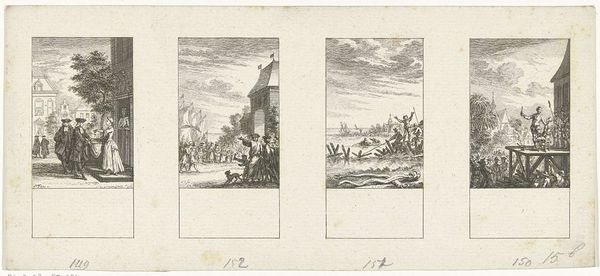
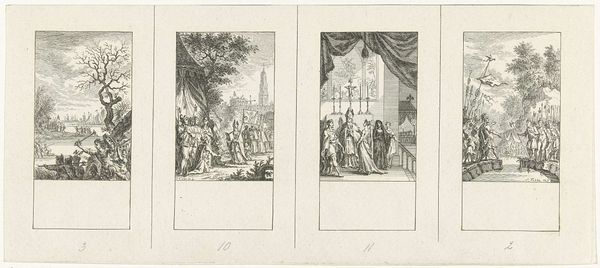
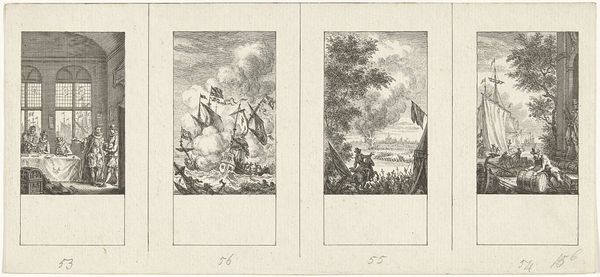
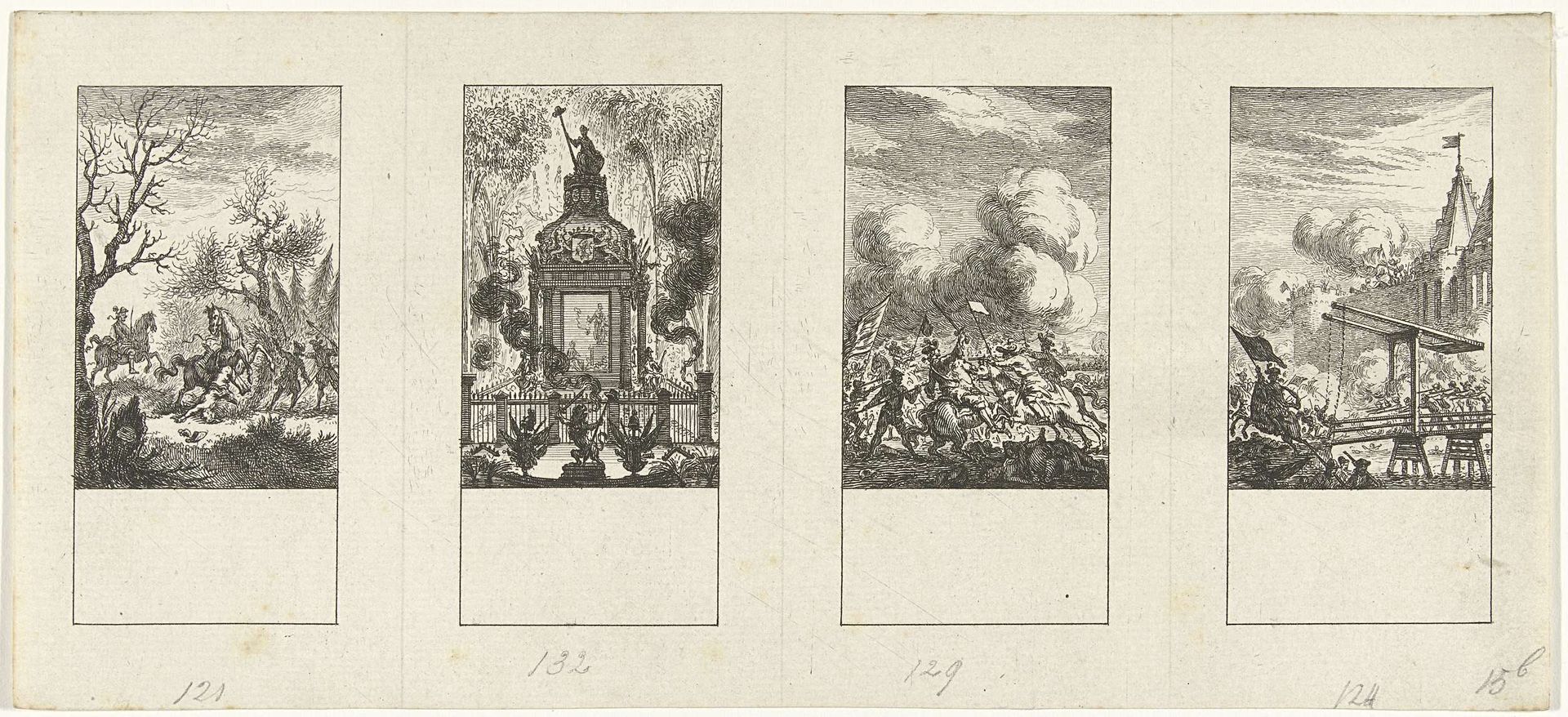
Simon Fokke created this print, Vier episodes uit de vaderlandse geschiedenis, sometime in the 18th century. What strikes one immediately is the stark contrast of the lines, which form dramatic scenes within four distinct panels. Each panel operates almost as a stage for a different historical episode. Look at how Fokke employs linear perspective to create depth, drawing the eye into the heart of each scene. The chaotic energy of battle is palpable, but note the classical architectural elements. These lend a sense of order and rationality, a kind of 'enlightened' lens through which to view the nation's history. The composition asks us to consider how narratives, even of conflict, are framed and presented. The formal precision invites a reading that goes beyond the purely representational. The print challenges the viewer to consider how history is structured and meaning is constructed through visual language.
Vier episodes uit de vaderlandse geschiedenis
1722 - 1784

Simon Fokke
1712 - 1784Location
RijksmuseumArtwork details
- Medium
- print, etching, engraving
- Dimensions
- height 112 mm, width 248 mm
- Location
- Rijksmuseum
- Copyright
- Rijks Museum: Open Domain
Tags
Comments
Share your thoughts
About this artwork
Simon Fokke created this print, Vier episodes uit de vaderlandse geschiedenis, sometime in the 18th century. What strikes one immediately is the stark contrast of the lines, which form dramatic scenes within four distinct panels. Each panel operates almost as a stage for a different historical episode. Look at how Fokke employs linear perspective to create depth, drawing the eye into the heart of each scene. The chaotic energy of battle is palpable, but note the classical architectural elements. These lend a sense of order and rationality, a kind of 'enlightened' lens through which to view the nation's history. The composition asks us to consider how narratives, even of conflict, are framed and presented. The formal precision invites a reading that goes beyond the purely representational. The print challenges the viewer to consider how history is structured and meaning is constructed through visual language.
Comments
Share your thoughts