About this artwork
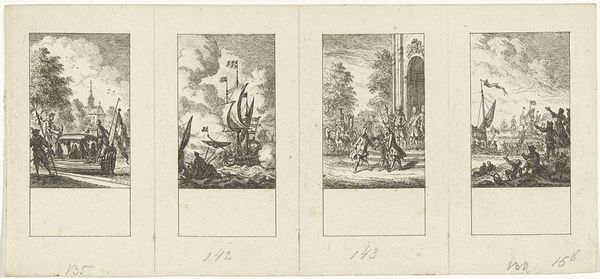
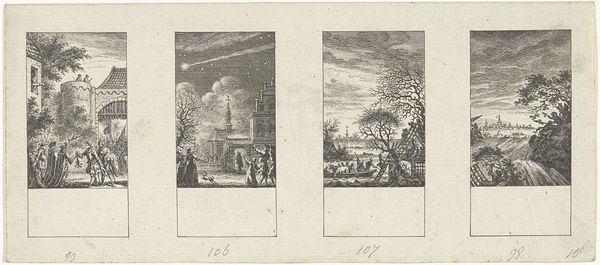
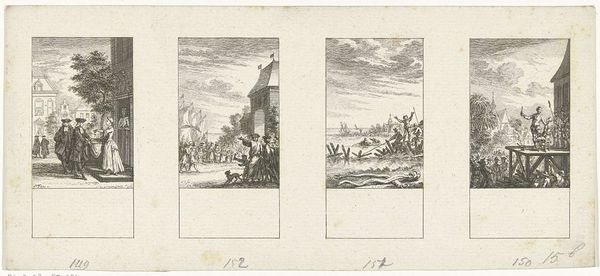
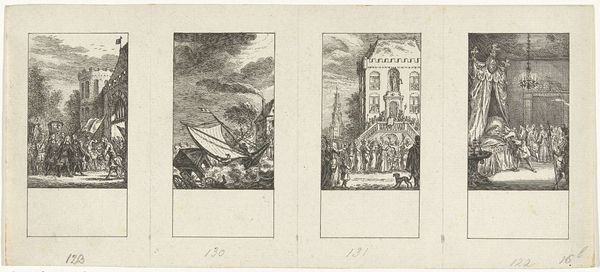
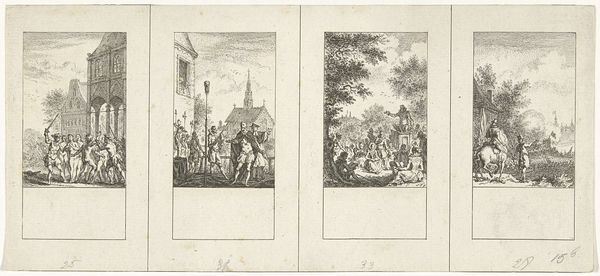
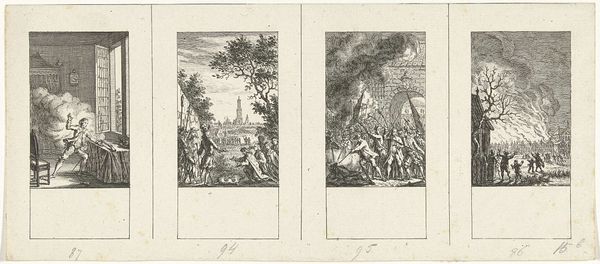
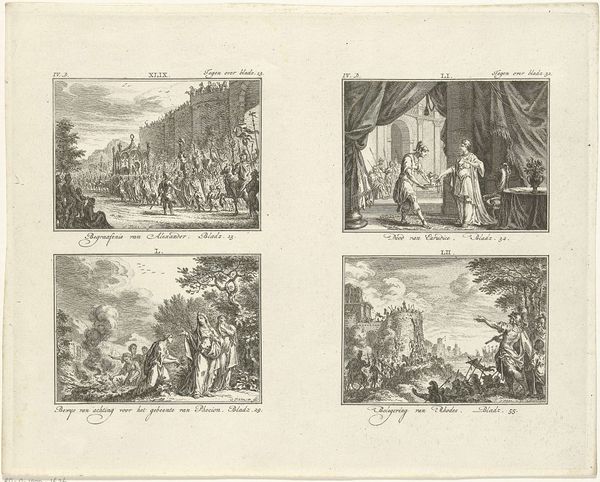
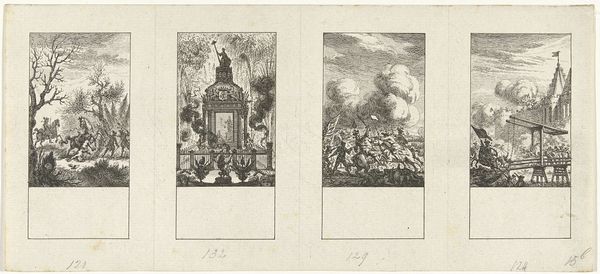
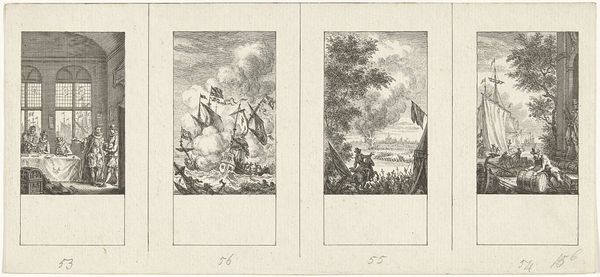
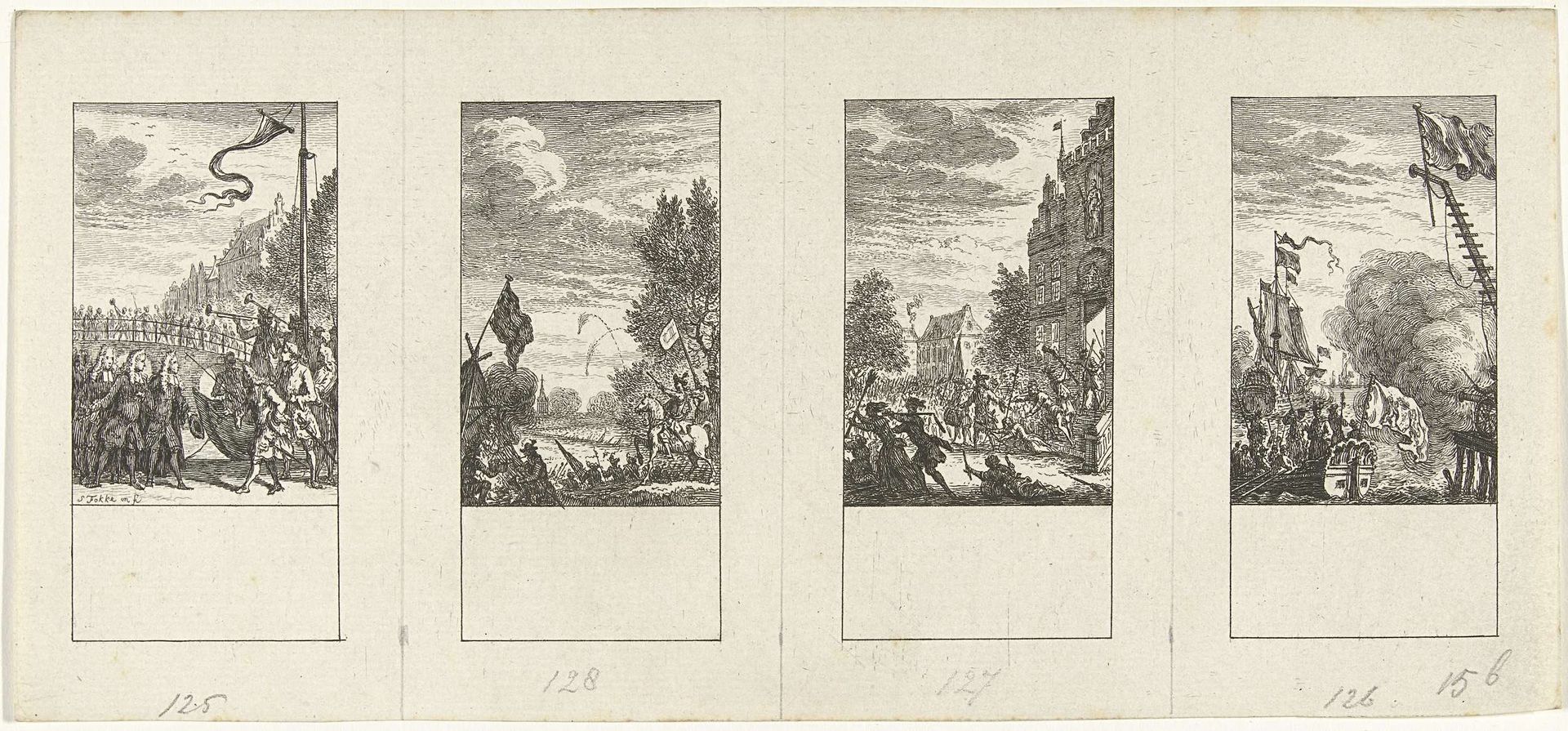
Simon Fokke created this print titled 'Four Episodes from National History' using etching sometime in the 18th century in the Netherlands. Prints like this one were often commissioned by institutions or wealthy patrons to shape public opinion and promote a particular version of history. Fokke's choice to depict historical events through printmaking reflects the social conditions of his time. During the Dutch Golden Age, the Netherlands experienced a flourishing of art and commerce. The rise of a wealthy merchant class created a demand for affordable art that could be mass-produced. Printmaking became a popular medium for disseminating information and propaganda. The print presents visual codes and cultural references that would have been easily understood by its intended audience. Each episode likely represents a significant event in Dutch history, promoting national pride and unity. By studying historical documents, political pamphlets, and other cultural artifacts from the time, historians can gain a deeper understanding of the social and institutional context in which this print was created.
Vier episodes uit de vaderlandse geschiedenis
1722 - 1784

Simon Fokke
1712 - 1784Location
RijksmuseumArtwork details
- Medium
- print, etching, engraving
- Dimensions
- height 114 mm, width 247 mm
- Location
- Rijksmuseum
- Copyright
- Rijks Museum: Open Domain
Tags
baroque
etching
etching
history-painting
engraving
Comments
Be the first to share your thoughts about this work.
About this artwork
Simon Fokke created this print titled 'Four Episodes from National History' using etching sometime in the 18th century in the Netherlands. Prints like this one were often commissioned by institutions or wealthy patrons to shape public opinion and promote a particular version of history. Fokke's choice to depict historical events through printmaking reflects the social conditions of his time. During the Dutch Golden Age, the Netherlands experienced a flourishing of art and commerce. The rise of a wealthy merchant class created a demand for affordable art that could be mass-produced. Printmaking became a popular medium for disseminating information and propaganda. The print presents visual codes and cultural references that would have been easily understood by its intended audience. Each episode likely represents a significant event in Dutch history, promoting national pride and unity. By studying historical documents, political pamphlets, and other cultural artifacts from the time, historians can gain a deeper understanding of the social and institutional context in which this print was created.
Comments
Be the first to share your thoughts about this work.