print, engraving
#
narrative-art
#
baroque
#
dutch-golden-age
# print
#
history-painting
#
engraving
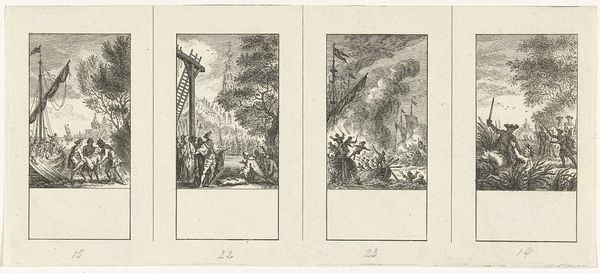
Dimensions: height 109 mm, width 250 mm
Copyright: Rijks Museum: Open Domain
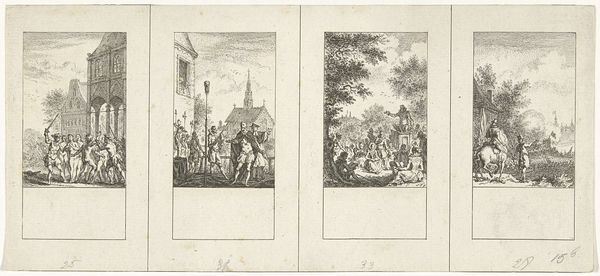
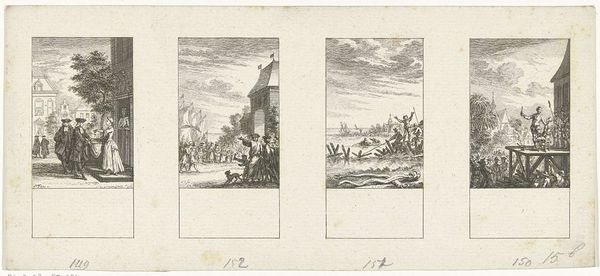
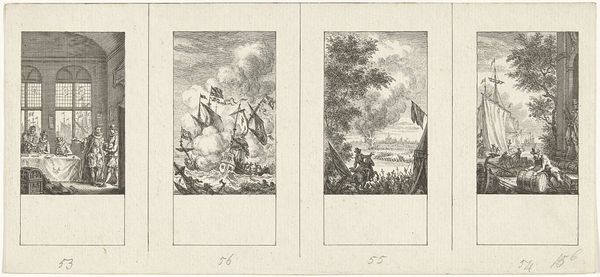
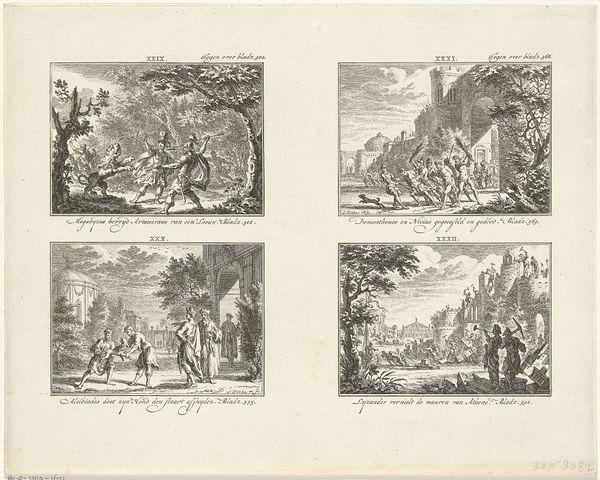
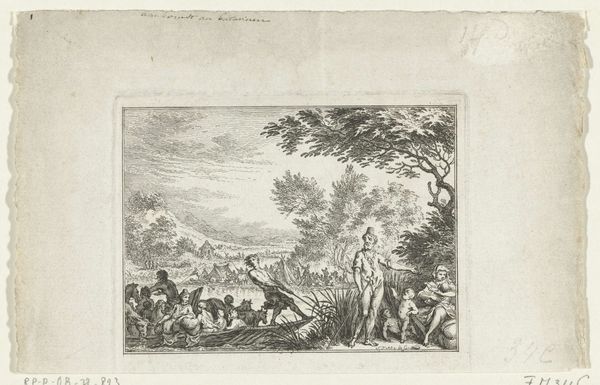
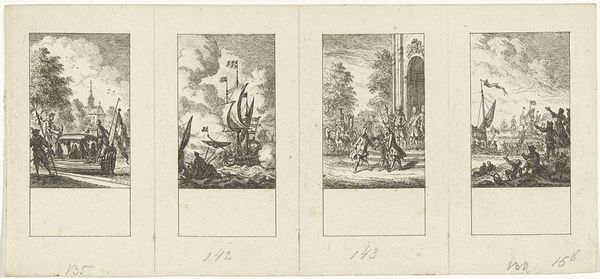
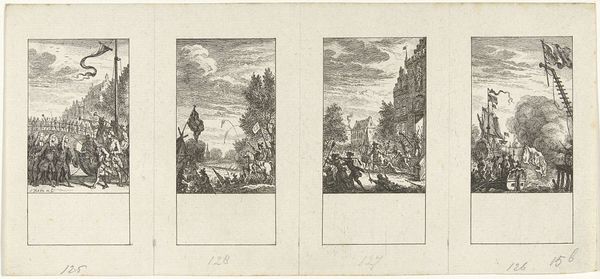
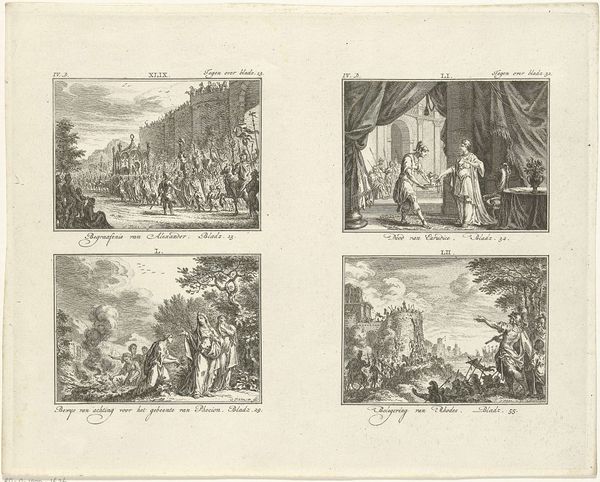
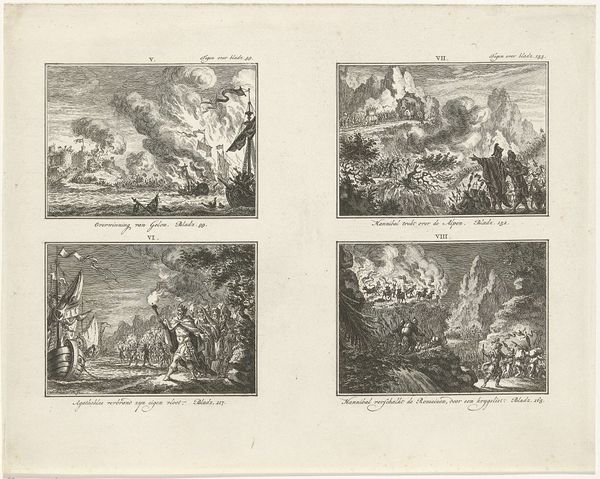
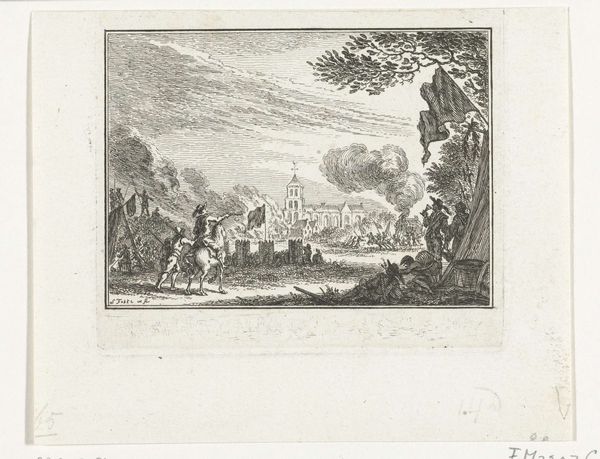
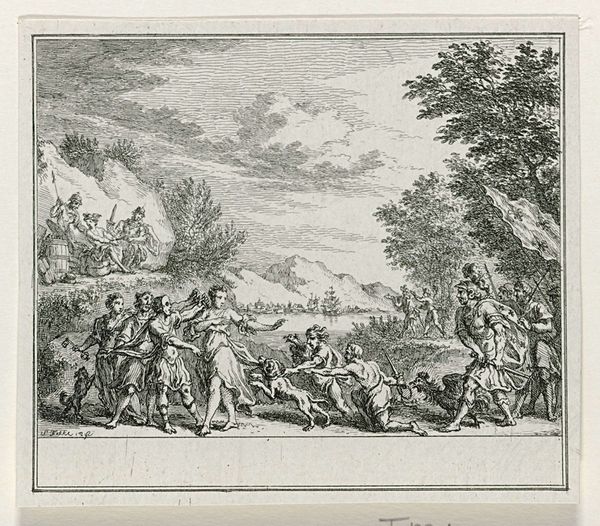
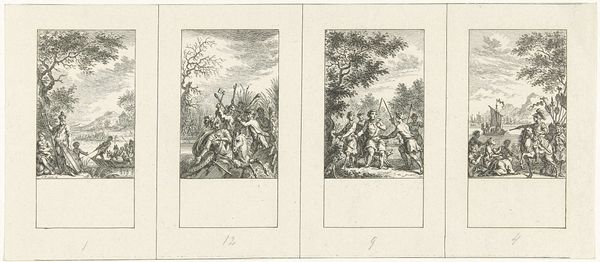
Curator: Here we have a print from the Dutch Golden Age. Dating from around 1722-1784, this engraving by Simon Fokke is entitled "Four Episodes from National History." Editor: My first impression is that these are scenes of unrest, perhaps even violent upheaval, rendered in stark black and white. There's smoke and fire, panicked figures, and an overall sense of chaos in each panel. Curator: Exactly. As an exercise in visual storytelling, the engraving seems to showcase pivotal events of political struggle. The figures, although small, appear posed to express very specific narrative meanings for contemporary audiences of the Dutch Enlightenment. Editor: It's intriguing how Fokke utilizes the print medium. It feels almost like a storyboard, setting out distinct acts in a larger, unnamed play. Do we know precisely what historical flashpoints Fokke is referencing? What does that clarify about who can claim ‘national history?' Curator: Historical documentation suggests that each of the four vignettes corresponds to a different event, moments deliberately selected to resonate with the civic pride and emergent nationalism of the Netherlands at that time. Notice the deliberate placement of certain architectural references within each engraving. Editor: So the buildings may be more than setting—more like icons standing in for values under threat. I’m especially interested in what narratives are omitted from this selective view of history. What voices are sidelined, whose perspectives are ignored to prop up this version of “national history?" Curator: Those omissions are absolutely integral to consider. We have to understand what's being actively presented to analyze its societal effects—which also tells us about what remained contentious. The visual culture of the time, even within ‘high art,’ was actively shaping political ideologies. Editor: It is unsettling to view what appear to be propagandistic portrayals of these “episodes,” in how the scenes likely paper over complex and devastating periods. Thank you for contextualizing how even something this detailed, in its way, creates erasures in the name of nation-building. Curator: Indeed, examining the visual record with scrutiny is an essential task to continually renegotiate these narratives in an open, accessible fashion.
Comments
No comments
Be the first to comment and join the conversation on the ultimate creative platform.
 Collect
 React
React Comment
More like this