
Curatorial notes
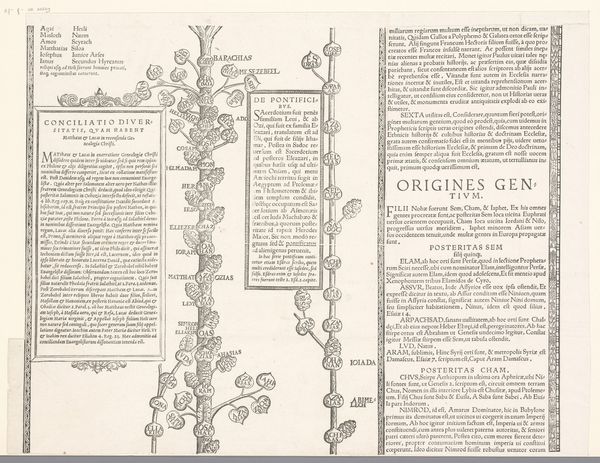
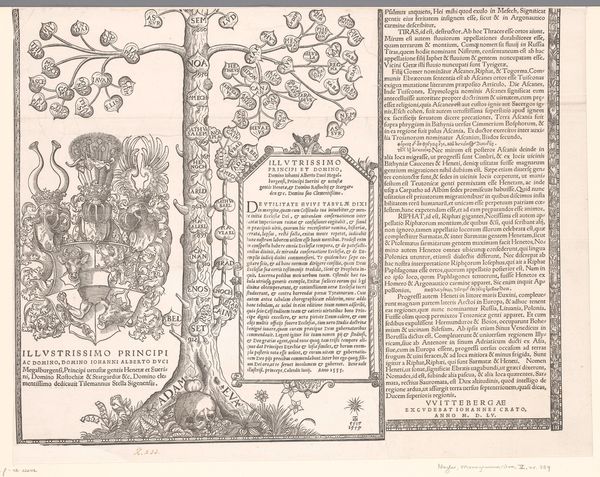
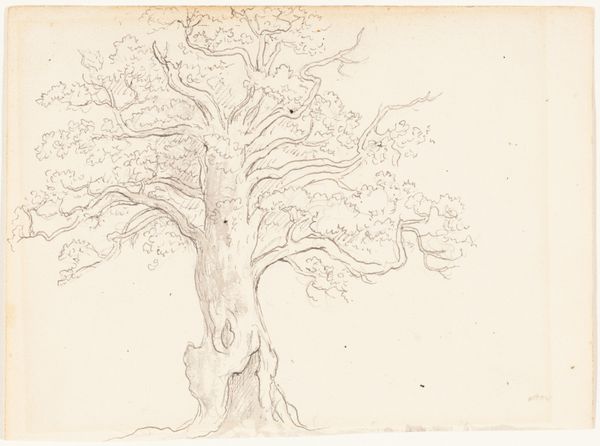
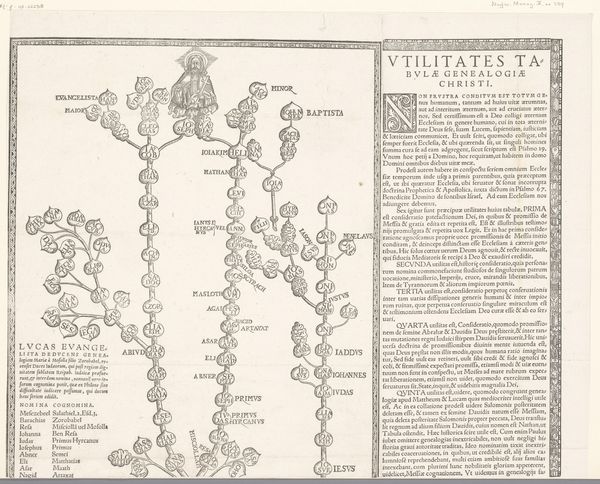
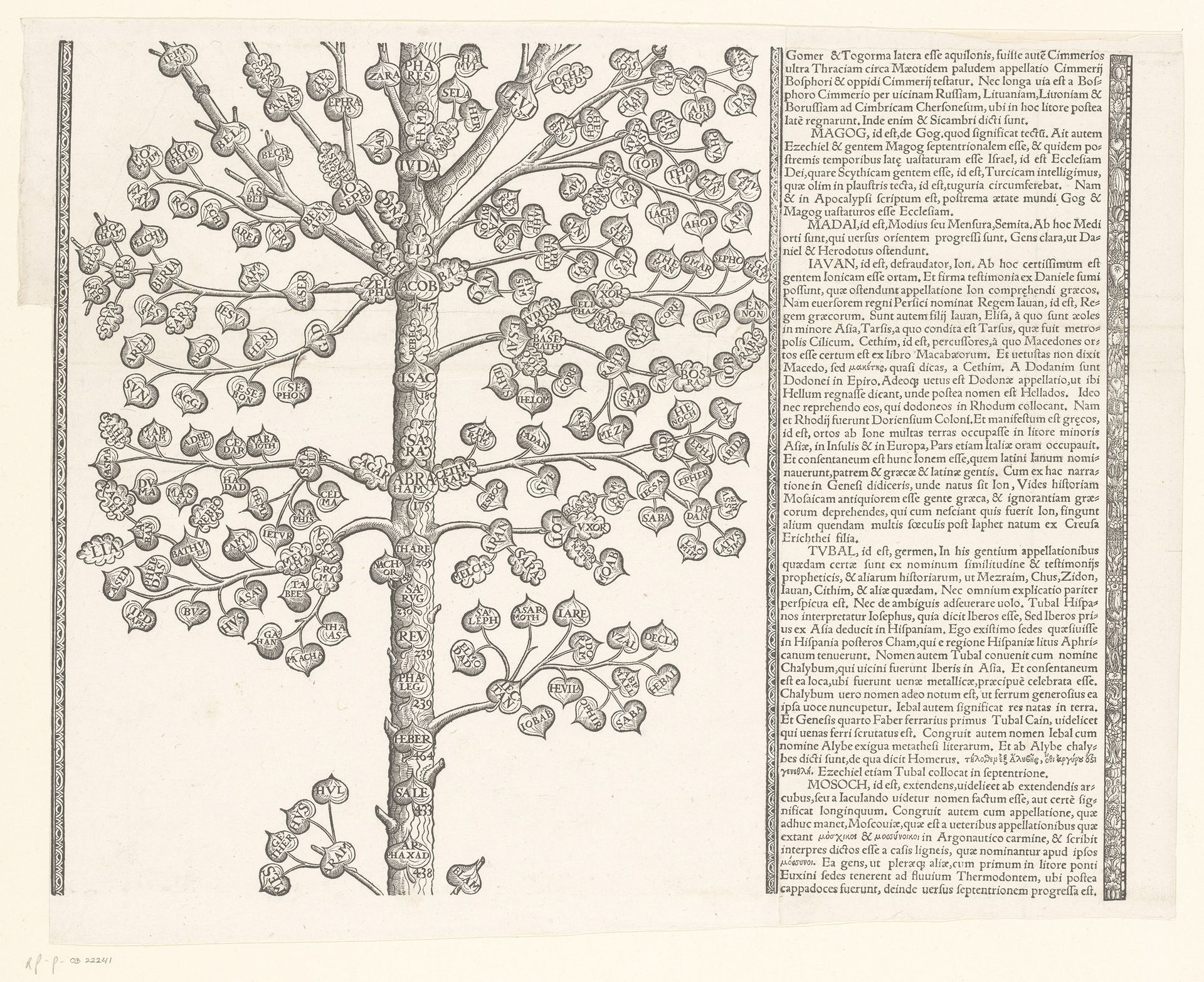
Curator: This engraving from 1555 is titled "Stamboom van Christus," which translates to "The Family Tree of Christ." It was created by Tillmann Stella. What are your initial thoughts? Editor: Well, it’s strikingly geometric, almost like a stylized anatomical rendering of a tree, not a naturalistic one. All those little… fruit? They’re labeled. It feels like a highly structured data visualization masked as art. Curator: Exactly! It's far more than a decorative image. This work visually represents the genealogy of Christ, tracing his lineage back through biblical figures. Stella is mapping out the intricate relationships of power, lineage, and identity as it was understood then. Consider the social and political weight of demonstrating a "pure" lineage at this time. Editor: Power structures encoded in sapwood! It's fascinating how literally they're taking this metaphor of a family tree. And you’re right—those labeled "fruit" create an immediate sense of historical record, almost clinical, but presented with the symbolism of growth and ancestry. Almost humorous when considering contemporary adoption and assisted reproduction outside these structures. Curator: Indeed, those names aren’t just names. Each one is a reference to complex historical, religious, and social narratives. Think about the emphasis on patrilineal descent and the role of women largely relegated to birthing these figures. It highlights the ways identity was constructed and controlled. And yes, the stark geometric presentation reinforces that sense of rigid structure. It begs to be picked apart and considered critically now. Editor: It does. As an artist, the labor of meticulously engraving this is something to behold! I appreciate how it uses pattern to balance out textual information within the tree, creating both complexity and balance. Although that balance might seem exclusionary from a modern intersectional point of view. It makes you consider how, historically, knowledge and control went hand in hand. Curator: I think it shows us the way that artwork could be used to reinforce ideology, to cement social hierarchy, in a period of social change. And, simultaneously, invite us to ask who is not included in this lineage, and why. Editor: It prompts me to think about whose family trees aren’t represented in art, or even deemed worthy of documentation. A rather sobering yet fertile ground for consideration.