1810
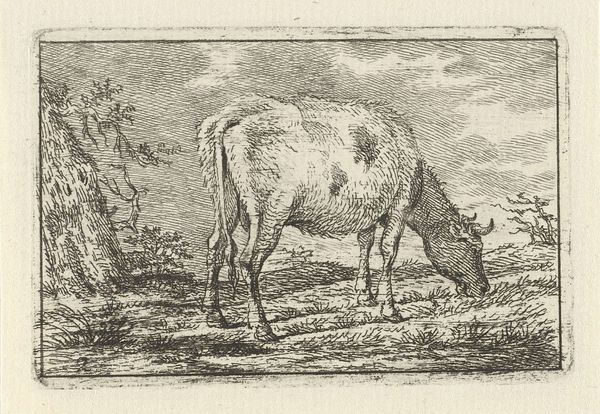
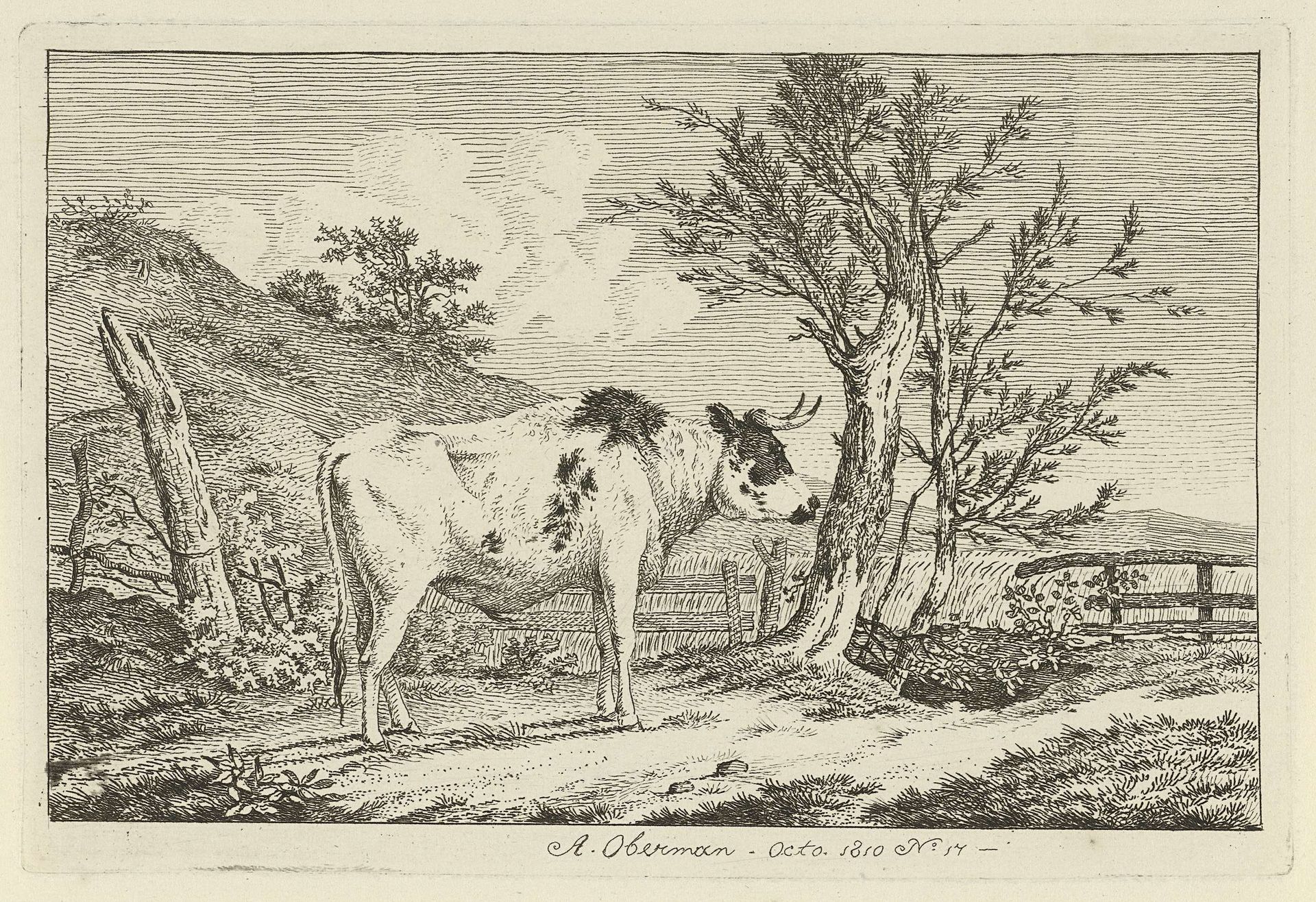
Stier in een landschap

Anthony Oberman
1781 - 1845Location
RijksmuseumListen to curator's interpretation
Curatorial notes
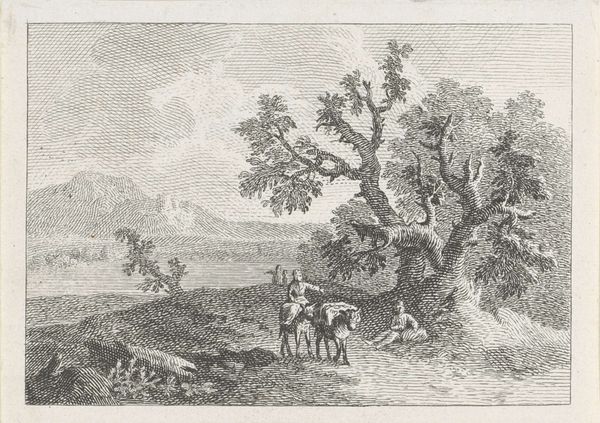
Editor: This is "Stier in een landschap," or "Bull in a Landscape," by Anthony Oberman, from 1810. It's an engraving, so primarily line-based. It’s so detailed and precise. What draws your attention in this piece? Curator: The artist's meticulous approach to line work certainly commands attention. Note how the hatching and cross-hatching articulate the form of the bull and the surrounding landscape, achieving a sense of volume and texture. Editor: Yes, the way the light seems to fall – it almost feels like a photograph with its high level of detail, even though it’s a print. The contrast is quite striking for the period, I think. Curator: Indeed. The strategic use of light and shadow creates a dynamic visual interplay, enhancing the spatial depth of the composition. Consider the subtle gradations of tone used to depict the foliage and the musculature of the animal. Editor: I noticed how the bull isn't centered. It's as if the artist wanted to integrate the animal more completely into the scene, not just depict it as a specimen. Curator: Precisely. Observe how the careful placement of the bull within the pictorial space establishes a visual equilibrium with the surrounding landscape elements. The formal relationships create a harmonious, unified whole. It appears Oberman is highlighting the interplay between the animal form and the rural landscape in a delicate balance of subject and ground. Editor: So you are saying it’s more about the total composition of nature, instead of just focusing on this one individual animal. I’ve learned to look at it differently! Curator: Exactly. By observing closely we appreciate how the formal elements construct meaning. The experience transforms our understanding, doesn't it?