1824
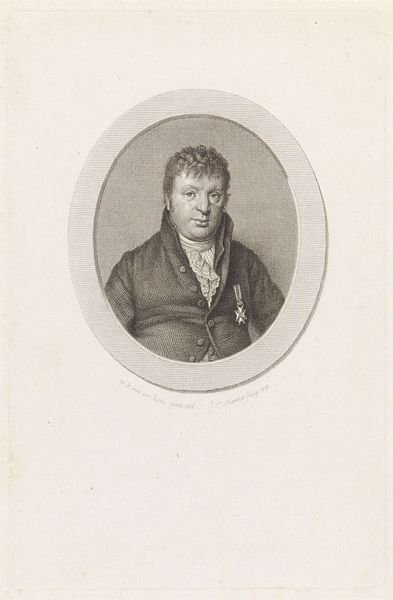
J.F. Clemens


Listen to curator's interpretation
Curatorial notes
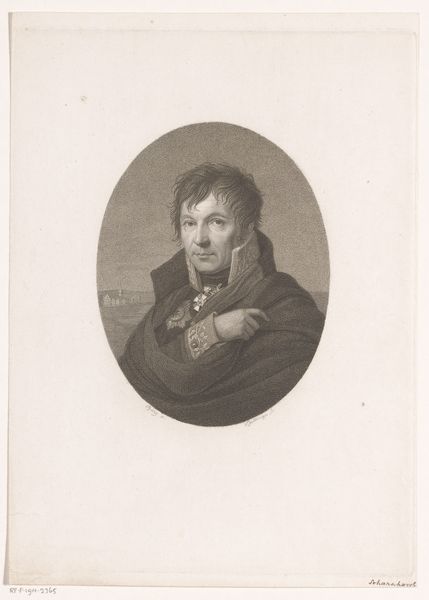
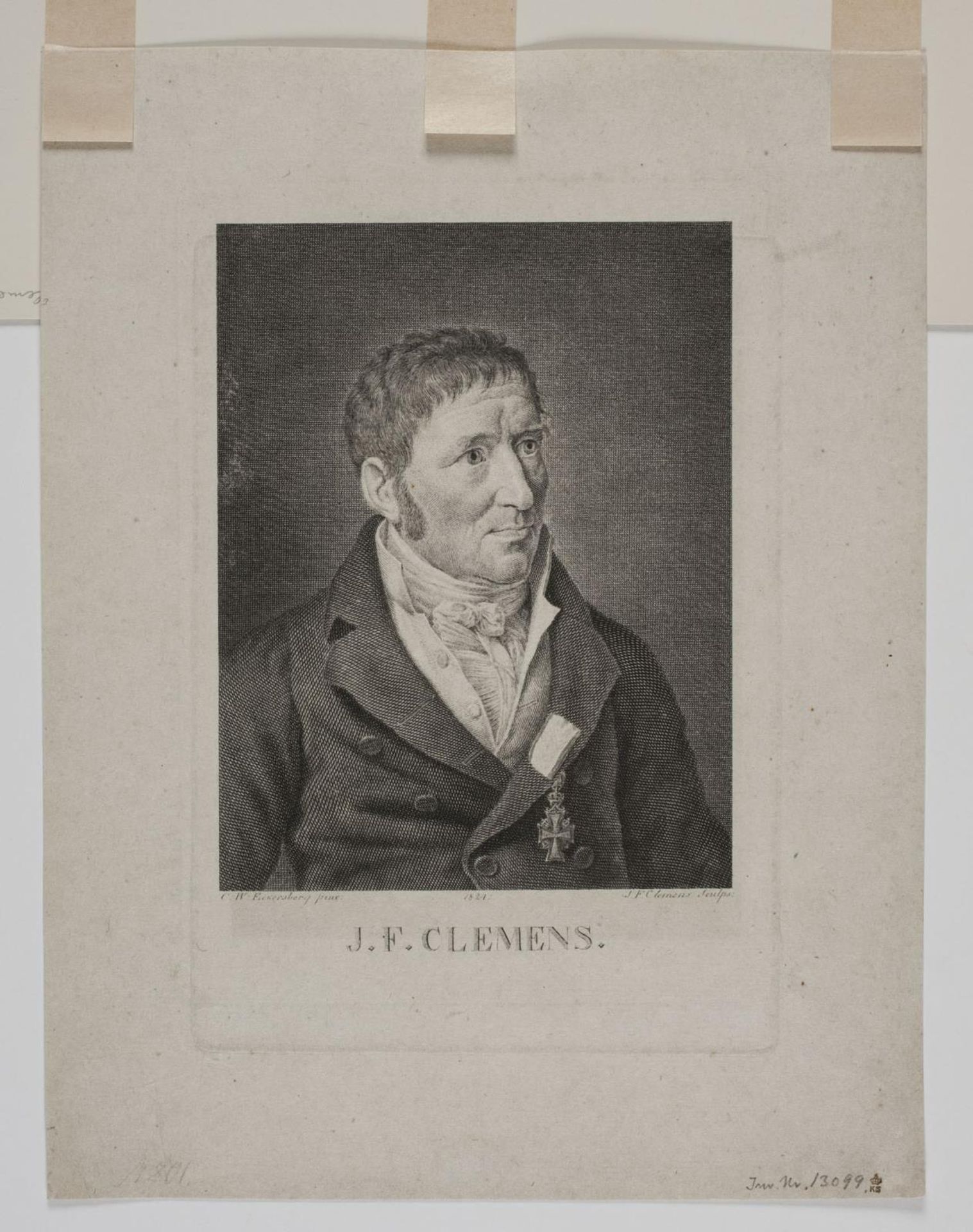
Curator: Here we have an engraving from 1824, simply titled "J.F. Clemens," currently held at the SMK, Statens Museum for Kunst. Editor: The immediate feeling I get is one of austere respectability. It's the way the subject gazes slightly upwards, and the stark black and white contrasts lend a sense of gravity. Curator: Indeed. What is compelling about this image to me is not merely the portrayal of an individual but also what it signifies about the emerging role of artists in early 19th century Europe. Printmaking offered new channels for artists' reputations and public recognition beyond traditional patrons. Editor: That medal draws the eye, doesn't it? Badges and insignia always speak volumes. I find myself wondering what accomplishments warranted such an honor and what sort of statement Clemens intended to make by including it. The cross potent shape suggests dedication and strength of conviction, doesn’t it? Curator: It reflects the institutional framework for artists at the time. Medals, honorary titles— these became mechanisms to integrate artists into the established societal hierarchies and validate their roles within society. These symbols are evidence of how institutions shape identity and self-representation, as you were saying. Editor: I think the detail in the clothing and the expression captures something else as well. It presents a cultural record of identity, reflecting societal values about an ideal bourgeois identity in Denmark. This print feels more like an act of cultural preservation. Curator: That's a compelling point. Prints like this served a crucial role in documenting and disseminating likenesses in an era before widespread photography. They created visual legacies, contributing to a growing sense of cultural memory and historical record-keeping through art. Editor: Considering the social context illuminates how powerful an apparently 'simple' image can be. Curator: Absolutely, and considering all those angles gives us greater historical insight. Editor: For sure. Looking at art as both an object of beauty and an archive is fascinating to me.